
- What Is Paradise at Mount Rainier? (Paradise or Sunrise?)
- Do You Need a Reservation? Fees and 2026 Timed Entry
- How to Get to Paradise (from Seattle or Portland)
- When Should You Start? I’ve Tried Both
- Paradise Trails from Easy to Hard
- Hiking the Skyline Trail Loop
- Wildlife and Wildflowers (An Honest Note)
- What to Pack for Paradise
- A One-Day Paradise Itinerary
- Who Is Paradise For?
- Rainier or Olympic for One Day? Plus More Near the Park
- 你問我答:常見問題
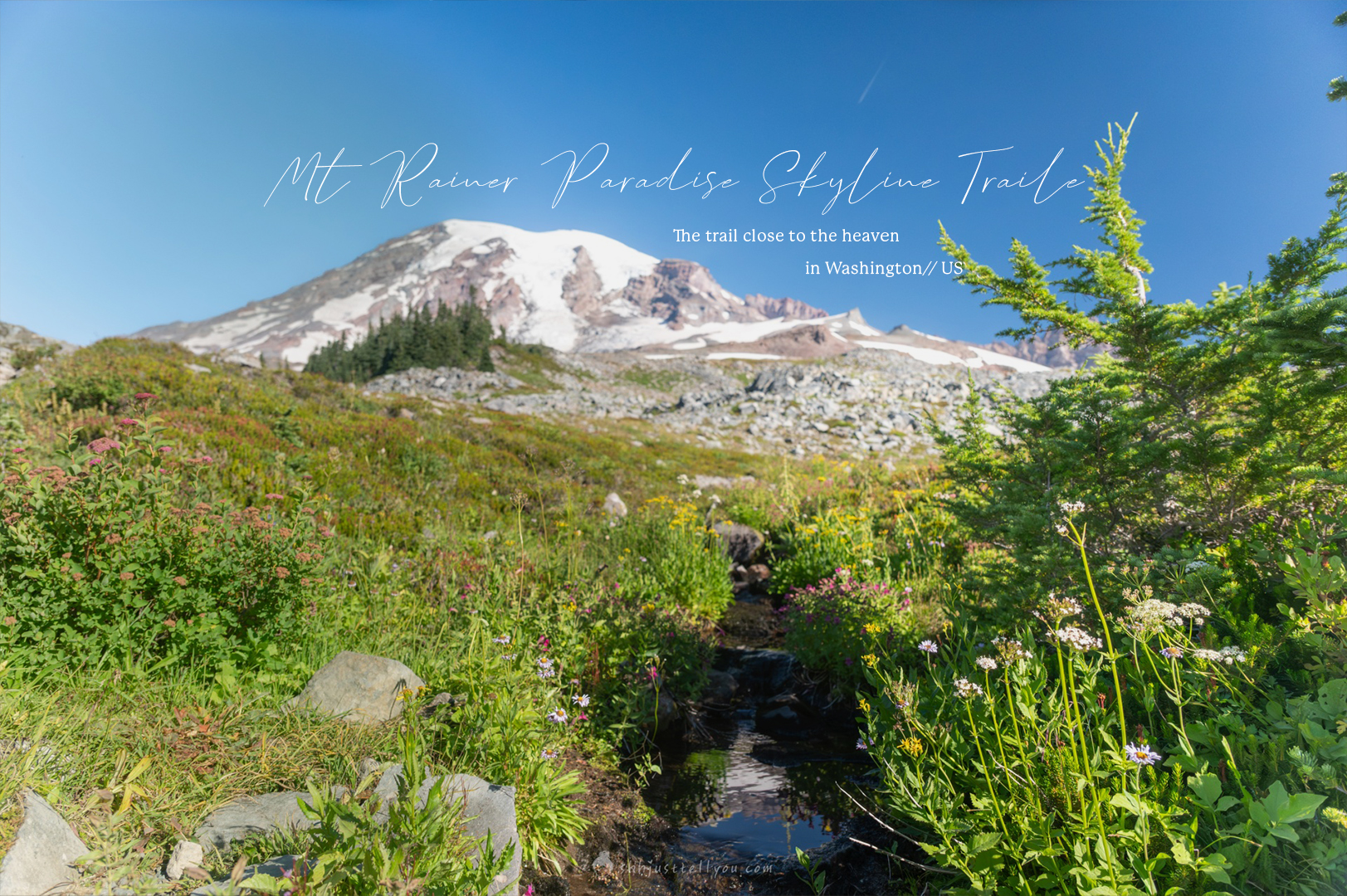
Some people call Paradise “the closest place to heaven,” and the first time I stood on that alpine meadow with the glacier-capped peak filling the sky, I understood why. Mount Rainier Paradise is the southwest corner of Mount Rainier National Park in Washington, and it is where the wildflowers, glaciers, and sea-of-clouds views are most concentrated, which makes it the best area for a day trip. I have been a few times, always centered on the signature Skyline Trail. This guide covers the latest 2026 entry and parking rules, when to leave, how to hike Skyline without wearing yourself out, the fearless marmots along the way, and a few easy stops nearby.
What Is Paradise at Mount Rainier? (Paradise or Sunrise?)
Paradise is the most popular sub-area of Mount Rainier National Park, a Washington State park built around a 14,411-foot (4,392 m) active volcano. “Rainier is huge, so where do I actually go?” is the question first-timers get stuck on, and the answer is simple: if your time is limited, focus on Paradise. The park is officially split into five areas, but most people head to Paradise or Sunrise.
| Area | Known for | Season / access |
|---|---|---|
| Paradise (SW) | Alpine meadows, wildflowers, glaciers, the Skyline Trail, main visitor center | Nearly year-round, busiest |
| Sunrise (NE) | Highest drivable point, closest views of the mountain face | Summer only (approx. July–Sept) |
| Longmire | Historic district, museum, National Park Inn | Year-round, on the way to Paradise |
| Ohanapecosh | Old-growth forest, hot springs, camping | Visitor center closed for repairs into summer 2026 |
| Carbon River & Mowich | Temperate rainforest, Mowich Lake | No car access (SR 165 Fairfax Bridge permanently closed) |
In short, with one or two days, pick Paradise (southwest, alpine meadows and glacier trails, open almost all year) or Sunrise (northeast, higher, summer only). Driving between the two areas takes hours, so for a day trip, commit to one area. Everything below is about Paradise.
Do You Need a Reservation? Fees and 2026 Timed Entry
No, you do not need a reservation in 2026. Mount Rainier has dropped its timed-entry system, and Paradise and Sunrise are back to first-come parking. The park now uses active parking management instead, closing lots when they fill and posting live space updates. So the game is no longer racing for a permit, it is arriving early to get a parking spot.
Honestly, that is easier for travelers. People often ask me whether skipping reservations makes it harder to get in, and it is the opposite: with no permit lottery, an early start is all it takes. The entry fee is valid for 7 days and applies to everyone: $30 per vehicle, $25 per motorcycle, $15 per person on foot or bike. A separate $100 non-resident surcharge started in 2026, but it only applies to 11 of the busiest parks, and Mount Rainier is not on that list, so non-resident visitors pay the normal fee here with no extra $100. Fees and lists can change, so confirm on the NPS website before you go.
How to Get to Paradise (from Seattle or Portland)
Driving to Paradise through the Nisqually Entrance takes about 2 to 2.5 hours from Seattle and 2.5 to 3 hours from Portland. The mountain road climbs gently, so altitude rarely bothers people on the way up. There is free parking at Paradise, but the lots fill fast in summer, which is exactly why an early start matters. If you would rather not drive or fight for parking, day tours run from Seattle with hotel pickup.
▸▸▸ Drive on your own schedule: compare Seattle car rentals on Klook
▸▸▸ Skip the driving: Mount Rainier day tour from Seattle (hiking, waterfalls & glaciers) on GetYourGuide
When Should You Start? I’ve Tried Both
The most comfortable way to do Paradise in a day is to leave before dawn and start hiking between 6:30 and 7 a.m., beating the crowds and the heat up the Skyline Trail. One time we left Portland at 6 a.m., and between traffic and the entrance line it took over four hours, so we did not arrive until past 11. Another time I stayed the night about an hour away, left around 4 to 5 a.m., and rolled in a little after 6 with the sky already bright and a crowd already gearing up below.
Why push to be early? At altitude you are closer to the sun, and once you are climbing and it hits mid-morning, the exposed trail gets hot enough to question your life choices. My favorite rhythm is to start around 6:30 to 7, walk slowly, photograph everything, and be back at the visitor center by 10 or 11.
Paradise Trails from Easy to Hard
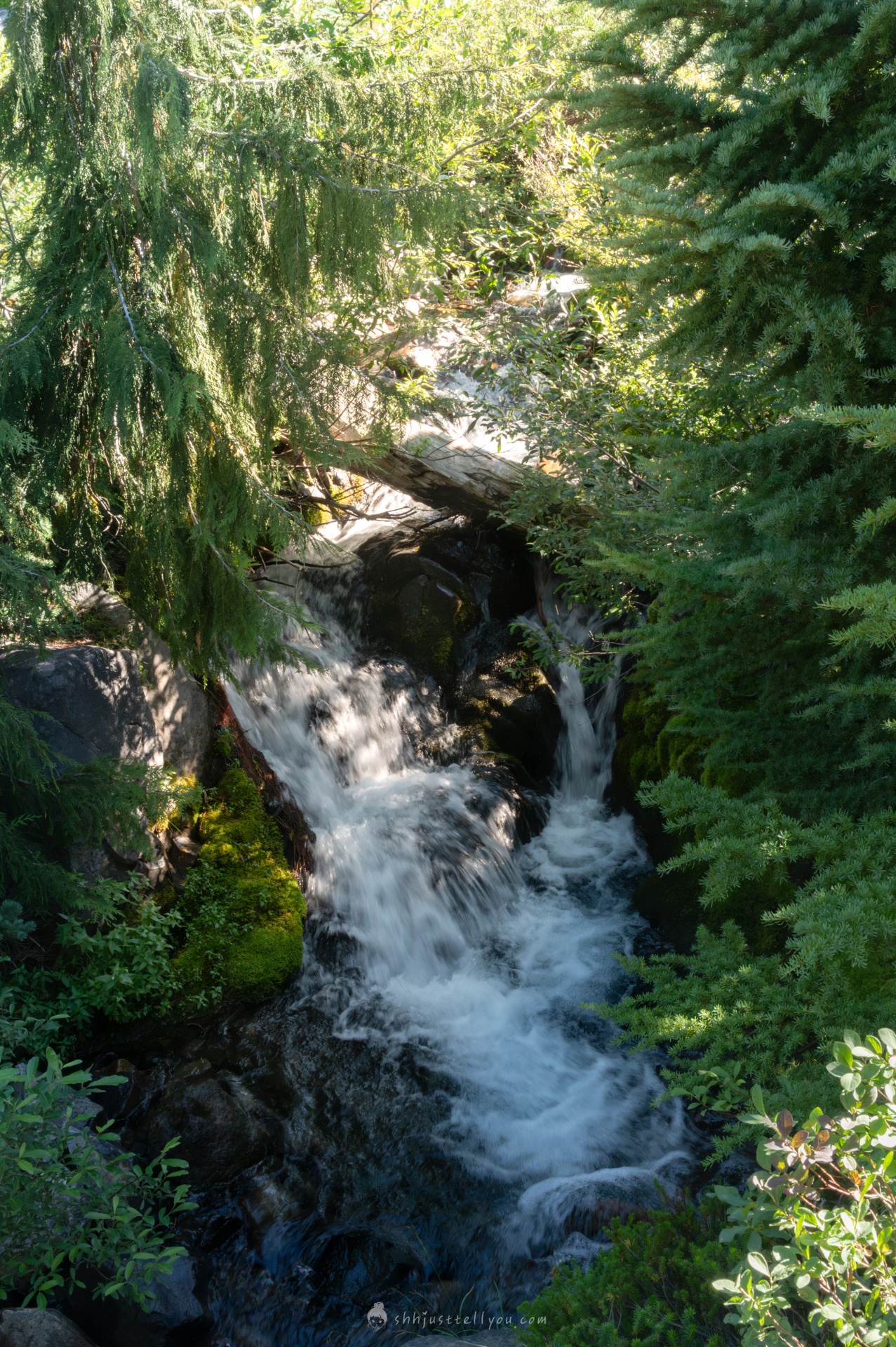
Paradise trails are a full spectrum, from a paved stroll you can push a stroller on with the glacier right in front of you, to the crown-jewel loop with over 1,700 feet (520 m) of climbing. Not everyone needs the full Skyline. Here they are in three tiers, so you can pick the right one for your energy level. Distances and gain are hiker GPS estimates and vary slightly by source, so check live trail conditions before you go.
🟢 Easy: senior- and kid-friendly, some stroller-friendly
| Trail | Round trip | Gain | Time | Easy or hard |
|---|---|---|---|---|
| Nisqually Vista Trail | 1.2 mi (1.9 km) | 200 ft (61 m) | ~45 min | Paved, almost no steep sections, stroller-friendly, faces Nisqually Glacier. Check the Paradise webcam first so fog does not hide the glacier |
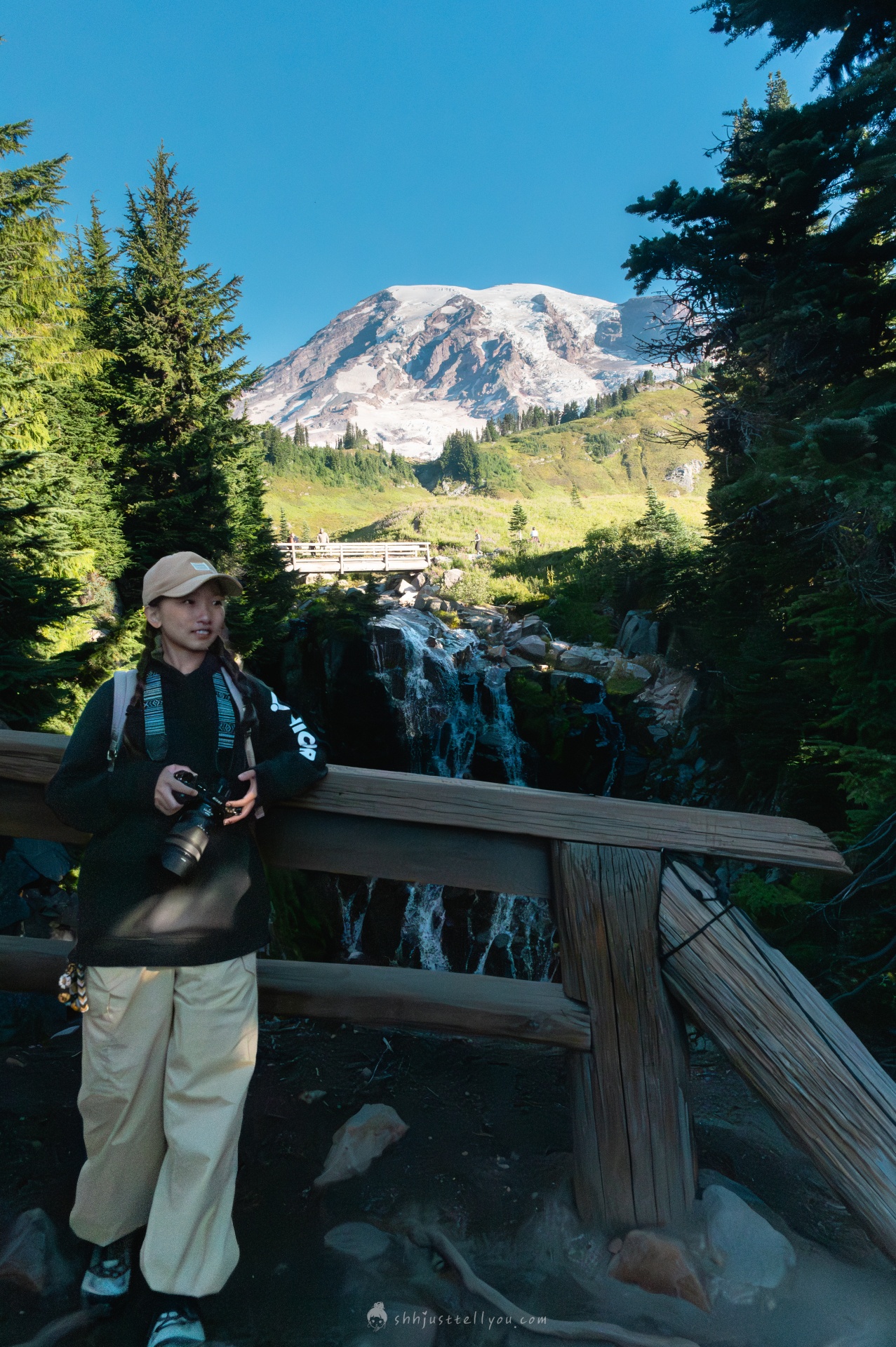
| Skyline to Myrtle Falls | 1.0 mi (1.6 km) | 100 ft (30 m) | ~35 min | Mostly flat and paved, stroller works with a little help. The waterfall with the peak behind it is the best easy photo |
🟠 Moderate: some climbing, fine if you exercise regularly
| Trail | Round trip | Gain | Time | Easy or hard |
|---|---|---|---|---|
| Dead Horse Creek + Moraine | 2.5 mi (4 km) | 400–660 ft (120–200 m) | 1.5–2 h | Even grade along a creek with wildflowers. The steady climb to the glacier viewpoint needs some legs, and it connects back to Skyline |
| Alta Vista (via Skyline) | 1.7 mi (2.8 km) | 600 ft (183 m) | ~1 h 15 | Short with a big, open view. A few pitches near an 18% grade make it puffy for its length |
🔴 Strenuous: more gain and altitude, hard on stamina not technique
| Trail | Round trip | Gain | Time | Easy or hard |
|---|---|---|---|---|
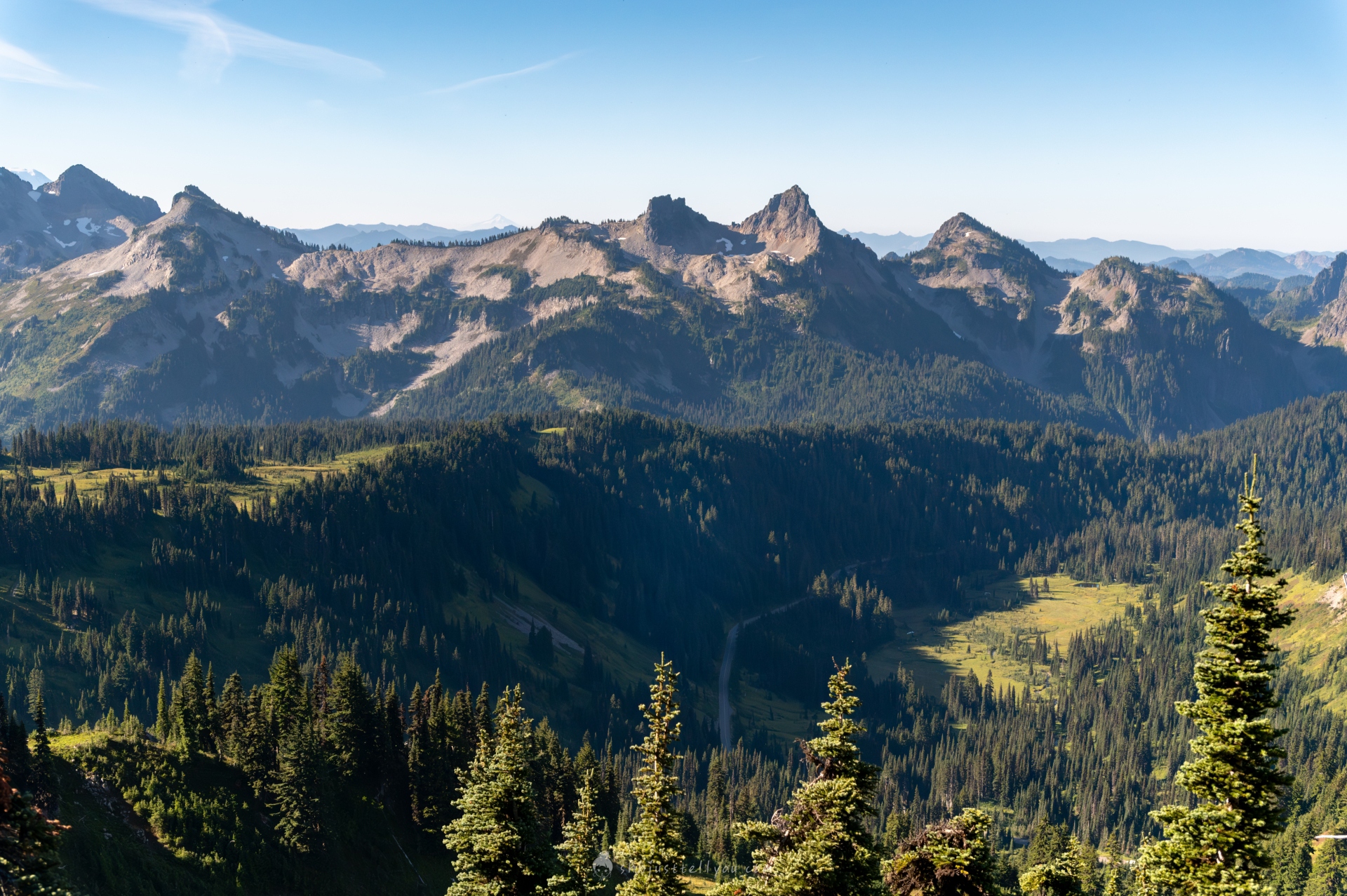
| Panorama Point (Skyline + Golden Gate) | 4.0 mi (6.4 km) | 1,700 ft (518 m) | ~3 h | Non-technical and well-marked. The top sees the Tatoosh Range, Adams, and St. Helens. Steep first mile, thin air, no shade, plus summer snow |
| Full Skyline Loop | 5.5 mi (8.8 km) | 1,700 ft (518 m) | ~4.5 h | All the highlights, no scrambling. The challenge is distance plus gain, altitude, sun, and lingering snow. I exercise 2 to 4 times a week and finished walking slowly; less-active hikers should bring trekking poles |
One-line picker: just want the glacier from the car, walk Nisqually Vista; want the waterfall and peak shot, do Myrtle Falls; exercise regularly and want more, try Dead Horse Creek or Alta Vista; fit and want all of Paradise, go up to Panorama Point or the full Skyline Loop.
Hiking the Skyline Trail Loop
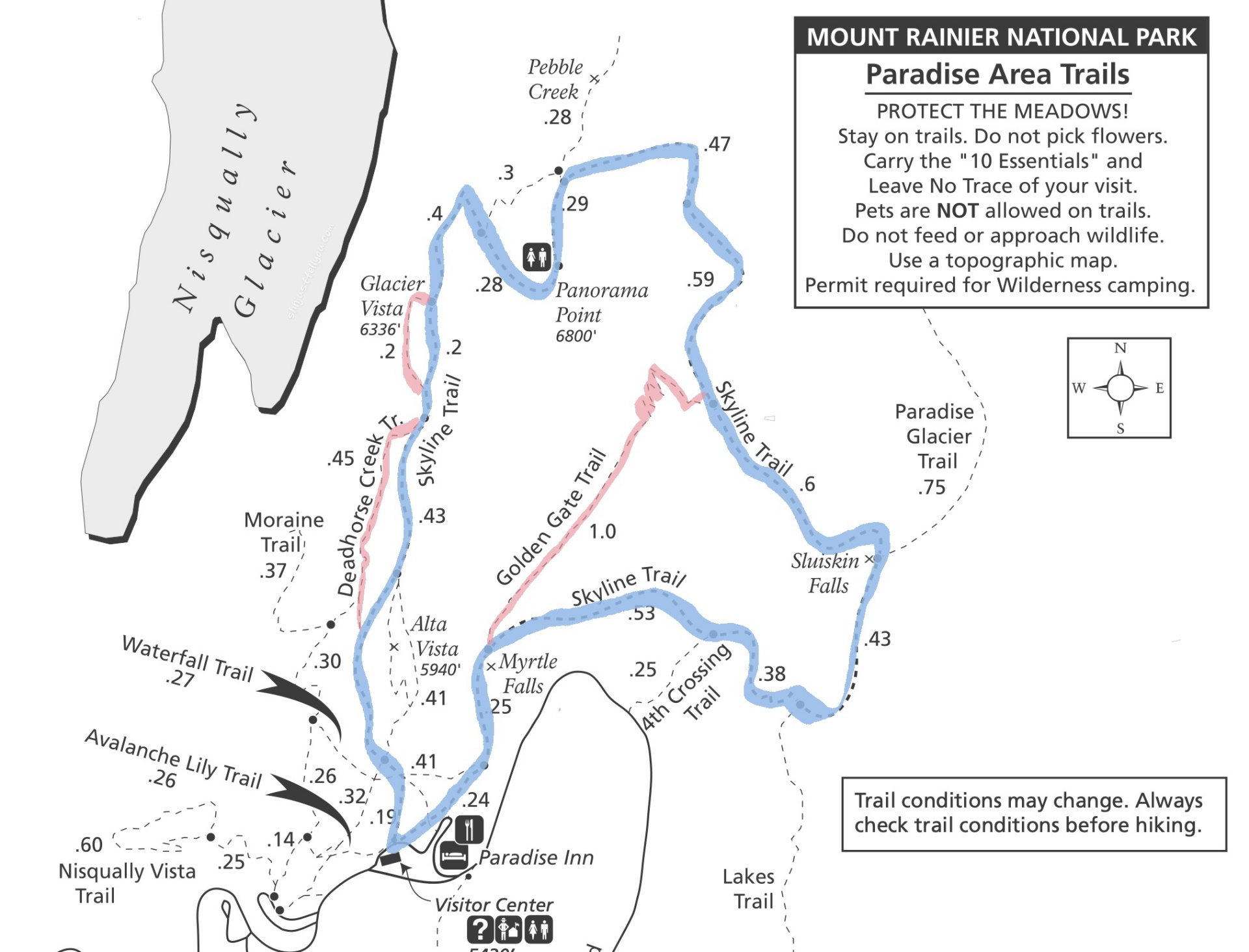
The soul of Paradise is the Skyline Trail Loop, about 5.5 miles (8.8 km) with roughly 1,700 feet (520 m) of gain, climbing to Panorama Point at 6,800 feet (2,073 m), where you stand face to face with the Nisqually Glacier. I prefer going clockwise, up the west side first. It is steeper but gains altitude quickly, keeps you facing the peak and the glacier the whole climb, and puts the Deadhorse Creek and Glacier Vista side trails right on your route. If you would rather start gentler and with fewer people, counterclockwise (up the flatter Myrtle Falls side) is the other camp.
One shortcut to flag: the Golden Gate Trail cuts from the ridge straight back to Myrtle Falls and trims the loop a lot, but it is steep, with tight switchbacks and stairs that can be slippery. If you are already tired or your shoes lack grip, staying on the longer main Skyline actually saves your legs. On difficulty, it is less brutal than it looks. I work out 2 to 4 times a week, and I got tired and slow but finished without trouble. If you rarely exercise, bring trekking poles.

Check the season too. Paradise snow is among the deepest in the country and often lingers on the upper loop into July, so bring microspikes if you go in early July, while August is the most stable and the peak of wildflower season. Check the official live trail conditions first. Two short side trails, Glacier Vista (about 0.2 mi / 0.3 km) and Deadhorse Creek (about 0.5 mi / 0.8 km), both rejoin Skyline and give you fresh glacier angles.
Wildlife and Wildflowers (An Honest Note)
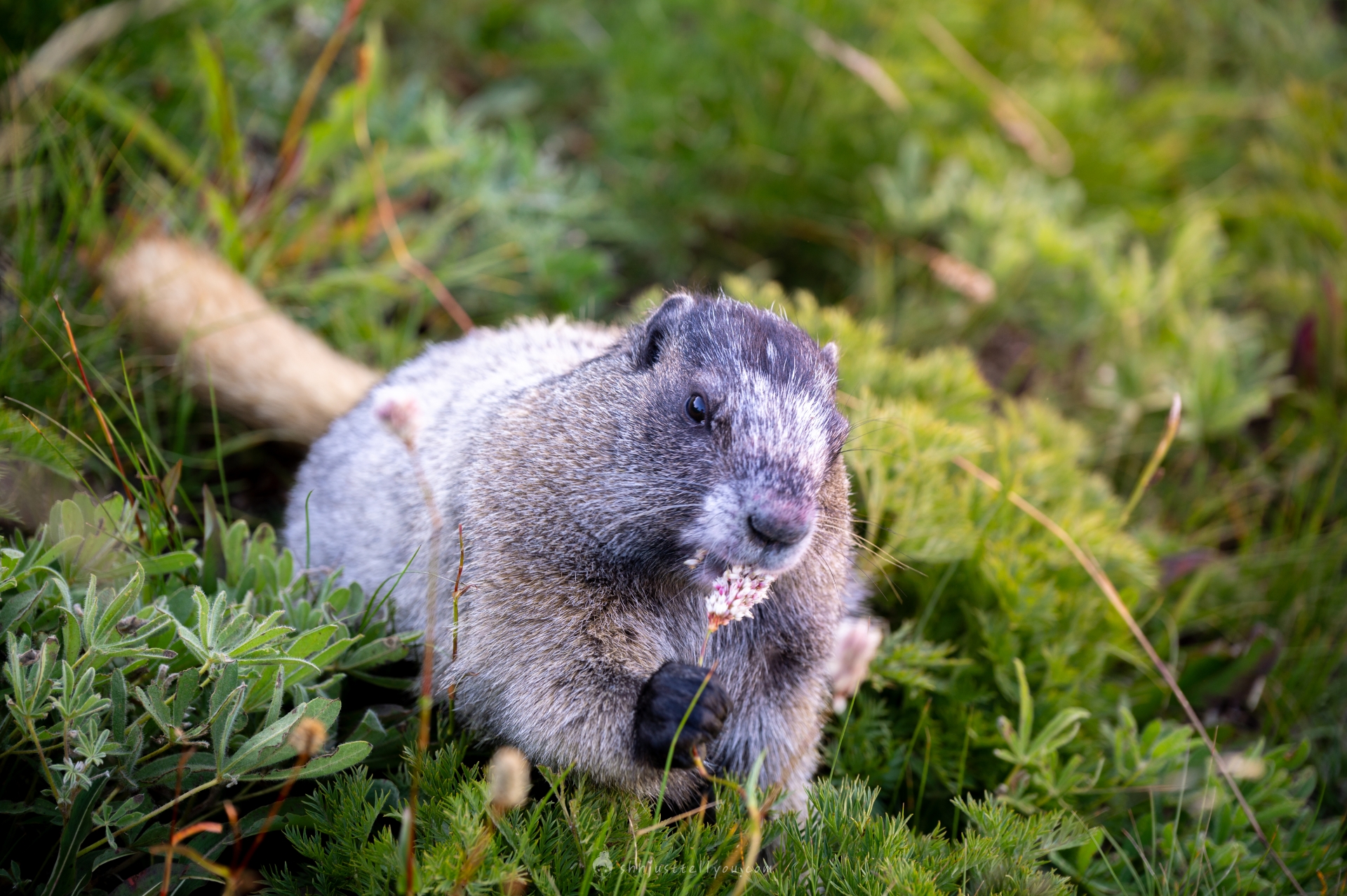
The wildlife along here is almost absurd, though which animals you see is luck. Marmots are a guarantee and everywhere, some diving into burrows at the sight of people, others munching grass right at your feet. You will also spot chipmunks, mountain goats, and deer. We even saw a bear once, but so far away you needed binoculars, so safety-wise there is little to worry about.
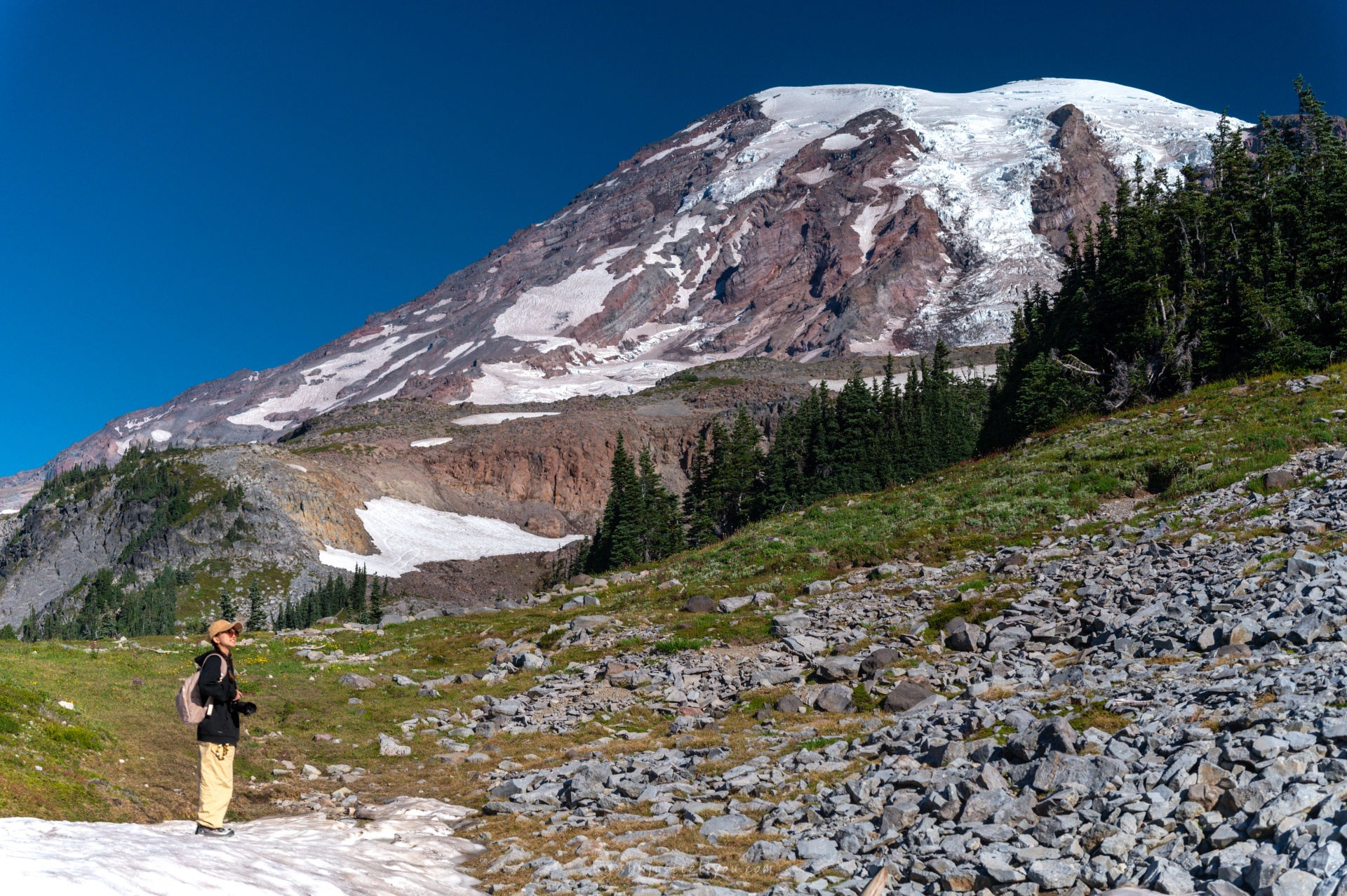
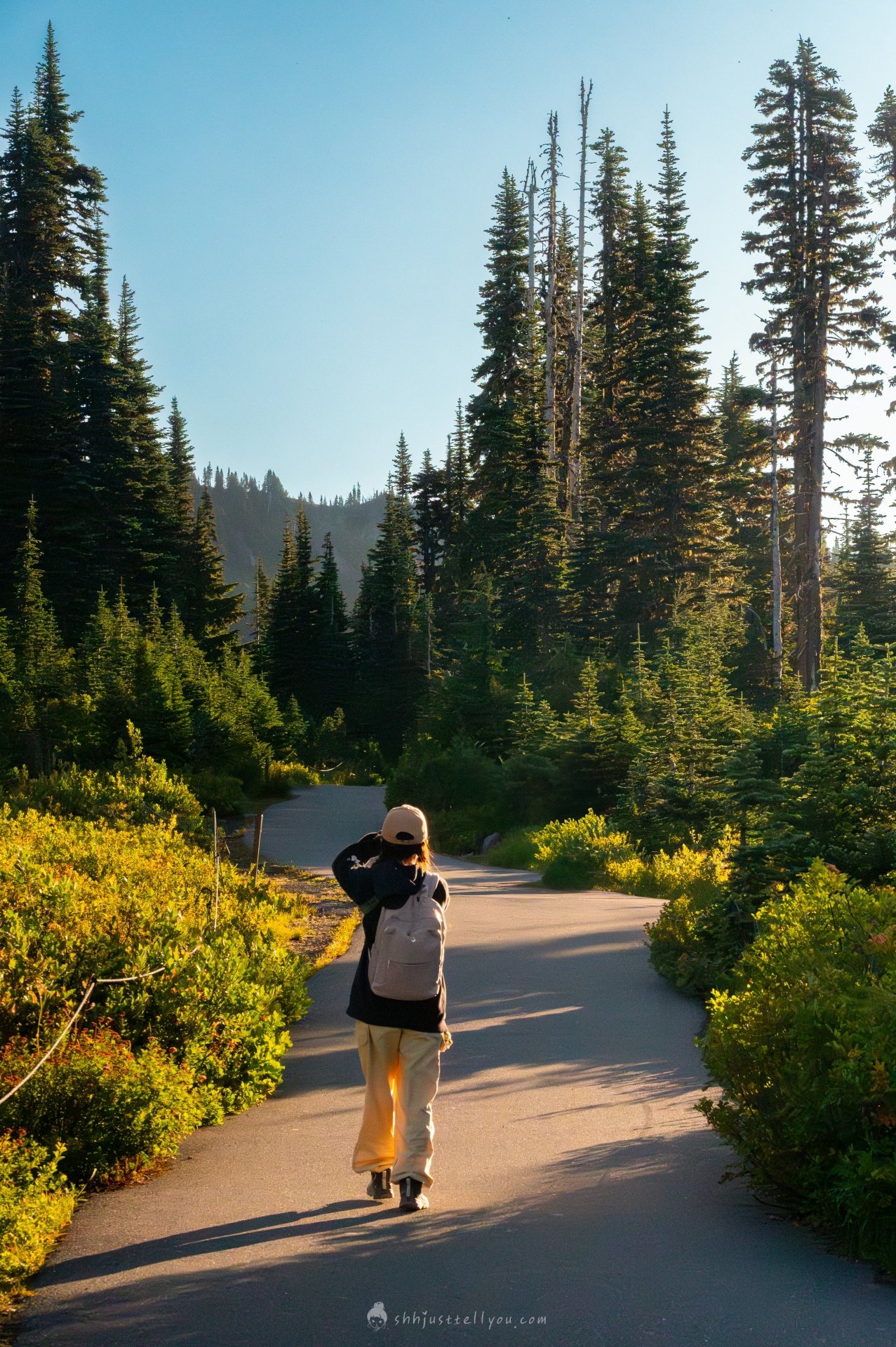
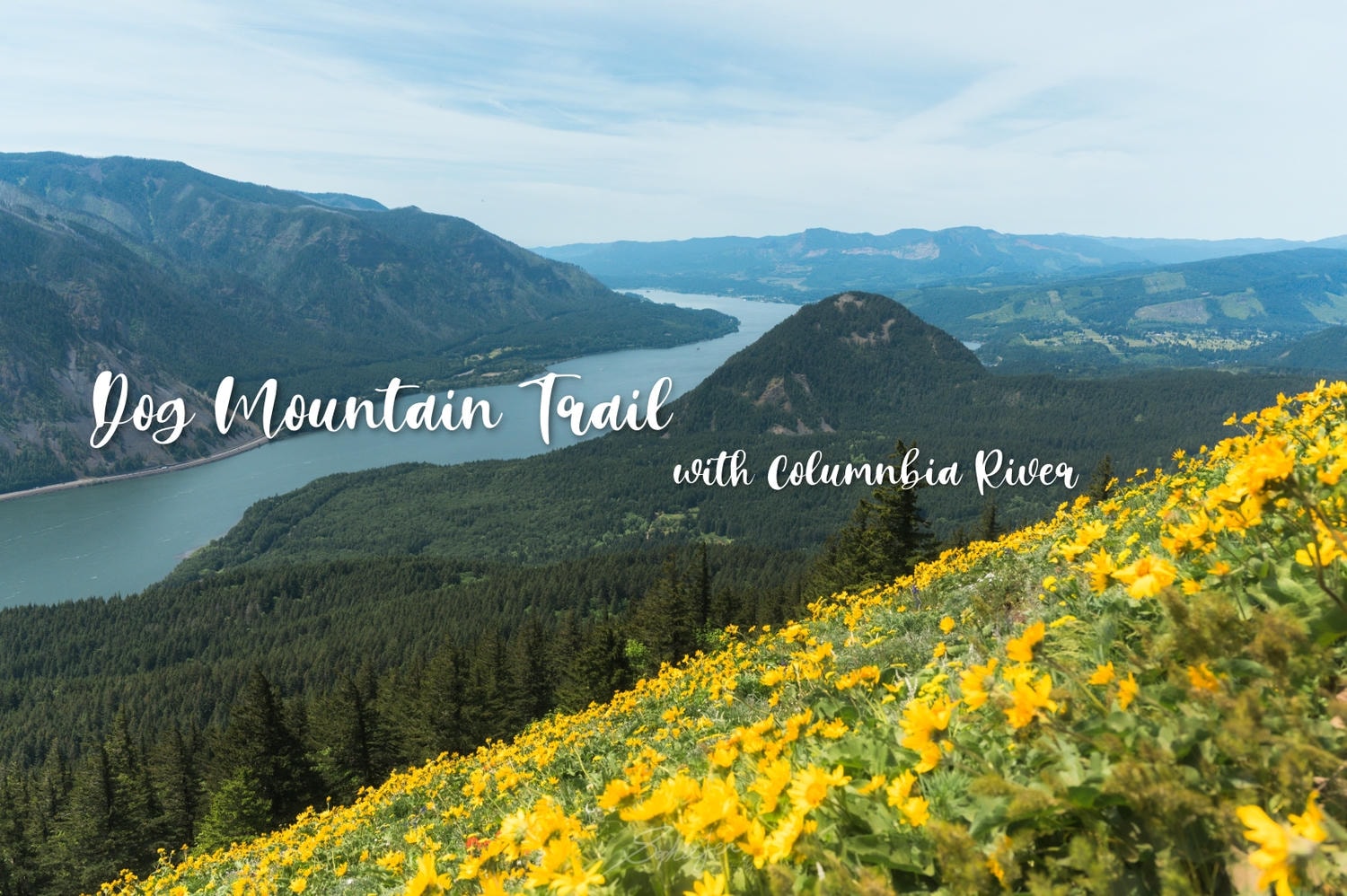
People often ask if Paradise wildflowers are always blooming. The main bloom is summer, July to August. I visited during flower season but seem to have caught the tail end each time, so I never hit a full bloom. Compared with the wall of color at Dog Mountain, I found Paradise a bit sparse, with the fuller meadows mostly on the back half near Myrtle Falls if you go clockwise. Even so, the ridgelines, sky, and glaciers kept me stopping constantly.
What to Pack for Paradise
In one line: always bring water, plus snacks, and do not skimp on warm layers, a rain jacket, and sun protection. Rainier has a big elevation range, so even in summer the top can be sunny and cold at once, which makes layering the safe bet. You burn through water fast at altitude, so bring more than you think, and pack sunscreen, a hat, and sunglasses since you are closer to the sun the higher you climb. Less-active hikers should add a trekking pole, and everyone wants grippy shoes for the scree. Signal is mostly fine with a few dead spots, but download an offline map before you go.
A One-Day Paradise Itinerary
- Leave your base pre-dawn (Seattle 2–2.5 h, Portland 2.5–3 h) and aim to park by 6:30 to 7 a.m.
- Hike the Skyline Loop clockwise while it is cool, with a detour to Glacier Vista or Deadhorse Creek
- Back at the visitor center by late morning to refuel and warm up
- On the drive out, add easy stops along the Nisqually-to-Stevens-Canyon road, like Myrtle Falls and Reflection Lakes
Who Is Paradise For?
If you want the most iconic and most accessible corner of Mount Rainier in a single day, Paradise is the pick. It has a trail menu for every level, so match the hike to your energy.
- You want the most iconic, most accessible part of Mount Rainier in one day
- You like a trail menu from paved-and-stroller-friendly to a big alpine loop
- You are happy to start early to trade crowds and heat for cool morning light
It may be less ideal if:
- You want deep solitude on a summer weekend, since Paradise is the busiest area
- You are set on guaranteed peak wildflowers, which is hit or miss
- You cannot start early and dislike circling for a parking spot
Rainier or Olympic for One Day? Plus More Near the Park
If you only have one day, I strongly recommend Rainier over Olympic National Park. Olympic is enormous, with coast, rainforest, and mountains in different directions, so one day means constant driving. Paradise, centered on Skyline plus a few nearby stops, fits a day comfortably. Basing in Seattle, you can pair this with the Dog Mountain wildflower hike in the Columbia River Gorge, the six Thomas Dambo forest trolls around the PNW, or an Oregon oddity like the last Blockbuster on Earth in Bend.
▸▸▸ If you are basing in the city before an early start: compare Seattle hotels on Booking.com
📍 Access: Nisqually Entrance to Paradise, Mount Rainier National Park, WA (Google Maps)
💰 Fee: $30 per vehicle / $15 per person, valid 7 days (no timed-entry reservation in 2026)
⏰ Best season: mid-July to mid-October, wildflowers mid-July to mid-August
🌎 Official site & trail map: NPS Mount Rainier

Sophie Yen
Taiwanese travel blogger based in the U.S. | Shh! Just Tell You
I work a 9-to-5 like most of us and write about travel after hours. Instead of racing through checklists, I prefer staying longer in one place. Everything on this blog comes from hotels I have actually stayed at, streets I have walked, and the honest research I do before every trip.
For those who like to slow down.
A little travel, a little life, a little warmth — in every letter.

Hi BFFs!
The article may contain affiliate links, and we welcome you to book accommodations or purchase tickets through the links in the article or below. Rest assured, it won’t affect the price for you, but it would give us a small commission to support us in creating more great content. Thank you so much for your support!
✒︎ Flights: Skyscanner
✒︎ Accommodations: Booking.com, Agoda
✒︎ Tickets: Klook, KKday, Get Your Guide
✒︎ Car Rentals: Rental Car
✔︎ Shh! Just Tell You exclusive travel discount code.
All opinions on this website are 100% personal and I only recommend products or itineraries that I trust. Please refer to the “Disclosure and Public Welfare Program” section for more details. If you have any questions, please click on the social media icons below to contact me, or email 📧 to [email protected].
All copyrights of the blog’s texts and images are reserved. Link sharing is welcome. © 2018-2026 Shh! Just Tell You.
你問我答:常見問題
Do you need a reservation for Mount Rainier in 2026?
No. Timed-entry reservations are not required anywhere in the park in 2026, and parking is first-come. You still pay the entrance fee, and it helps to arrive early since lots fill and close when full.
How much is the Mount Rainier entrance fee?
It is $30 per vehicle, $25 per motorcycle, or $15 per person on foot or bike, valid for 7 days. The $100 non-resident surcharge does not apply to Mount Rainier.
How long is the Skyline Trail at Paradise?
The full Skyline Loop is about 5.5 miles (8.8 km) with roughly 1,700 feet (520 m) of gain, reaching Panorama Point at 6,800 feet (2,073 m). Allow around 4.5 hours at a relaxed pace.
When is the best time to visit Paradise?
Roughly mid-July to mid-October when the trails are snow-free, with wildflowers peaking mid-July to mid-August. Start early to beat both the crowds and the midday heat.
Rainier or Olympic for one day?
Rainier. Olympic National Park is too spread out for a single day, while Paradise, centered on the Skyline Trail plus a few nearby stops, fits a day comfortably.