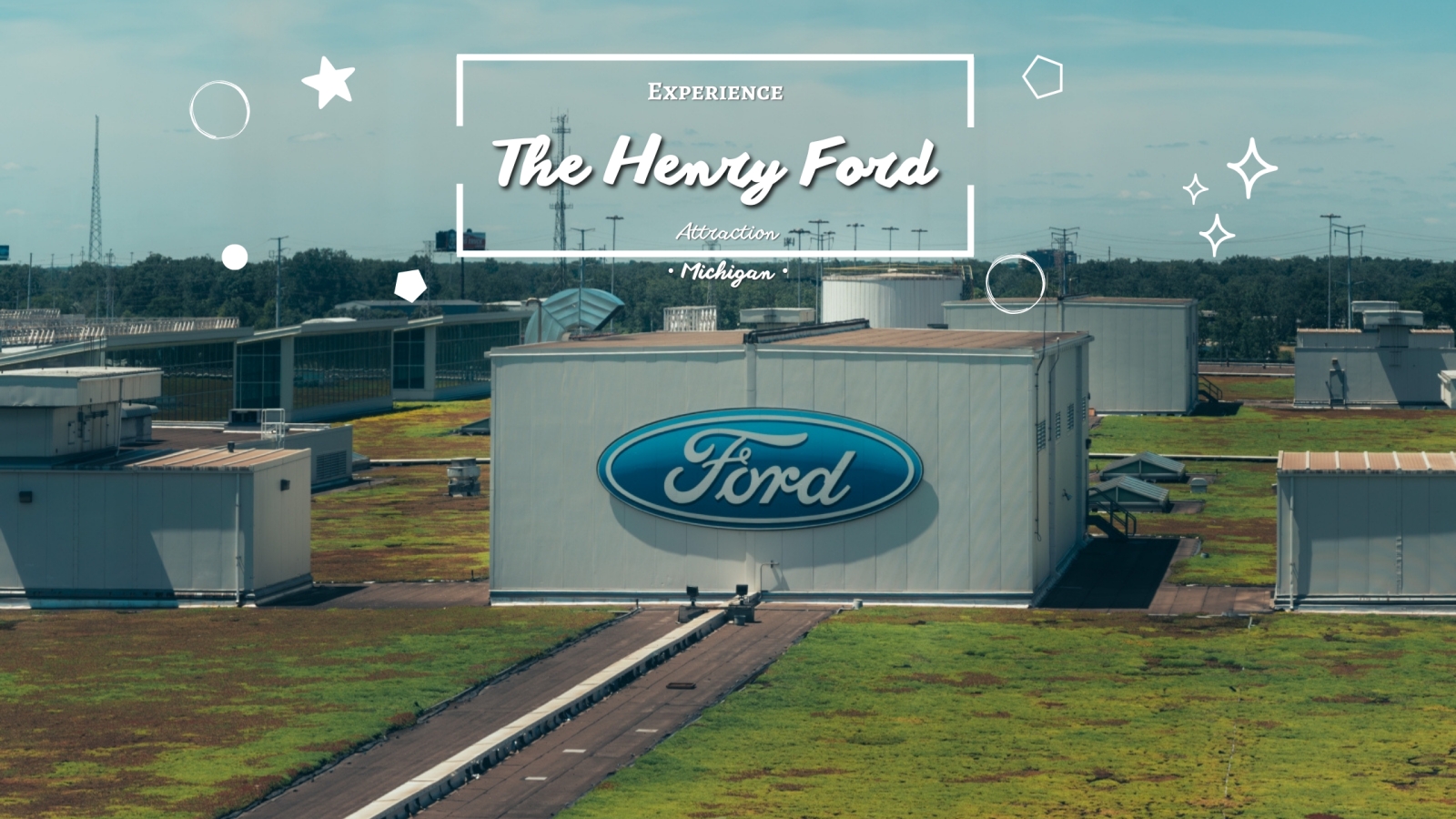

- What is The Henry Ford? Sort out the 3 venues first
- Tickets and hours: how to pay the least
- Getting there and parking: do you need a car?
- Can you really do all three in one day?
- Ford Rouge Factory Tour: watching real trucks roll off the line
- Henry Ford Museum: from a Model T to the exhibits worth your time
- Greenfield Village: a “rebuilt” historic town
- Who should visit The Henry Ford (and who shouldn’t)
- Nearby Ford stops and where to stay
- 你問我答:常見問題
The Henry Ford in Dearborn, just west of Detroit, isn’t one building. It’s a campus of three separately ticketed attractions: the Henry Ford Museum of American Innovation (indoor), Greenfield Village (a huge outdoor history town, seasonal), and the Ford Rouge Factory Tour (a working truck plant). I did all three in a single day, and honestly it was a sprint. I only finished because Greenfield Village happened to stay open until 9 p.m. that night. This guide covers what trips up most first-timers: how long each venue takes, whether one day is enough, the cheapest way to buy tickets, parking, and what’s actually worth your time inside each one.
If you’re flying in, line up a rental car before you land. Public transit out here is painful, and you’ll see why below.
What is The Henry Ford? Sort out the 3 venues first
“So is The Henry Ford one building or several?” That’s the thing most people get wrong. It’s several. What everyone calls the Henry Ford Museum is really a large campus about 14 miles west of downtown Detroit, in Dearborn, made up of three independent, separately ticketed parts:
- Henry Ford Museum of American Innovation: indoor, open year-round.
- Greenfield Village: a huge outdoor living-history park, open seasonally.
- Ford Rouge Factory Tour: a tour of a real, working Ford truck plant.
There’s also an IMAX theater and a research center, but most visitors come for those three. Don’t confuse this with the Ford Piquette Avenue Plant back in the city. That’s a totally different place with different tickets. Everything here is about the Dearborn campus.
Here’s the quick comparison before you decide how to split your time:
| Venue | Indoor / Outdoor | Season | Suggested time | Adult ticket (approx.) |
|---|---|---|---|---|
| Henry Ford Museum | Indoor | Year-round | 2 to 2.5 hrs | ~$34 |
| Greenfield Village | Outdoor | mid-April to late fall (closed winter) | Half day or more | ~$37 |
| Ford Rouge Factory Tour | Indoor + shuttle | Year-round (live production not guaranteed) | 2 to 3 hrs | ~$24 to 26 |
Tickets and hours: how to pay the least
The cheapest way depends on how many venues you want. Doing all three? Buy the Main Attractions combo, which beats three separate tickets. Only two? Use the buy-one-get-one-half-off (BOGO) and mix and match. Prices float with the season, so treat these online-prepurchase figures as a reference and confirm on the official site before you go.
| Ticket | Adult (12 to 61) | Senior (62+) | Child (5 to 11) | Under 4 |
|---|---|---|---|---|
| Main Attractions combo (3 venues) | ~$73.5 to 76.5 | — | 25% off | Free |
| Henry Ford Museum | ~$34 | ~$30.5 | ~$25.5 | Free |
| Greenfield Village | ~$37 | ~$33.25 | ~$27.75 | Free |
| Ford Rouge Factory Tour | ~$24 to 26 | — | 25% off | Free |
Money-saving notes:
- All three: the Main Attractions combo (about $73.5 to 76.5) is cheaper than buying separately.
- Two venues: BOGO, with the second venue half price, and you can mix and match.
- Buy online to skip the gate surcharge. Just know it forces a $9 parking fee into the order, plus about $3 service fee per order.
- AAA members get 10% off, active military are free, and SNAP/EBT gets the Museums for All $3 rate.
- Budget extra for Greenfield Village’s rides (Model T, steam train, carousel, horse-drawn bus). They are not included in admission and are usually paid on-site.
People always ask me whether it’s cheaper to pay at the gate. It isn’t. The gate is usually pricier, and online prepurchase is what saves the fees. Just remember online quietly bundles in the $9 parking, so you’re not actually being overcharged.
Hours to plan around:
- Museum: roughly 9:30 a.m. to 5:00 p.m. daily, year-round (closed major holidays).
- Greenfield Village: seasonal, about mid-April to late fall, closed in winter. Some summer Fridays and Saturdays run until 9 p.m.
- Rouge Factory Tour: the shuttle departs from the museum, and seeing the live assembly line isn’t guaranteed. Staff tell you upfront. Weekdays have better odds, but I caught it running on a weekend.
One thing to plan for: the museum building closes at 5 p.m. even when Greenfield Village runs late, so the two don’t stay open together.
Getting there and parking: do you need a car?
I’d strongly recommend driving. You can take a SMART bus from the city, but the stop is a long walk from the entrance and service is sparse, so most people drive or rideshare (about $25 each way from downtown). Parking is right next to the campus with plenty of spots, and the $9 parking fee is bundled into online tickets. There’s no obvious signage on-site, so don’t assume it’s free.
No car? Sort out the rental and insurance before you land. It saves a lot of hassle.
Can you really do all three in one day?
Honestly, it’s tight, and your feet will know it. Here’s my actual pace that day, for reference:
- About 10:20: flight lands at Detroit airport.
- About 11:00: freshen up, rideshare to the campus, buy tickets.
- About 11:40: shuttle to the Rouge plant (around 20 minutes, farther than you’d think).
- About 12:00 to 14:00: factory tour (around 30 minutes of films, the rest self-paced; budget 2 to 3 hours to be safe).
- About 14:00 to 17:00: back to the museum, around 2 to 2.5 hours (I had to speed through a whole wing before closing).
- After 17:00: Greenfield Village. I got lucky, because it stayed open until 9 p.m. that night (normally 5:30), or I’d never have fit it in.
So if you actually want to enjoy it, plan two days, or buy a membership and split it: Greenfield Village one day, Museum plus Rouge another. One day means dropping a venue or speed-walking a lot. Both the museum and the village have bag check, which is handy if you come straight from the airport. They won’t move your bags between venues, though, so grab them yourself when you switch.
Which ticket should you buy?
🧭 Which ticket should you buy? Start here: how much time do you have?
Pick just ONE venue, don't cram:
- Love cars & design history → the Museum (indoor, year-round, most to see)
- Want a working factory → the Rouge (live assembly line not guaranteed)
- Kids & the outdoors → Greenfield Village (open in season only)
How many venues?
- All three → buy the Main Attractions combo (about $73.5+); arrive early, leave shuttle buffer, accept a quick pass on some areas.
- Just two → use BOGO (buy one, second half price) and pick your two favorites.
Most relaxed: get a membership or split it across two visits — Greenfield Village one day, Museum + Rouge another.
Prefer a list? Here’s the same guide based on how much time you have:
- Half a day or in a hurry: pick ONE venue. Love cars and design? The Museum. Want a real factory? The Rouge (live line not guaranteed). Kids and the outdoors? Greenfield Village (in season).
- A full day: do all three with the Main Attractions combo. Arrive early, leave shuttle buffer, and accept that a few areas get a quick pass.
- Two or more days: get a membership or split it over two visits. Easiest on your feet.
Museum routing tip: if you love cars, head straight to Driving America and Driven to Win, with Railroads nearby. That’s about half the building. The central hall is mostly aircraft, and the left side runs era-by-era exhibits like engines, kitchens, and furniture.
Ford Rouge Factory Tour: watching real trucks roll off the line
Of the three venues, this was my favorite, because it’s a genuine working plant.
A question I get a lot: can you see the line running on weekends? It isn’t guaranteed. Staff warn you when you buy, and it depends on whether they’re producing that day. Weekdays are the safer bet, but I hit it on a weekend, so don’t write weekends off. The tour walks five areas in order, and knowing them ahead of time means you won’t feel lost:
- Legacy Theatre: a film on Ford’s history for context.
- Manufacturing Innovation Theatre: a film on the production process.
- Observation Deck: an 80-ft platform over the famous living roof.
- Factory: the actual moving assembly line, where no electronics are allowed.
- Legacy Gallery and Store: classic Fords by era, plus the gift shop.
The world’s largest living roof
The factory roof is a living garden of 10.4 acres (about three basketball courts), planted with hardy sedum. It isn’t just pretty. It cools the interior by around 10 degrees in summer, absorbs up to 4 million gallons of rainwater, turns CO2 into oxygen, and doubles the roof’s lifespan. Looking out over all that green is the opposite of what the word factory makes you picture.
The assembly line
This stuck with me most. The line is split into many stations, each doing one small job like headlights or a windshield, and a truck gets built piece by piece. I especially remember a robot that installs windshields and a skillet conveyor that auto-adjusts height to the ideal working position. It runs roughly First Section (building the body) and then Final Assembly (fuel, engine, doors, tires), with final checks on doors and lights. The Rouge currently builds the Ford F-150, so what you’ll see coming together is a truck.
Rules you have to know
- No electronics in three areas: both theaters and the factory floor. Phones and cameras go in your pocket, and security is strict.
- Photos are fine at the observation deck, the legacy gallery, and outdoors.
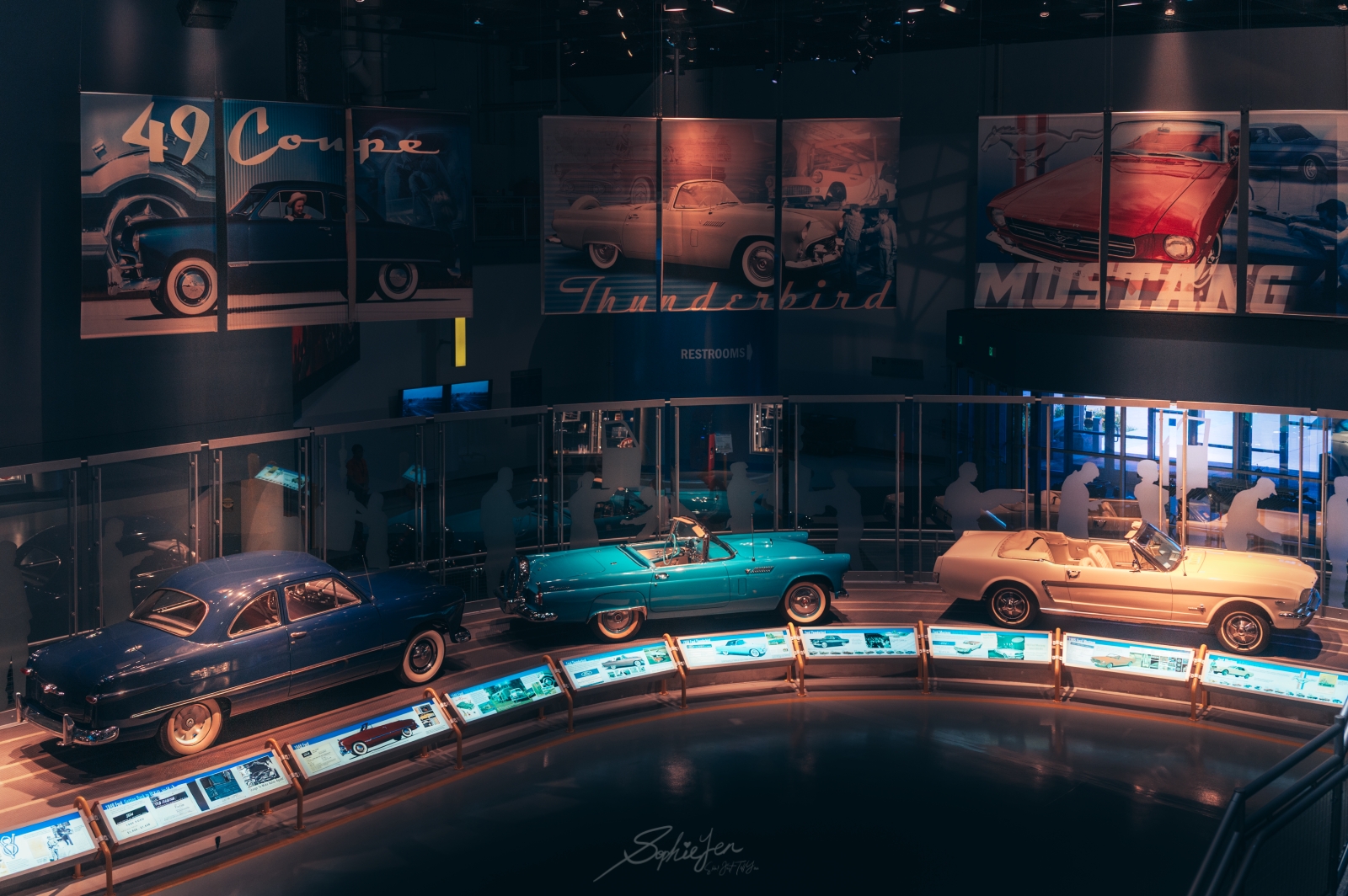
- The legacy gallery lines up classic Fords by year (1932 V8 Victoria, 1929 Model A, 1949 Ford, 1965 Mustang, 2001 Thunderbird). Ford’s early icon was the 1908 Model T, and the company was founded in 1903.
Henry Ford Museum: from a Model T to the exhibits worth your time
If the factory is “now,” this indoor museum is “how America got here over three centuries.” It’s enormous, covering transportation, design, industry, and social history, and you can lose hours easily.
It starts with a Model T
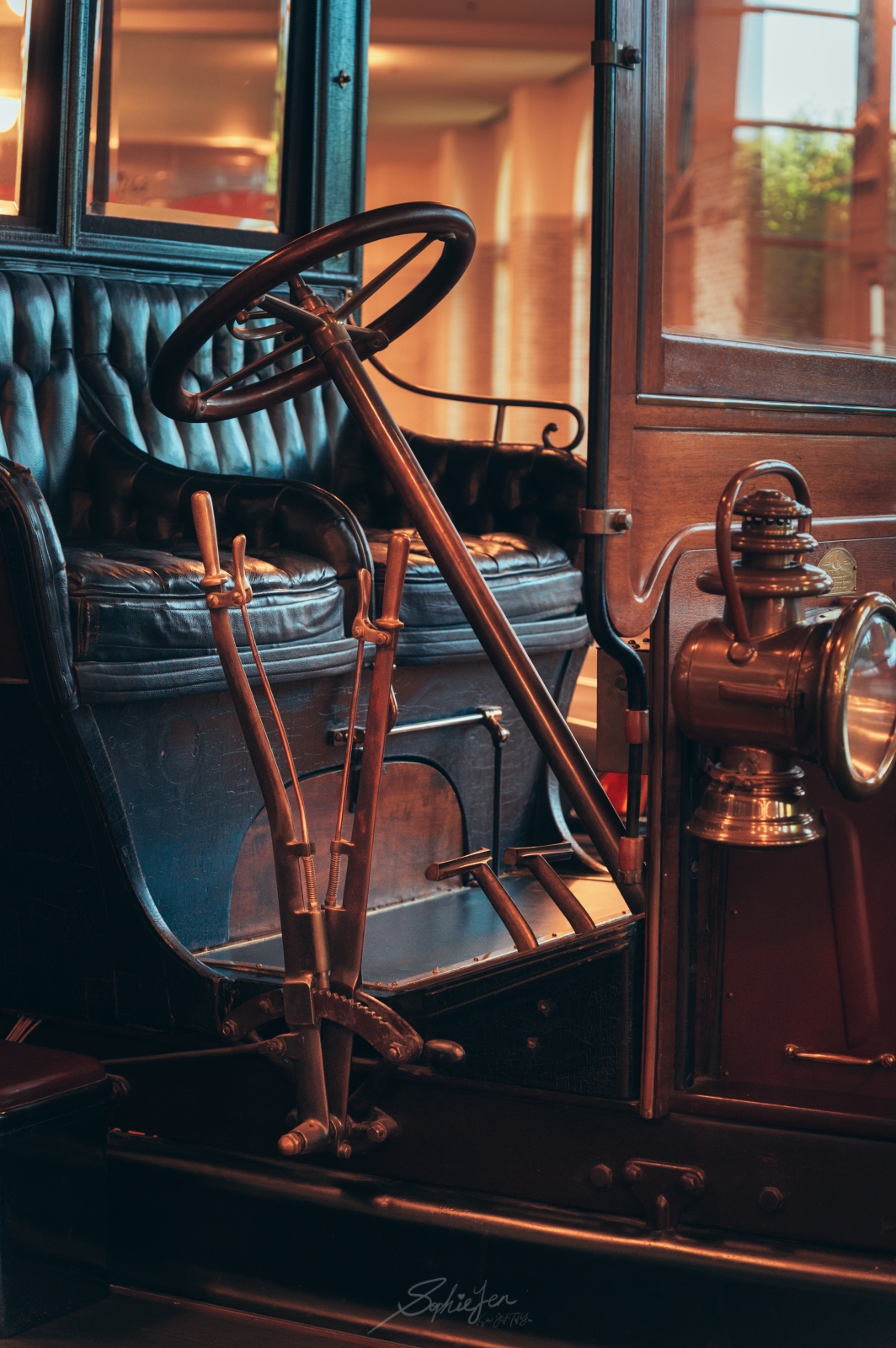
The first car you see is a 1923 Model T. A panel notes it took 7,882 operations to assemble one, and 15 million were built, thanks to that moving line at the Highland Park plant. A fun detail: before the car, the most complex thing humans mass-made was the clock, and it was clockmaking’s idea of interchangeable parts that set up the whole age of mass production.
My top three exhibits: Driving America, Driven to Win, Railroads
If time is short, these are my priorities:
- Driving America: billed as one of the world’s great automotive exhibits. It isn’t just rows of cars. It uses iconic American vehicles to tell the story of how the country got moving, from commuting and highways to gas-station culture and a whole way of life. As someone who knew nothing about cars, I finally got them through this lens.
- Driven to Win: Racing in America: American racing history, with completely different energy. Speed, engineering, and the people behind it. Gearheads will linger.
- Railroads: how the railway pushed America west and reshaped where people lived and worked. There’s a giant steam locomotive you can stand beside, and it’s genuinely awe-inducing.
Other exhibits I quietly loved
Beyond those, the standing exhibits worth a look if you have time: Heroes of the Sky (early aviation, Wright-era planes), With Liberty and Justice for All (civil-rights history, where the Rosa Parks bus and Lincoln’s assassination chair sit), Presidential Vehicles (including Kennedy-era limousines), Made in America, and Agriculture and the Environment. Smaller things that charmed me: a Hannah Barnard painted court cupboard, an ancient TV that looks half furniture and half gramophone, a math gallery called “a world of numbers and beyond,” kitchens from the 1700s to the 1930s lined up around one corner, a 1952 Wienermobile, the Your Place in Time 20th-century rooms (a 1957 duck-and-cover drill, a 1987 teen bedroom with early video games), and an early electric-car display whose charger looks almost identical to today’s.
Greenfield Village: a “rebuilt” historic town
Greenfield Village is Henry Ford’s outdoor living-history museum. It broke ground in 1929 and opened in 1933, the first of its kind in the U.S. and a model for many that followed. It spans about 80 acres and nearly 100 historic buildings, and walking in feels like stepping into a working small town: costumed staff doing period work, horse-drawn carriages and old Fords passing by, and the smell of coal smoke and fresh bread.
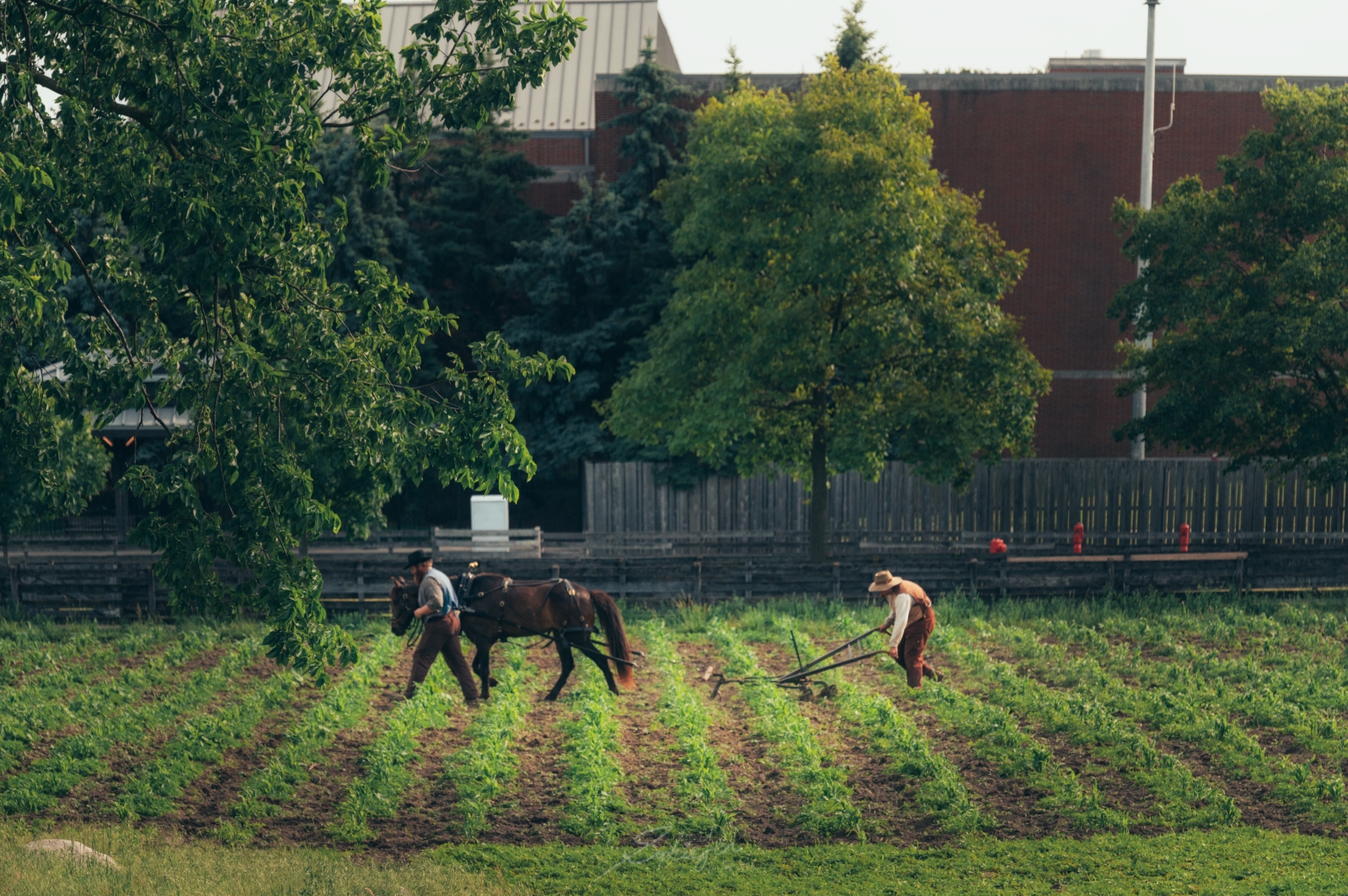
I’ll admit I misunderstood it at first. I thought it was a real village where these famous people had once been neighbors. It isn’t. Worried that fast progress would erase America’s heritage, Ford bought real historic buildings from across the country, numbered and dismantled them, and rebuilt them here around a village green: a “town” with a courthouse, church, shops, and school. So the houses never belonged together, but most are the genuine article. Ford’s birthplace, Edison’s Menlo Park lab, the Wright brothers’ home, Noah Webster’s house, and a courthouse where Lincoln once practiced law are all here.
The 7 districts: get your bearings first
| District | Theme and highlights |
|---|---|
| Main Street | The hub: old Fords, carriages, events, performances |
| Working Farms | Live farms with period agriculture and food prep |
| Liberty Craftworks | Artisan workshops: glass, textiles, pottery demos |
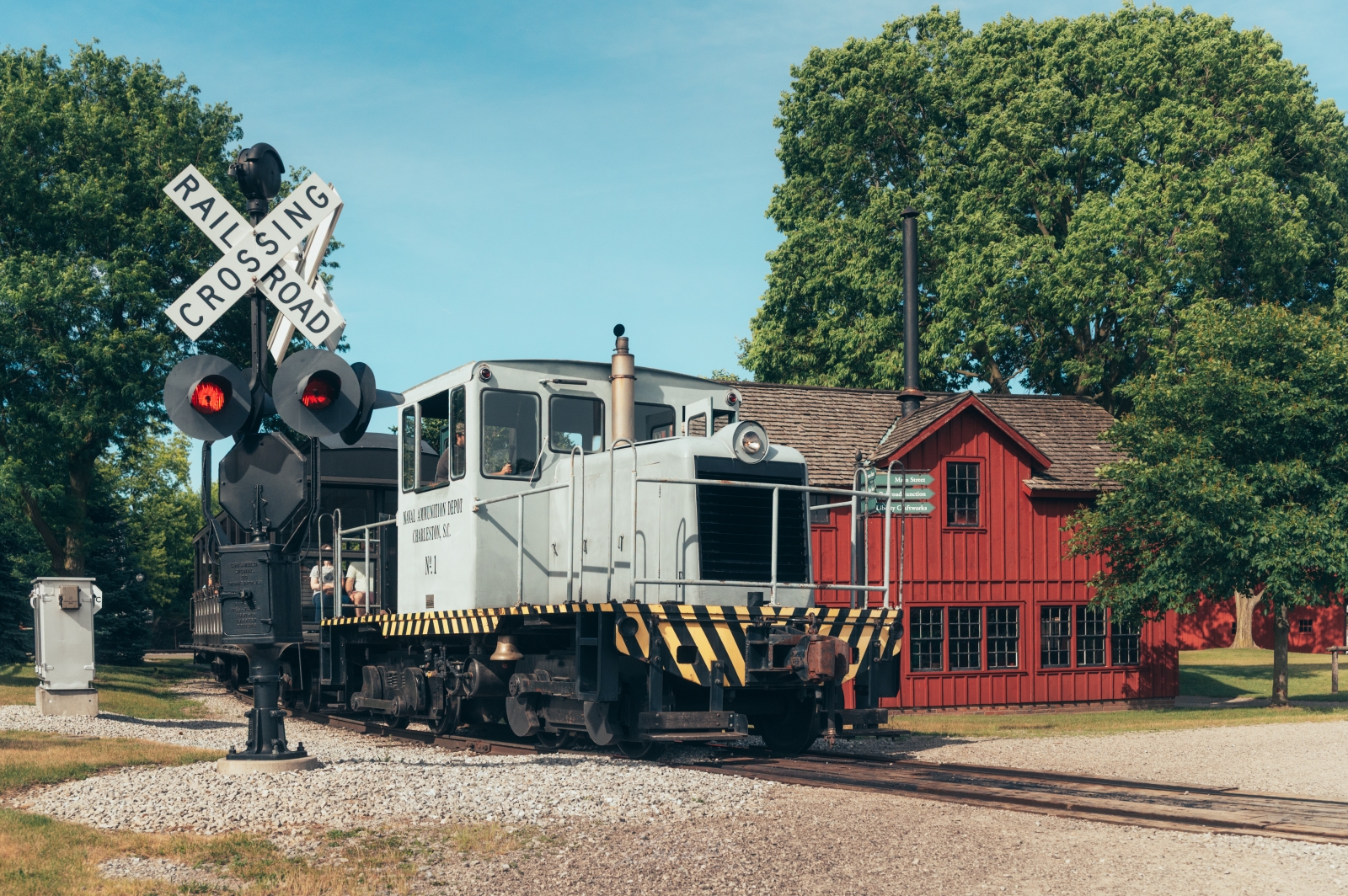
| Railroad Junction | Board a steam locomotive; the Midwest’s only working 19th-c. roundhouse |
| Henry Ford’s Model T | Ford’s life and the auto revolution |
| Edison at Work | Early R&D labs; Edison’s Menlo Park |
| Porches and Parlors | “Ordinary people who changed America” (the Mattox home is here) |
Four rides not to miss
Four rideable vehicles, not included in admission (pay on-site or add a Ride Pass): a real Model T, the Weiser Railroad steam train (a loop around the village), a hand-carved 1913 carousel, and a horse-drawn omnibus, which was an early form of city transit.
Three workshops: watch the craft up close
- Printing Office: it turns out old letterpress printing works like rubber stamps. Every letter is its own little pre-carved block, one letter per piece, and they’re sorted by typeface; if you want a picture, that gets carved as a separate block too. When you make a flyer, you arrange all those letter blocks and images together into a layout, ink it, and press out a sheet. Watching a single page come off the press really takes you back to when information was a slow, precious thing.
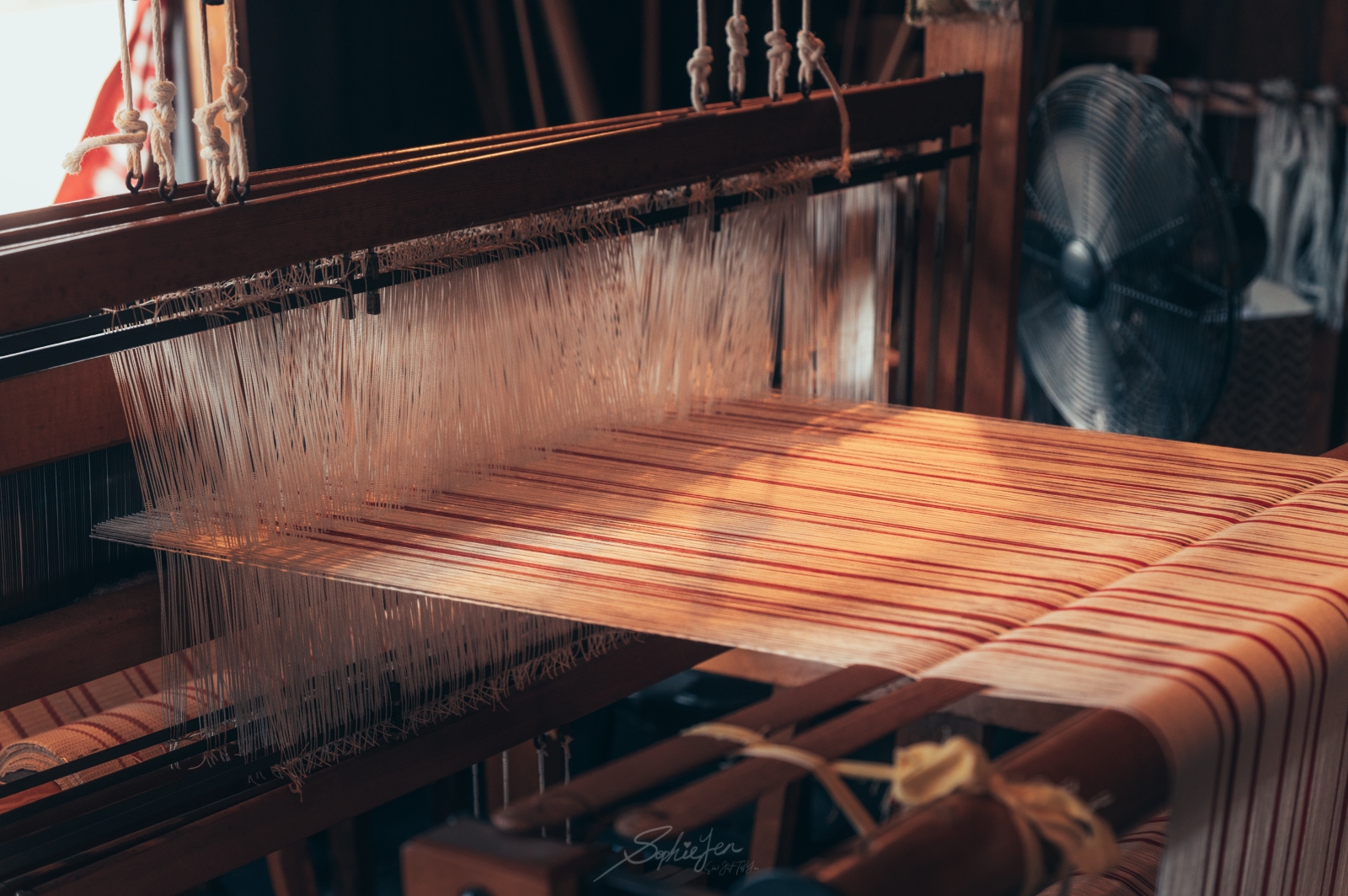
- Textile shop: they were weaving the tricky Log Cabin pattern. It looks 3-D, but I touched it and it’s totally flat. One loom’s warp ran 21 yards with 500 threads across, each one threaded by hand. I told the weaver their hands were unbelievably steady.
- Pottery shop: all hand-decorated. One piece takes about 30 days, two firings of three days each, with glaze (basically liquid glass) in between. In June they were already making Halloween stock.
Those are the three I caught live. All the workshops cluster in Liberty Craftworks, and there are eight in total, also including the Glass Shop, Tin Shop, Armington & Sims machine shop, Carding Mill, and Gristmill.
The story that made me stop: the Mattox family
There’s a 1927 home from Georgia, the Mattox family house. Almaz Mattox and his wife Grace raised two kids here as self-sufficient farmers who owned nearly 100 acres, which was extraordinary in an era when most Black families were trapped in sharecropping and owed their harvest to landlords. In the segregated South they made do with whatever they had on hand, even cardboard for insulation, and were barred from many facilities white families used. A timely note: when I visited, the Village was celebrating the newly relocated Jackson Home, its first new building in over 40 years, which also tells a Southern civil-rights story.
Who should visit The Henry Ford (and who shouldn’t)
- Car, industrial-design, or history lovers: go without hesitation. All three will keep you longer than you expect.
- Families with kids: Greenfield Village is very hands-on, with a steam train, Model T rides, and live craft demos, so kids won’t be bored.
- First-timers unsure if it’s worth it: don’t worry about not knowing the history. Its whole magic is turning abstract history into places you can walk into, so zero background is needed.
Who it’s not for: anyone short on time who’s indifferent to both cars and history. All three venues are a real physical effort, and cramming them into half a day is miserable. The one rule is to give it enough time and wear comfortable shoes.
Nearby Ford stops and where to stay
A few Ford-themed add-ons if you want to extend (I haven’t done all of these yet):
- Fair Lane, Henry Ford’s estate (Dearborn, very close): the main house is under renovation and reopening around 2027, but the gardens are free and open now.
- Edsel and Eleanor Ford House (Grosse Pointe Shores, about 40 minutes, the opposite direction): year-round, with house tours, a good standalone half-day.
- Ford’s Garage: a 1920s gas-station-themed restaurant with vintage Fords, and the Dearborn location is under 10 minutes from the campus.
If you’d rather split the campus over two days, staying nearby is the comfortable move. There are plenty of options around Dearborn and the airport.
📍 20900 Oakwood Blvd, Dearborn, MI 48124 (Google Map)
⏰ 9:30 a.m. to 5:00 p.m.
🌎 The Henry Ford official site

Hi BFFs!
The article may contain affiliate links, and we welcome you to book accommodations or purchase tickets through the links in the article or below. Rest assured, it won’t affect the price for you, but it would give us a small commission to support us in creating more great content. Thank you so much for your support!
✒︎ Flights: Skyscanner
✒︎ Accommodations: Booking.com, Agoda
✒︎ Tickets: Klook, KKday, Get Your Guide
✒︎ Car Rentals: Rental Car
✔︎ Shh! Just Tell You exclusive travel discount code.
All opinions on this website are 100% personal and I only recommend products or itineraries that I trust. Please refer to the “Disclosure and Public Welfare Program” section for more details. If you have any questions, please click on the social media icons below to contact me, or email 📧 to [email protected].
All copyrights of the blog’s texts and images are reserved. Link sharing is welcome. © 2018-2026 Shh! Just Tell You.
你問我答:常見問題
Is The Henry Ford one place or three?
It's a campus of three separately ticketed venues: the Henry Ford Museum, Greenfield Village, and the Ford Rouge Factory Tour, in Dearborn, west of Detroit.
Can you do all three in one day?
Technically yes, but it's a rush. Two days, or a membership split over two visits, is far more comfortable, especially since the museum closes at 5 p.m.
What's the cheapest way to buy tickets?
All three: the Main Attractions combo (about $73.5 to 76.5). Two: buy-one-get-one-half-off. Buy online to skip gate fees (it bundles the $9 parking).
Will I see the assembly line running on the Rouge tour?
Not guaranteed. It depends on the day's production. Weekdays have better odds, but it can run on weekends too.
Do I need a car?
Effectively yes. Transit is sparse and the stop is far from the entrance, so most people drive or rideshare (about $25 each way), with parking right beside the campus.