

The New York subway is the fastest way to see Manhattan, and in 2026 there is only one way to pay: OMNY, the contactless “tap and go” system that has fully replaced the old yellow MetroCard. You tap a contactless credit card, your phone, or a physical OMNY card at the turnstile. A single ride is about $3.00, and once you have paid $35 in a rolling 7-day window (around 12 rides) the rest of that week is free, calculated automatically. This guide covers how to pay, the 2026 fares, how to read the map without panicking, and which line takes you to each major sight.
🚇 NYC subway at a glance — Single ride: $3.00 · Weekly cap: $35 (free after about 12 rides) · Pay with: OMNY (contactless card, phone, or OMNY card) · MetroCard: retired in 2026.
New York is one of the first US cities people recommend for a car-free first trip, because almost all the big sights sit on Manhattan island, and going underground is usually faster than any taxi above it. One honest warning: if you have just landed and you are dragging luggage, the subway may not be your friend. Many stations are old and have no escalator or elevator, and hauling bags up and down those stairs will test your patience. Drop your bags first, travel light, and the subway becomes the most efficient way to explore the city.
What public transport does New York have?
The subway covers the most ground, but it is not your only option. On my own trip, some shops I wanted to visit had no subway stop nearby, and after a full day of walking my legs staged a protest, so buses became a good friend too.
- Subway: widest coverage, runs 24/7, your first choice for sightseeing. 23 lines split into Express and Local across Manhattan, Queens, Harlem, Brooklyn and beyond.
- Bus: a dense network that reaches corners the subway misses, with street views as a bonus. Every bus has an OMNY reader, with free transfers to the subway within two hours.
- Staten Island Ferry: completely free, and a great way to see the Statue of Liberty and the skyline (Whitehall Terminal to St. George).
- NYC Ferry: modern ferries along the East River; fares are separate from the subway. Handy for DUMBO and Williamsburg.
- Roosevelt Island Tramway: more of an attraction than transport; pay with OMNY, the same price as one subway ride.
- Citi Bike and hop-on-hop-off buses: nice on a clear day, or for a first orientation of the city.
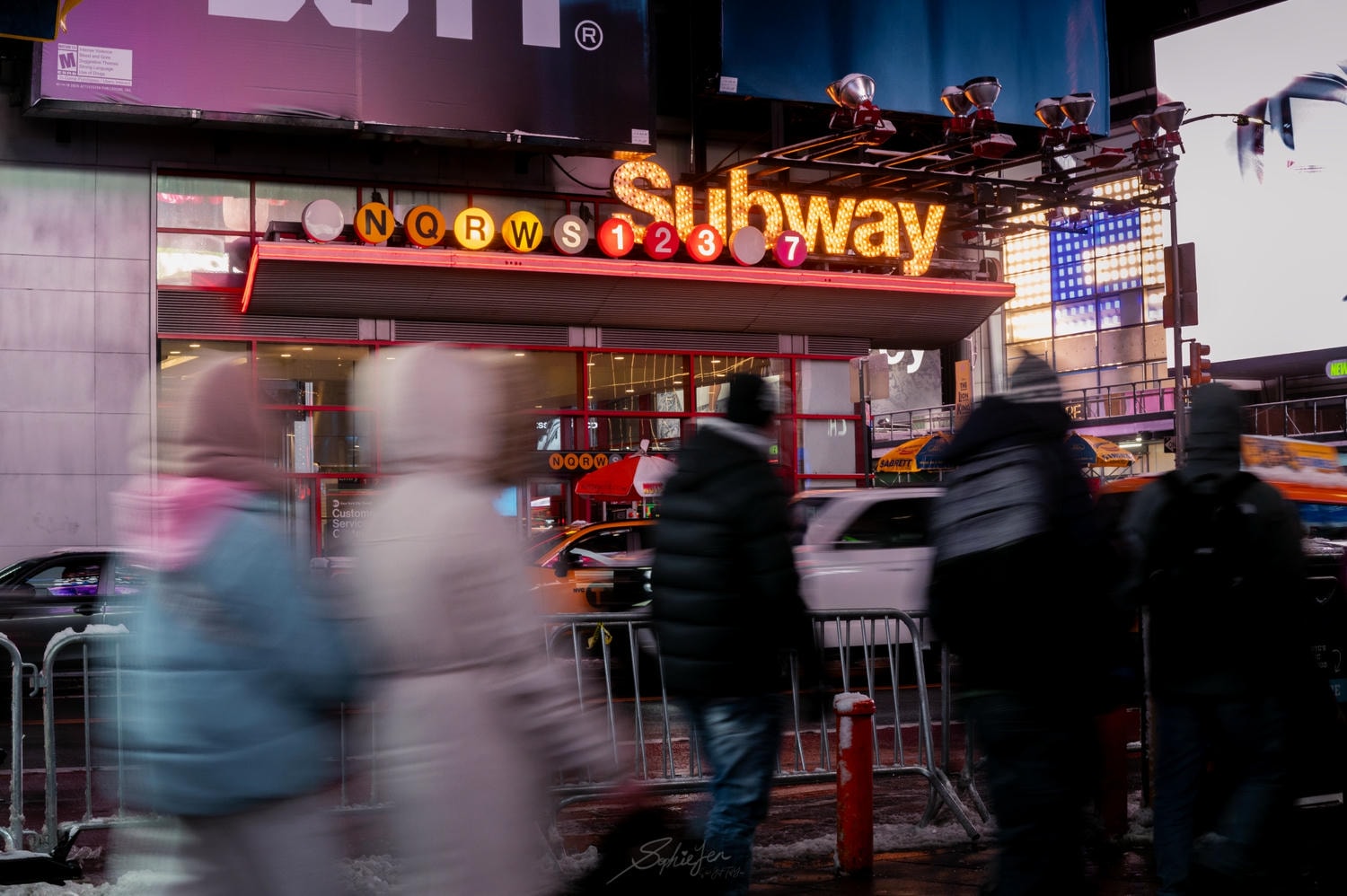
Paying in 2026: OMNY has fully replaced the MetroCard
If you have read older NYC guides, you will know the yellow MetroCard. It is gone. After more than 30 years (since 1994), the MetroCard stopped being sold or refilled at the end of 2025, and the subway now runs entirely on OMNY (One Metro New York). If you are planning a trip now, skip the MetroCard research and just use OMNY.
What is OMNY, and can I use a foreign card?
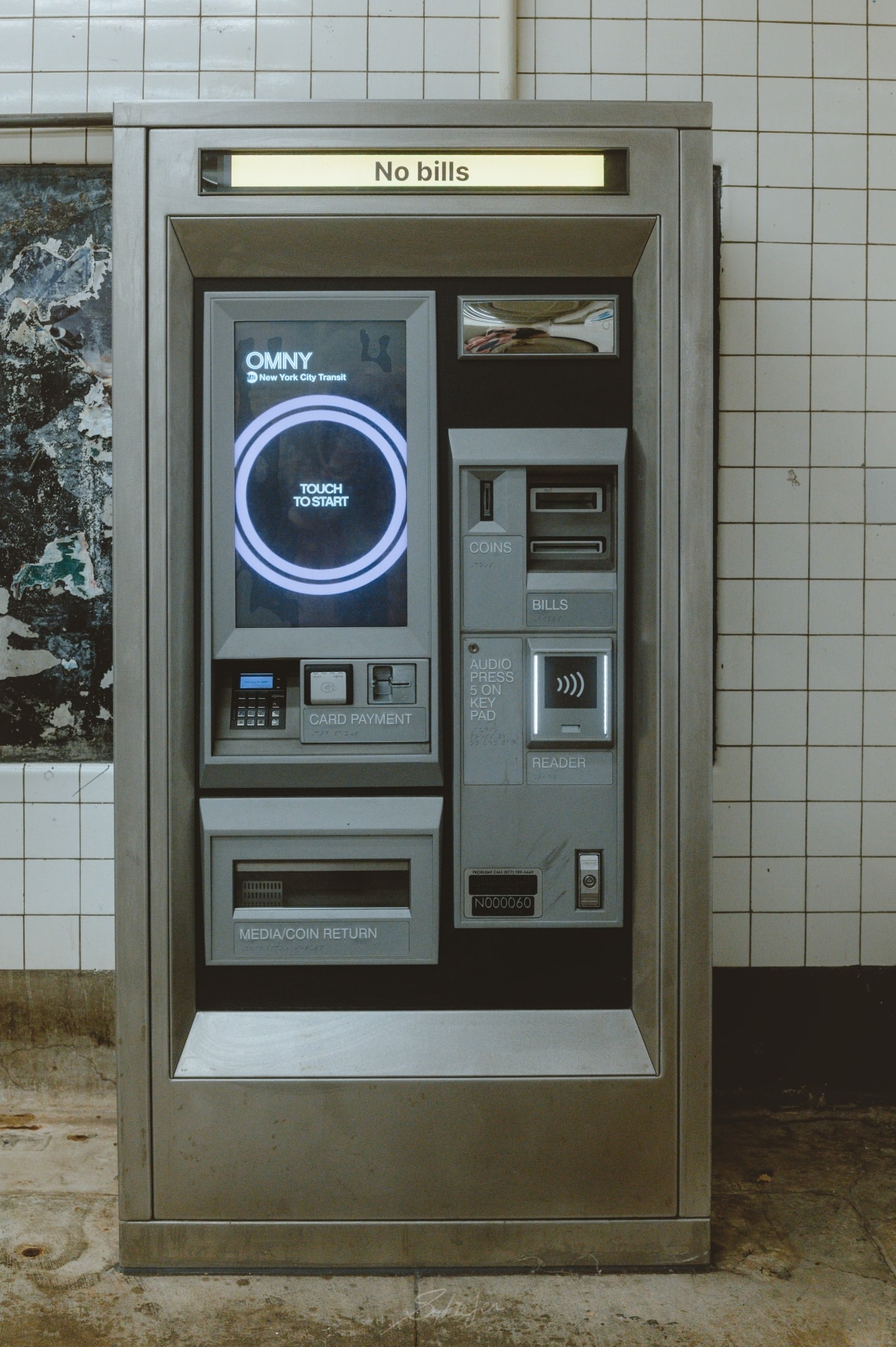
OMNY is the contactless payment system for the subway and buses. It is refreshingly simple: tap once at the reader when you enter, and you do not tap out. Yes, foreign cards work. Any contactless Visa, Mastercard, Amex or Discover credit or debit card taps straight through, with no setup and no US bank account, which makes it the easiest option for visitors.
Three ways to pay
- Contactless card: tap a contactless credit or debit card directly on the reader.
- Phone or smartwatch: add your card to Apple Pay, Google Pay or Samsung Pay and tap without even taking your card out.
- Physical OMNY card: if your card is not contactless, buy a reloadable OMNY card at CVS, Walgreens, 7-Eleven and station vending machines. The card costs $1 for now (rising to $2 once the MetroCard is fully retired) and lasts up to 5 years.

The weekly fare cap (this is the best part)
The best thing about OMNY is the automatic weekly fare cap. Use the same card or device, and once you have paid about $35 in a rolling 7-day period (roughly 12 rides at $3.00), every ride for the rest of that week is free. There is nothing to buy in advance; the system does the math for you. The old 30-day monthly pass is gone, but express-bus riders get their own cap of $67 a week for unlimited express bus, local bus and subway.
Very often people ask me: do I need to buy a weekly pass first? No. Just tap the same way every time and the discount happens on its own.
OMNY tips worth knowing
- “Same device” rule: the cap only counts one payment method. An iPhone and an Apple Watch count as two different devices, so pick one and stick to it all week.
- Travelling as a group: one device can pay for up to four people (tap that many times), but the cap only applies to one person. If everyone rides a lot, each person should get their own OMNY card and load $35.
- PATH is different: trains to New Jersey do not take OMNY; they use a separate system called TAPP.
- Register a free account at omny.info to track rides, see how close you are to the cap, reload online, and, most importantly, freeze a lost or stolen card and move the balance to a new one. The 24/7 helpline is 877-789-6669.
Riding like a New Yorker
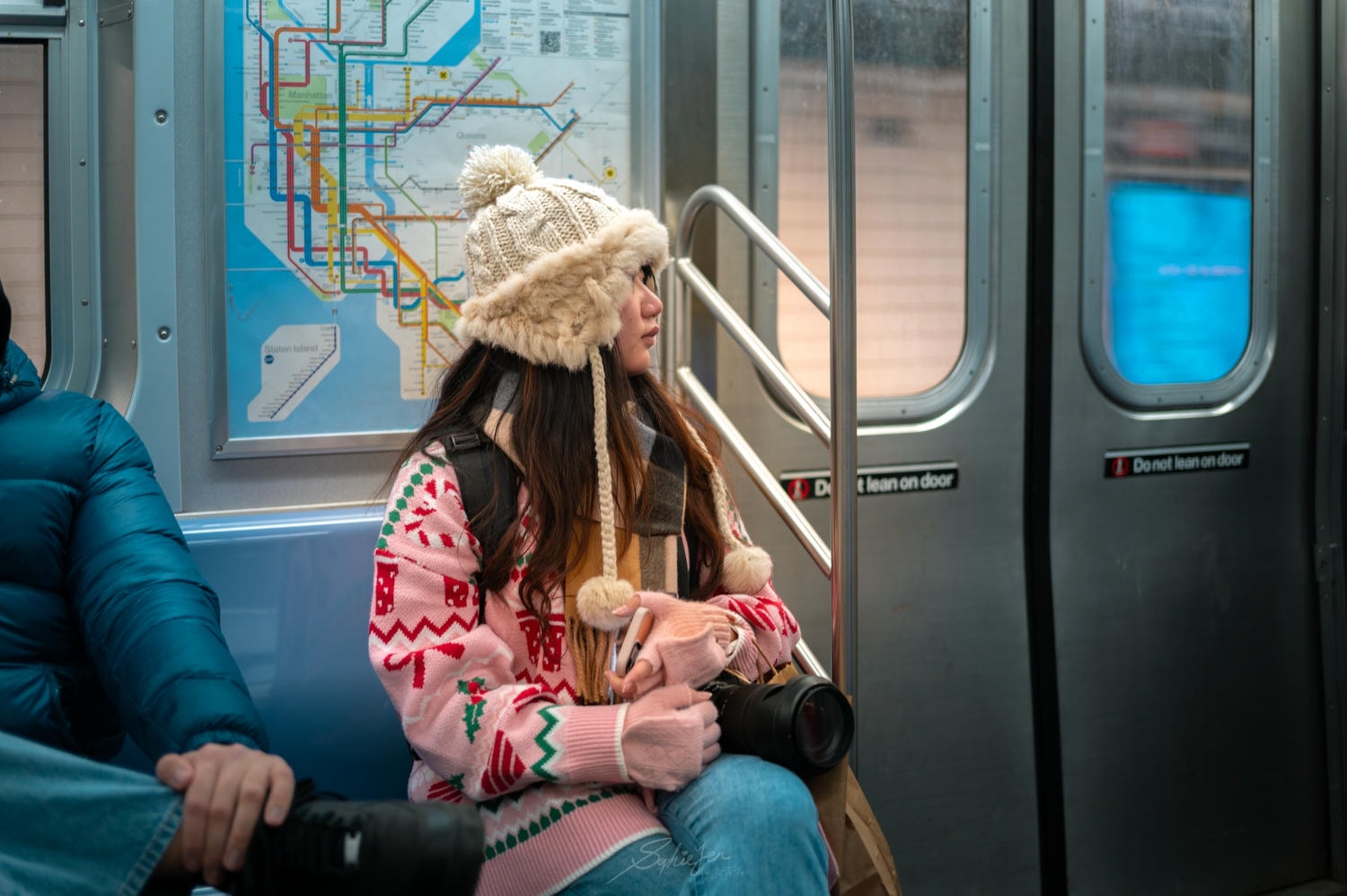
With 23 lines, the NYC subway is one of the most complex systems in the world, and the map alone can make your scalp tingle. Honestly, if you can use Google Maps (even offline) you will be fine, but a few local quirks will save you from getting lost or paying twice.
Green globe vs red globe
Station entrances look similar, but check the globe on top. A green globe means you can enter. A red globe means exit only; walk down and you will find no way onto the platform, so you will climb back up to find another entrance. Some entrances built into buildings have no globe at all, just the station name and lines on the door, and those are easy to miss.
Uptown, Downtown, Crosstown
New York does not label directions by destination station; it uses three words instead.
- Uptown: north through Manhattan, toward the Bronx or Queens.
- Downtown: south, usually toward Brooklyn.
- Crosstown: the few sideways lines (like the L and 7), signed by their end station.
Check the direction sign before you tap in. At stations where the two platforms are not connected, going the wrong way means exiting and paying again.
Local vs Express
Local trains stop everywhere; Express trains skip smaller stations. They sometimes share a track, so it is easy to sail past your stop. On the map, a solid dot means Local-only and a hollow circle means both stop there. Check the platform board for EXP or LCL, and the letter or number on the train itself, before boarding.
Which line takes you where
The good news: most headline sights sit right on a line, so with the right train you rarely need to transfer.
- 🔴 Red (1, 2, 3), Manhattan’s west side: South Ferry (Statue of Liberty and the free Staten Island Ferry), Wall St (Charging Bull, Trinity Church), Chambers St (9/11 Memorial, Oculus), Times Sq (Broadway), 81 St (Central Park West, Natural History Museum).
- 🟢 Green (4, 5, 6), east side: Brooklyn Bridge–City Hall, Union Sq (Strand bookstore, farmers’ market), Grand Central (the ceiling is worth a look), 86 St (the Met, Guggenheim, Museum Mile).
- 🟡 Yellow (N, Q, R, W), through the heart: Canal St (Chinatown, SoHo), 34 St–Herald Sq (Empire State Building, Macy’s, and the Harry Potter flagship store nearby), 5 Av/59 St (Fifth Avenue, Plaza Hotel).
- 🔵 Blue (A, C, E), art and culture: High St (DUMBO, Brooklyn Bridge Park), World Trade Center, 14 St/8 Av (Chelsea Market, the High Line, Whitney), 59 St–Columbus Circle (Lincoln Center).
Read the map by letter and number, not colour
Here is the concept that trips people up: on the map, colour is the physical track (the Line), and the letter or number is the service running on it. Green is the Lexington Avenue Line, but the 4, 5 and 6 all run on it. On the platform, watch for the number or letter on the train, not the colour of the carriage.
Etiquette and safety
A few unwritten rules make the ride smoother, and earn you fewer glares: let people off before you board, move to the centre of the car, wear your backpack on your front when it is crowded, do not “manspread,” give up your seat for those who need it, and keep music in your headphones.
The subway is generally safe, but it runs 24/7, so keep the basics in mind: stay aware of your belongings and surroundings, avoid empty cars late at night, stand back from the platform edge as trains arrive, and if anyone harasses you, use the in-car intercom or get off at the next stop and find staff or police.
2026 New York subway fares
These fares took effect on January 4, 2026. Always confirm the latest on mta.info before you travel.
| Fare | Price |
|---|---|
| Subway / local bus, single | $3.00 |
| Reduced fare (senior / disabled) | $1.50 |
| Express Bus, single | $7.25 |
| Single-ride paper ticket | $3.50 |
| OMNY card fee | $1 (rising to $2) |
| Weekly cap (subway + local bus) | $35 |
| Weekly cap (incl. express bus) | $67 |
For me, riding the subway is not just transport; it is part of the adventure. It is loud, old, occasionally strange-smelling and full of every kind of person, but it is also alive with energy and art. Do a little homework, stay open and a little alert, and this vast underground network lets you reach the soul of the city.

Hi BFFs!
The article may contain affiliate links, and we welcome you to book accommodations or purchase tickets through the links in the article or below. Rest assured, it won’t affect the price for you, but it would give us a small commission to support us in creating more great content. Thank you so much for your support!
✒︎ Flights: Skyscanner
✒︎ Accommodations: Booking.com, Agoda
✒︎ Tickets: Klook, KKday, Get Your Guide
✒︎ Car Rentals: Rental Car
✔︎ Shh! Just Tell You exclusive travel discount code.
All opinions on this website are 100% personal and I only recommend products or itineraries that I trust. Please refer to the “Disclosure and Public Welfare Program” section for more details. If you have any questions, please click on the social media icons below to contact me, or email 📧 to [email protected].
All copyrights of the blog’s texts and images are reserved. Link sharing is welcome. © 2018-2026 Shh! Just Tell You.

Sophie Yen
Taiwanese travel blogger based in the U.S. | Shh! Just Tell You
I work a 9-to-5 like most of us and write about travel after hours. Instead of racing through checklists, I prefer staying longer in one place. Everything on this blog comes from hotels I have actually stayed at, streets I have walked, and the honest research I do before every trip.
你問我答:常見問題
How do you pay for the New York subway in 2026?
Tap a contactless credit or debit card, your phone (Apple Pay or Google Pay), or a physical OMNY card at the reader. The MetroCard has been retired.
Can I use a foreign credit card on the subway?
Yes. Any contactless Visa, Mastercard, Amex or Discover card works with no setup and no US bank account.
How much is a New York subway ride?
$3.00 per ride, with an automatic weekly cap of $35 (about 12 rides), after which the rest of that 7-day period is free.
Is the MetroCard still valid?
No. Sales and refills ended in late 2025 and the system now runs entirely on OMNY.
What is the OMNY weekly fare cap?
Pay $35 within a rolling 7-day period using the same card or device and every further subway or local-bus ride that week is free.