


- About Tokyo Tower
- Quick Overview: All 7 Spots at a Glance
- Shibuya Sky
- Roppongi Hills — Tokyo City View
- Keyakizaka Avenue. A must visit for Christmas
- Akabanebashi Station Intersection
- Shiba Park. Autumn ginkgo forest, Tokyo Tower all in one place
- Zojoji Temple & Kumano Shrine
- Tokyo Prince Hotel Skybridge
- Bonus Spot A: The Underground Parking Staircase
- Bonus Spot B: Zojoji Temple Grounds — Momiji Valley
- Photography Tips
- Best Season to Visit
- Frequently Asked Questions
Tokyo Tower is one of those landmarks you want more than just a snapshot of — you want the shot. Before my first trip to Tokyo, I spent a good amount of time tracking down the best vantage points, and then actually walked to each of them. This guide covers all 7 spots I visited, plus 2 bonus locations worth knowing about.
About Tokyo Tower
Tokyo Tower’s official name is the “Japan Radio Tower.” Built in 1958 and modeled after the Eiffel Tower in Paris, it stands at 333 meters — 13 meters taller than its French inspiration — and currently ranks as the second tallest structure in Japan.
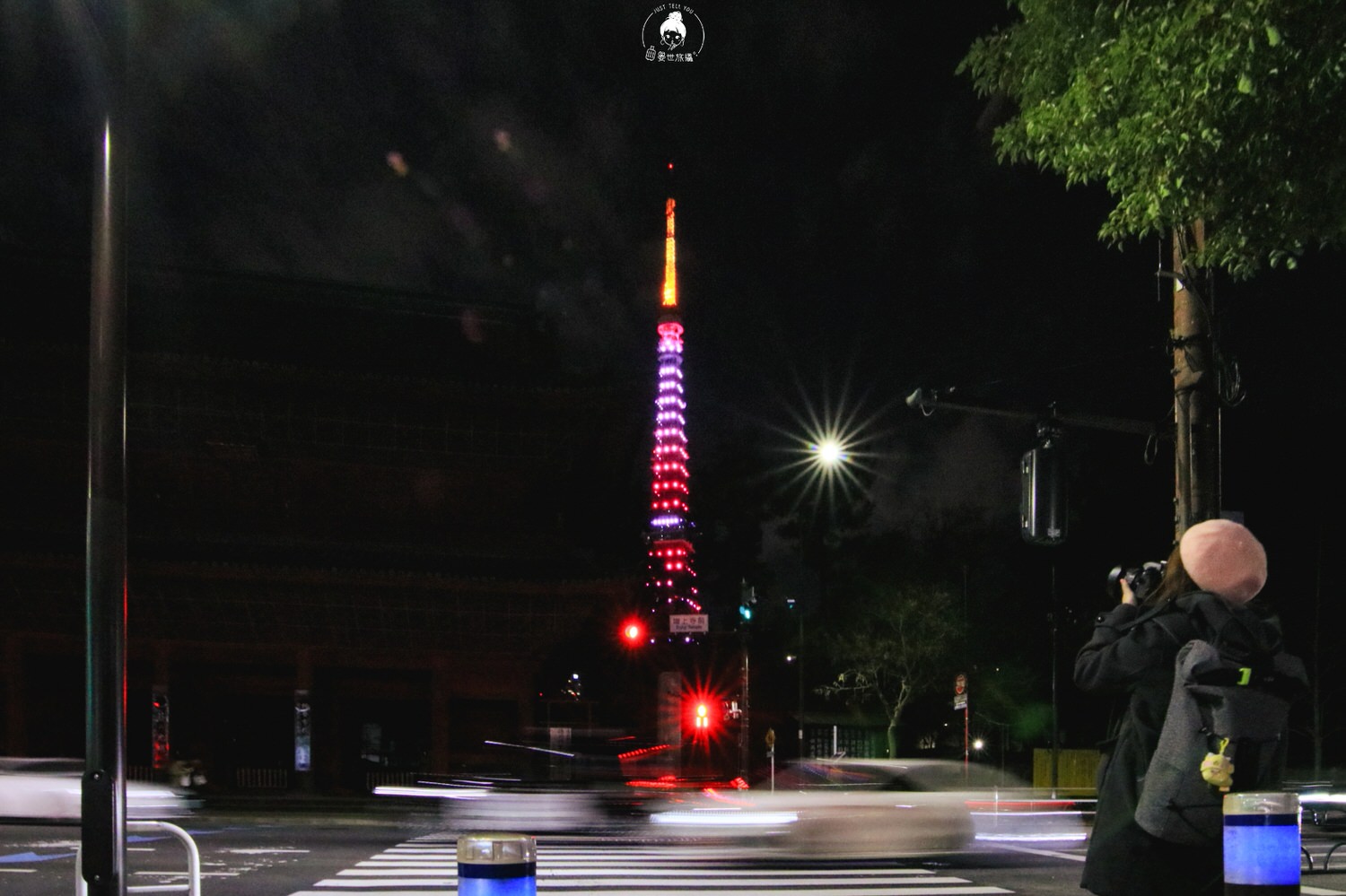
The red and white color scheme isn’t just aesthetic: it’s mandated by air traffic regulations to keep the tower visible to pilots. At night, the tower switches to white lights in summer and orange in other seasons. During special events, it runs entirely different lighting schemes — worth checking the official website before you go if you’re planning a night shoot.
Getting to Tokyo Tower
Tokyo Tower is not on the JR Yamanote Line, which catches some first-time visitors off guard. The closest stations are on the Toei subway network.
| Station | Line | Walk to tower | Notes |
|---|---|---|---|
| Akabanebashi | Toei Oedo Line | 5 min | Closest overall — tower visible as soon as you exit |
| Onarimon | Toei Mita Line | 6 min | Good for Shiba Park access |
| Shibakoen | Toei Mita Line | 7 min | Alternative for Shiba Park |
| Daimon | Toei Asakusa / Oedo Line | 10 min | Convenient from Shiodome area |
| Kamiyacho | Tokyo Metro Hibiya Line | 10 min | Good from Roppongi direction |
| Hamamatsucho | JR Yamanote / Keihin-Tohoku Line | 15 min | Useful if arriving from Tokyo Station or Shinagawa |
From major hubs:
- From Shinjuku: Toei Oedo Line directly to Akabanebashi (approx. 20 min)
- From Tokyo Station: JR Keihin-Tohoku Line to Hamamatsucho, then walk 15 min
- From Shibuya: Tokyo Metro Hibiya Line to Kamiyacho (approx. 25 min)
- From Roppongi Hills: Akabanebashi Station is a 10-minute walk — convenient for combining with Keyakizaka Avenue in one afternoon
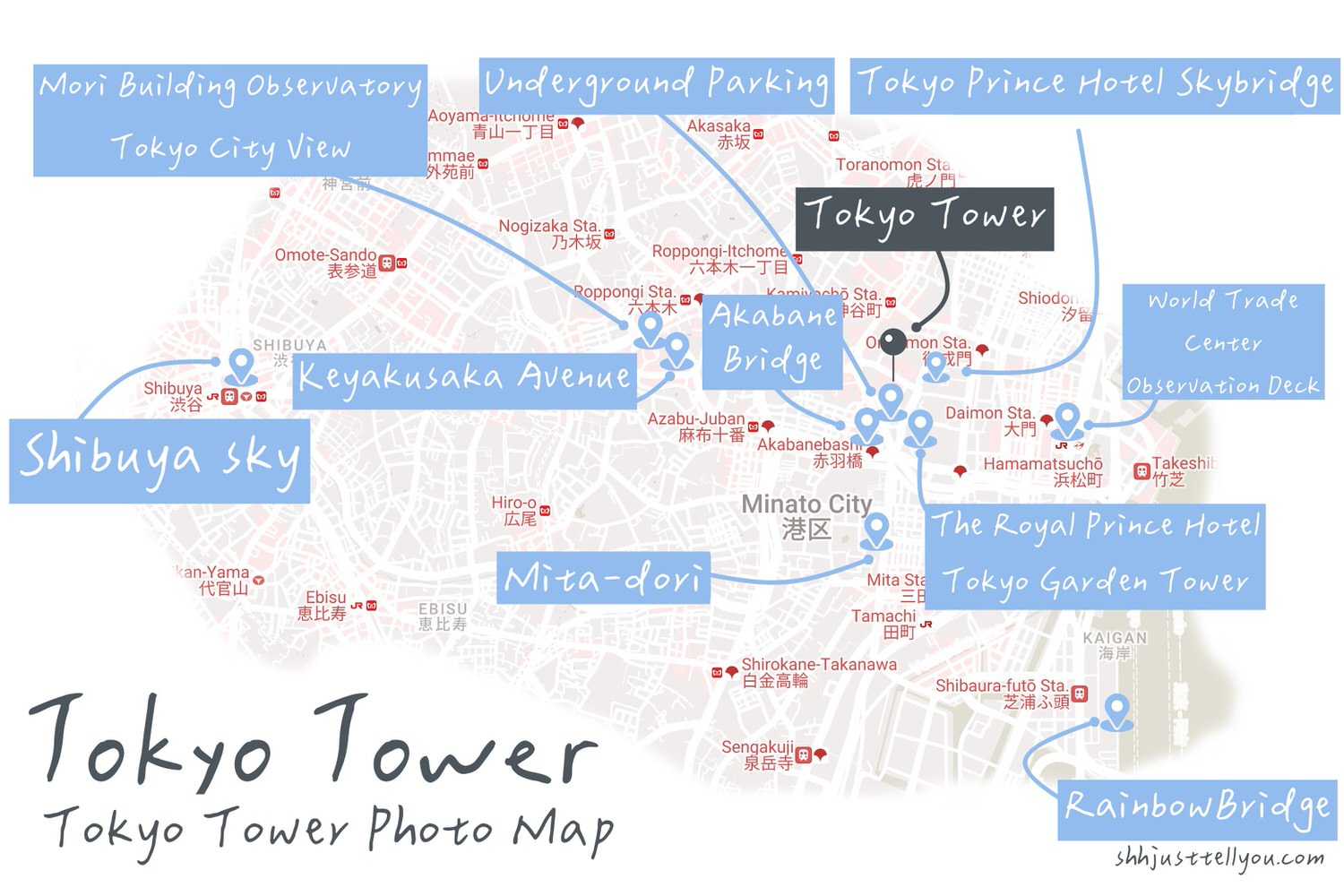
Roppongi Hills, Keyakizaka Avenue, Akabanebashi, Shiba Park, and Zojoji Temple are all within 15 minutes of each other on foot. Start at Roppongi Hills in the afternoon, walk down toward the tower as the sun sets, and you’ll cover multiple spots in one go.
Quick Overview: All 7 Spots at a Glance
| Spot | Type | Fee | Best time | Rating |
|---|---|---|---|---|
| Shibuya Sky | Observation deck | ¥2,200–2,500 (~$15–17) | 30 min before sunset | ★★★★ |
| Roppongi Hills — Tokyo City View | Observation deck | ¥2,200–2,400 (~$15–16) | Afternoon into evening | ★★★★ |
| Keyakizaka Avenue | Street | Free | Night / Christmas season | ★★★★★ |
| Akabanebashi Station | Intersection | Free | Day & night | ★★★★ |
| Shiba Park | Park | Free | Day — autumn especially | ★★★★★ |
| Zojoji Temple & Kumano Shrine | Temple path | Free | Early morning / night | ★★★★★ |
| Prince Hotel Skybridge | Footbridge | Free | Daytime | ★★★★★ |
Shibuya Sky
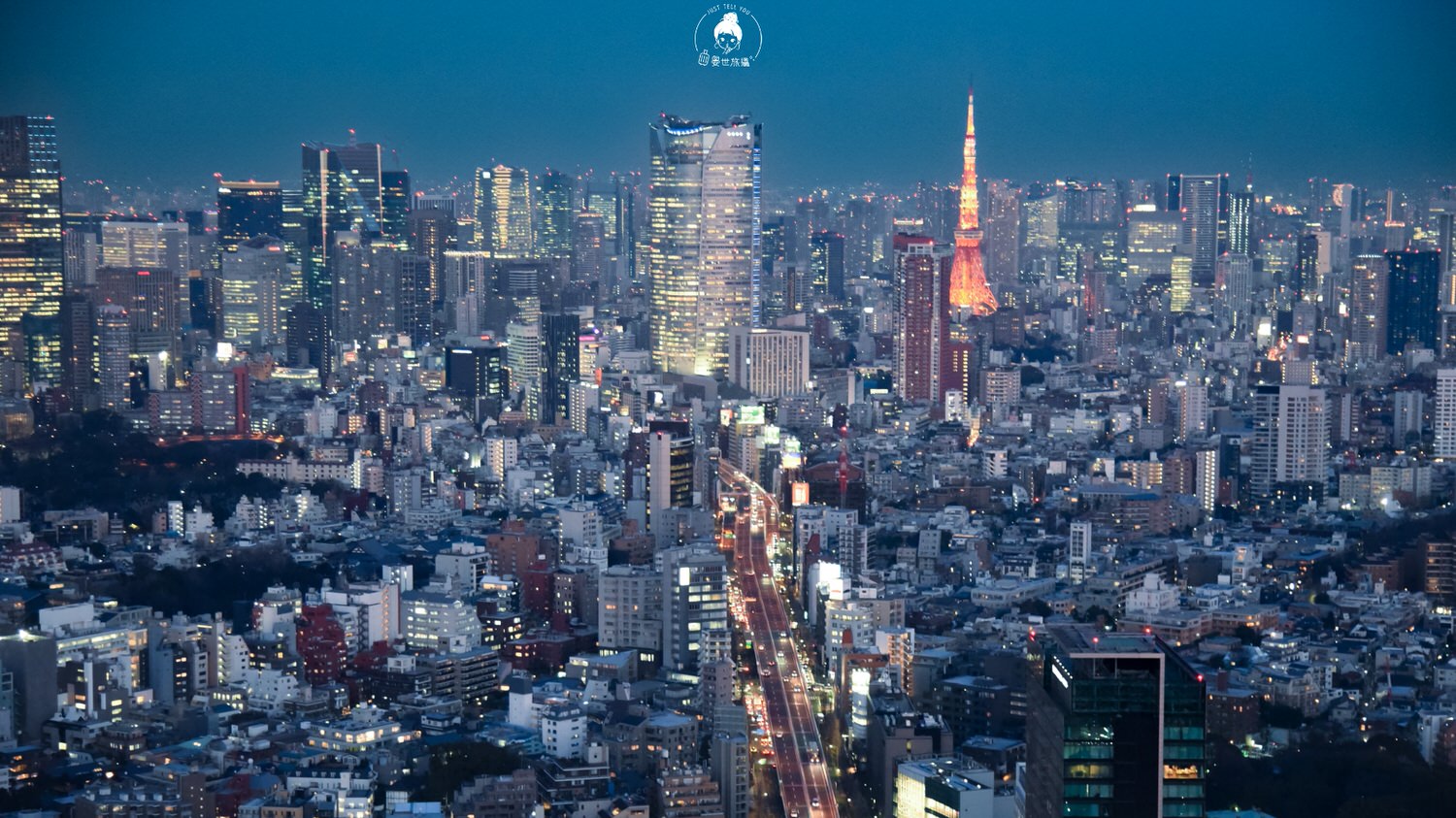
Shibuya Sky opened in 2020 on the rooftop of Shibuya Scramble Square and has quickly become one of Tokyo’s most popular observation decks. From 229 meters up, you get a full 360-degree open-air panorama: Shibuya Crossing directly below, Tokyo Skytree to the east, and on clear days, Mount Fuji to the southwest.
Tokyo Tower appears from the north side of the deck — not as close as from Roppongi Hills, but with the entire city laid out below it, the composition is more dramatic in terms of scale.
- Book online in advance — sunset slots sell out fast, sometimes within seconds of going on sale
- Foreign credit cards may not work on the official website; use Klook, Kodak, Get Your Guide or Viator instead
- Bags, hats, and tripods are not allowed on the rooftop (lockers available on site)
- The indoor Sky Gallery on the 46th floor is worth the time too — warmer and less crowded
Shibuya Sky photo point information
- Location and coordinates: Shibuya Sky(Google Map)
- Recommendation: ⭑⭑⭑⭑
- Transportation:Public transportation
- Ticket cost: ¥2,200 online (~$15) / ¥2,500 at counter (~$17)
- Hours: 10:00–22:30 (last entry 21:20)
- Best Time: 30 min before sunset — catch daylight, sunset, and night in one visit
- Book Online: Get Your Guide/ Viator
Roppongi Hills — Tokyo City View
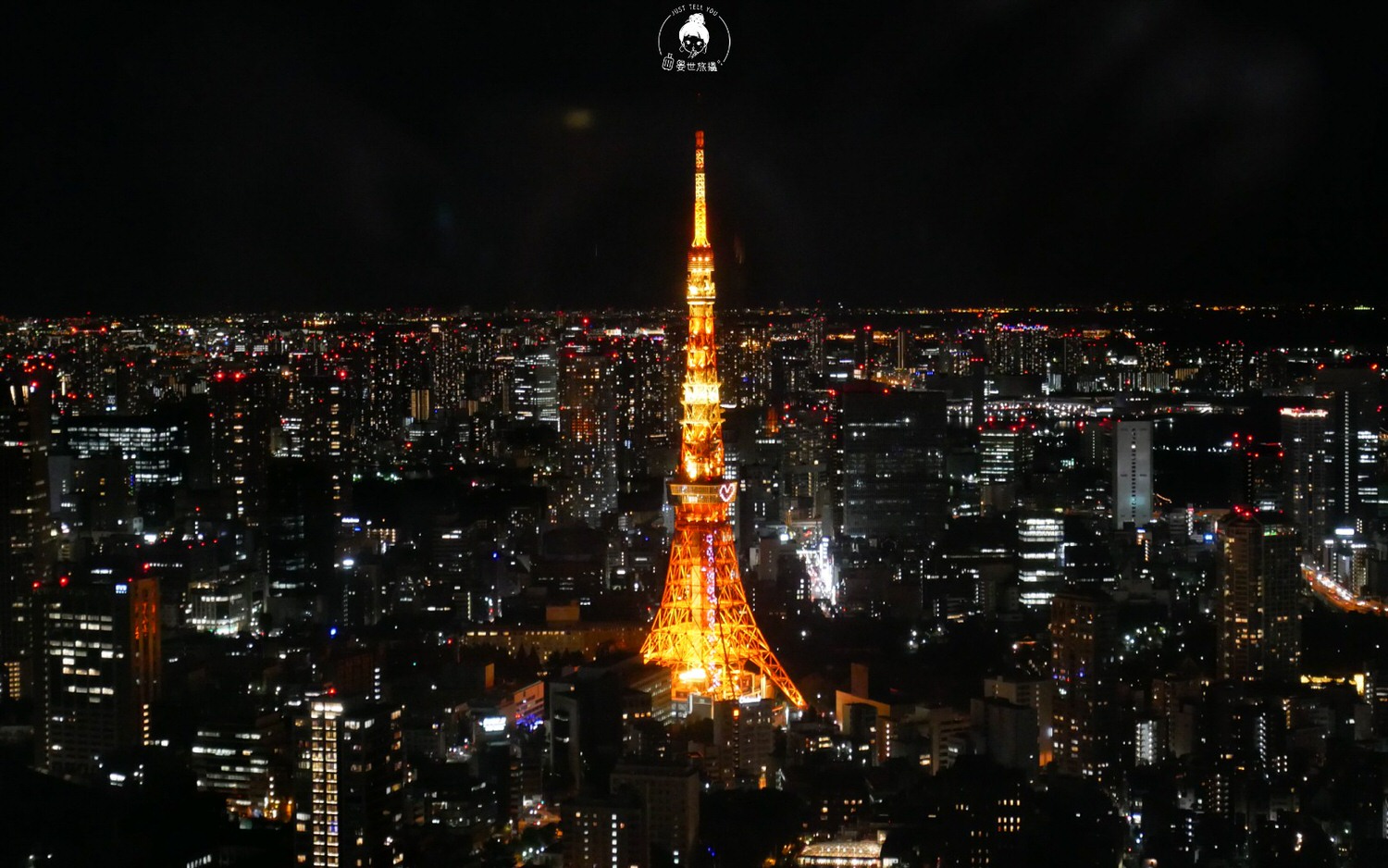
The Tokyo City View observation deck sits on the 52nd floor of Roppongi Hills Mori Tower, at roughly the same height as Tokyo Tower. This proximity is what makes it special: you’re essentially looking at the tower eye-to-eye rather than down at it, which gives you a different kind of shot compared to higher decks.
▸▸▸ Japan, Tokyo|Roppongi Hills Mori Building, Tokyo Tower, Sky Railway Story Special Exhibition
The indoor deck has floor-to-ceiling windows facing in all directions. The rooftop Sky Deck, which offered open-air access, is currently closed to the public — confirm the current status on the official website before visiting.
- The Mori Art Museum on the 53rd floor is included in some ticket packages — worth combining if there’s a current exhibition
- Afternoon visits let you shoot in natural light and stay into the evening for the night view transition
- Closest entrance is via Roppongi Station Exit 1C (Hibiya Line), then through the underground concourse
Roppongi Mori Building photo spot information
- Location and coordinates: Roppongi Mori Art Museum(Google Map)
- Recommendation: ⭑⭑⭑⭑
- Access: 3 min from Roppongi Station Exit 1C (Tokyo Metro Hibiya Line)
- Ticket cost: ¥2,200 online (~$15) / ¥2,400 at counter (~$16)
- Hours: 10:00–22:00 (last entry 21:30)
- Best time: Afternoon into evening
- Book Online: Get Your Guide/ Viator
Keyakizaka Avenue. A must visit for Christmas
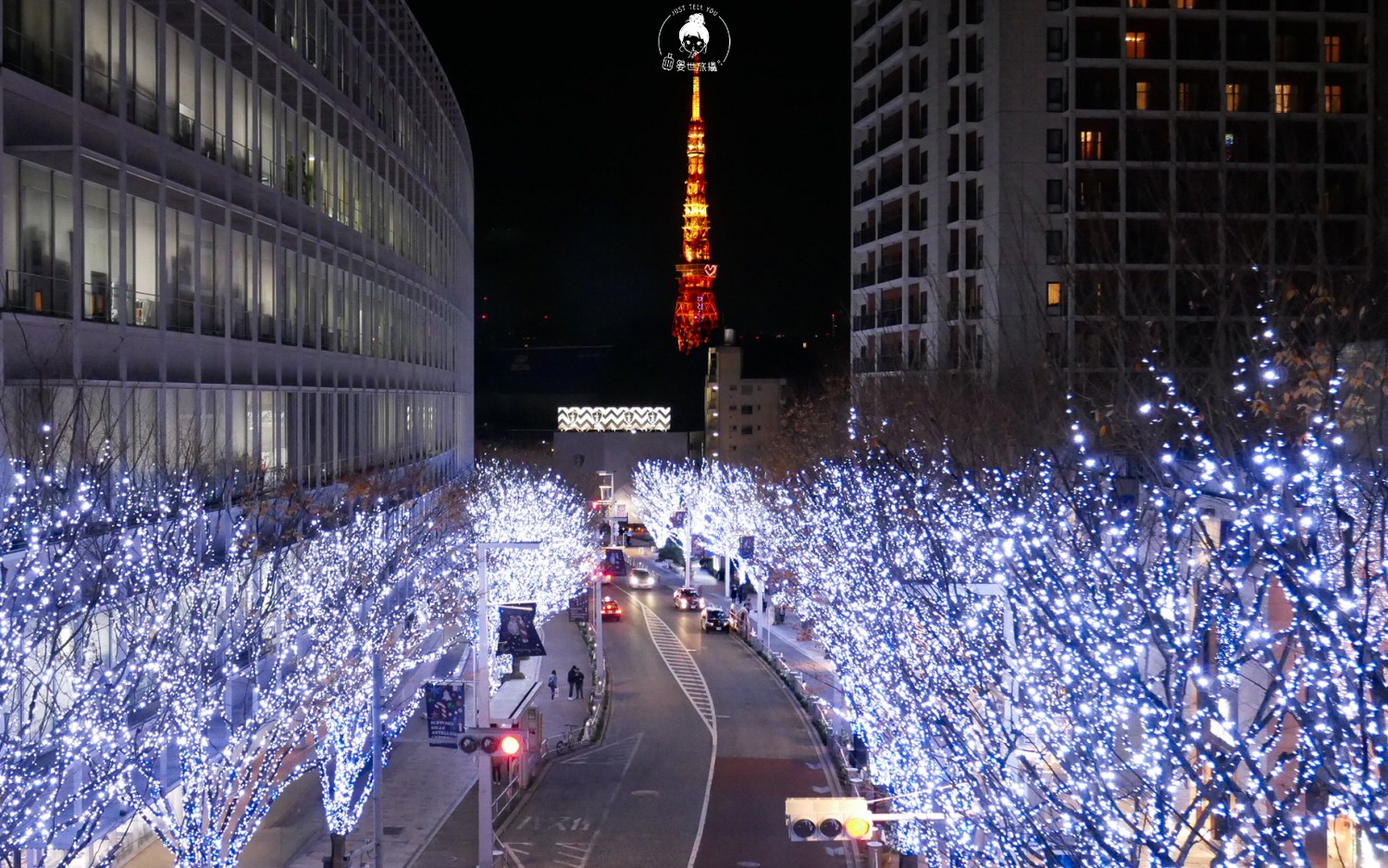
After leaving Roppongi Hills Mori Tower, walk a few minutes to Keyakizaka Avenue. The tree-lined street leads directly toward Tokyo Tower, and the composition — tower at the end of the avenue — is excellent year-round.
But come here at Christmas and it becomes something else entirely. From late November through December, the zelkova trees along the avenue are lit with blue and white lights, and Tokyo Tower glows in the background. It’s one of the most photographed spots in Tokyo during the holiday season.
Keyaki-zaka Avenue photography information
- Location and coordinates: Roppongi Keyaki (Google Map)
- Recommendation: ⭑⭑⭑⭑⭑. Christmas must come!
- Access: Walking distance from Roppongi Hills
- Transportation:Walking, public transportation
- Admission fee:Free
- Best time: Night — especially November through December for Christmas illuminations
Akabanebashi Station Intersection
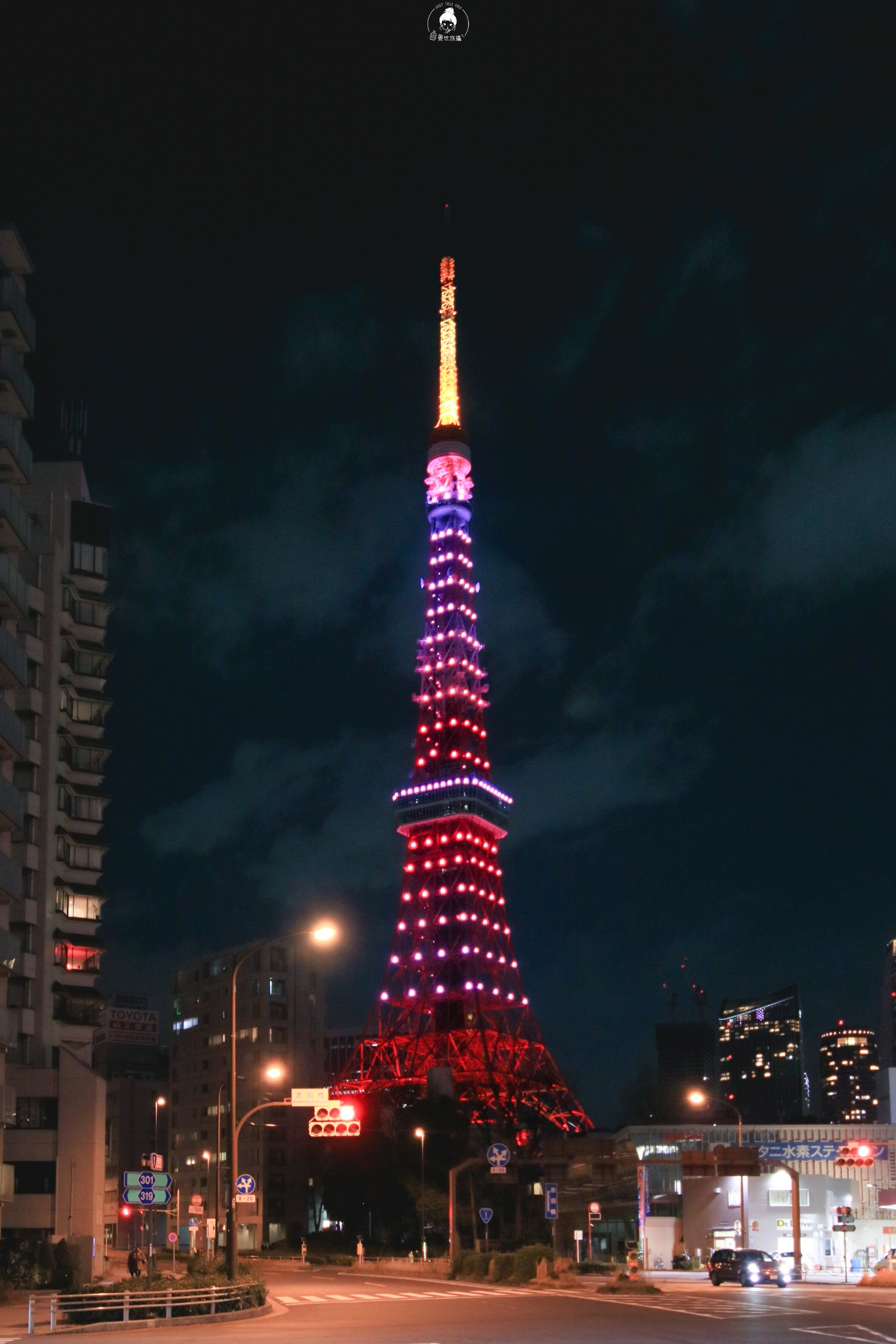
Exit the Toei Oedo Line at Akabanebashi Station (Nakanohashi exit) and Tokyo Tower is right there in front of you, framed by the street. It’s one of the most direct and accessible photo spots near the tower.
At night, the intersection becomes particularly good for long-exposure shots: the light trails from passing cars combined with the illuminated tower make for a dynamic composition. A tripod helps significantly here.
Akabane Bridge intersection shooting point information
- Location and coordinates: Akabane Bridge (Google Map)
- Recommendation: ⭑⭑⭑⭑
- Transportation:Walking, public transportation
- Admission fee:Free
- Best time: Daytime for clean shots; night for car light trails
Shiba Park. Autumn ginkgo forest, Tokyo Tower all in one place
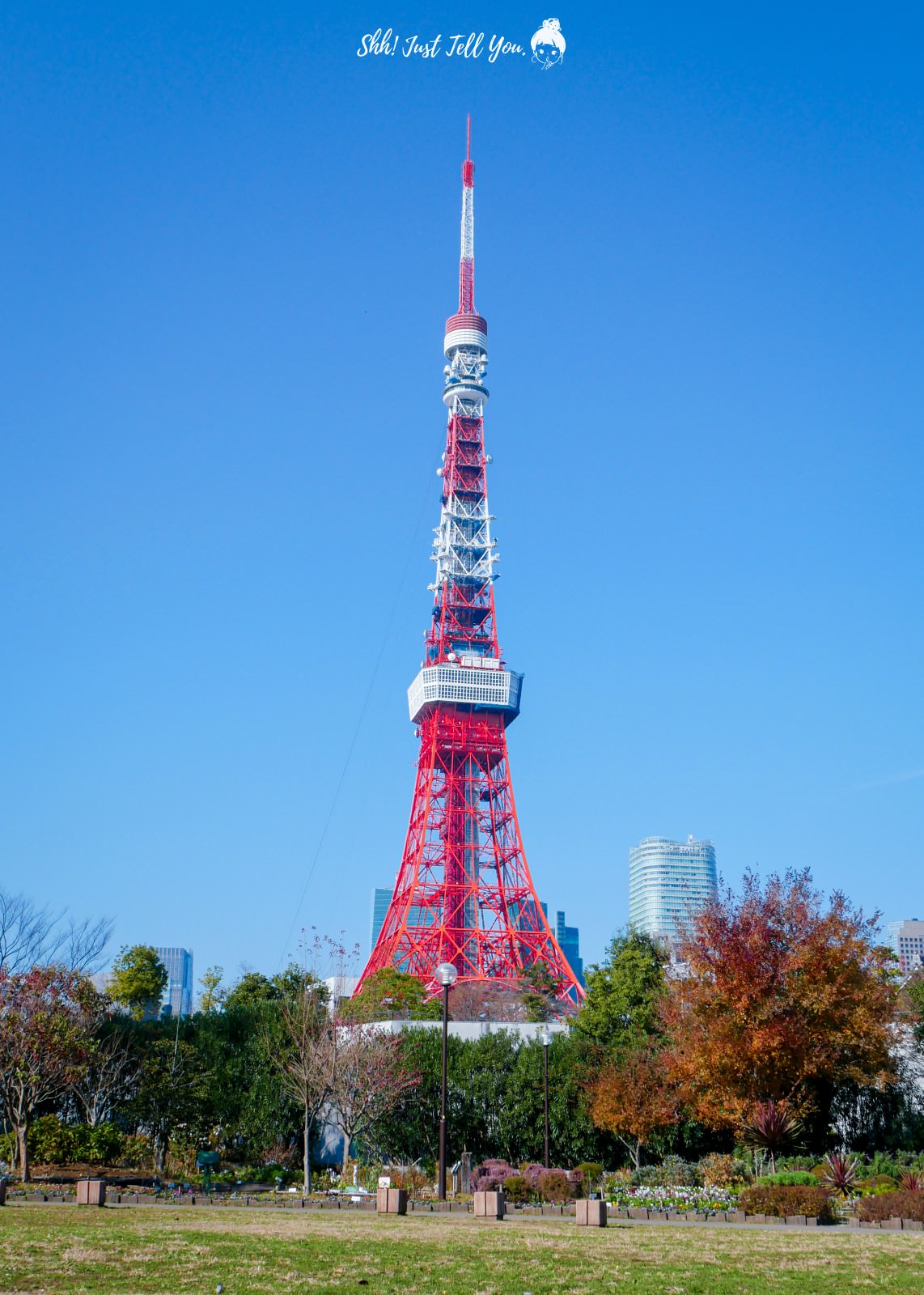
Shiba Park sits directly across from Tokyo Tower with no tall buildings in between — which means an unobstructed, straight-on view of the tower from ground level. Stand on the lawn, point your camera, and the tower fills the frame against open sky.
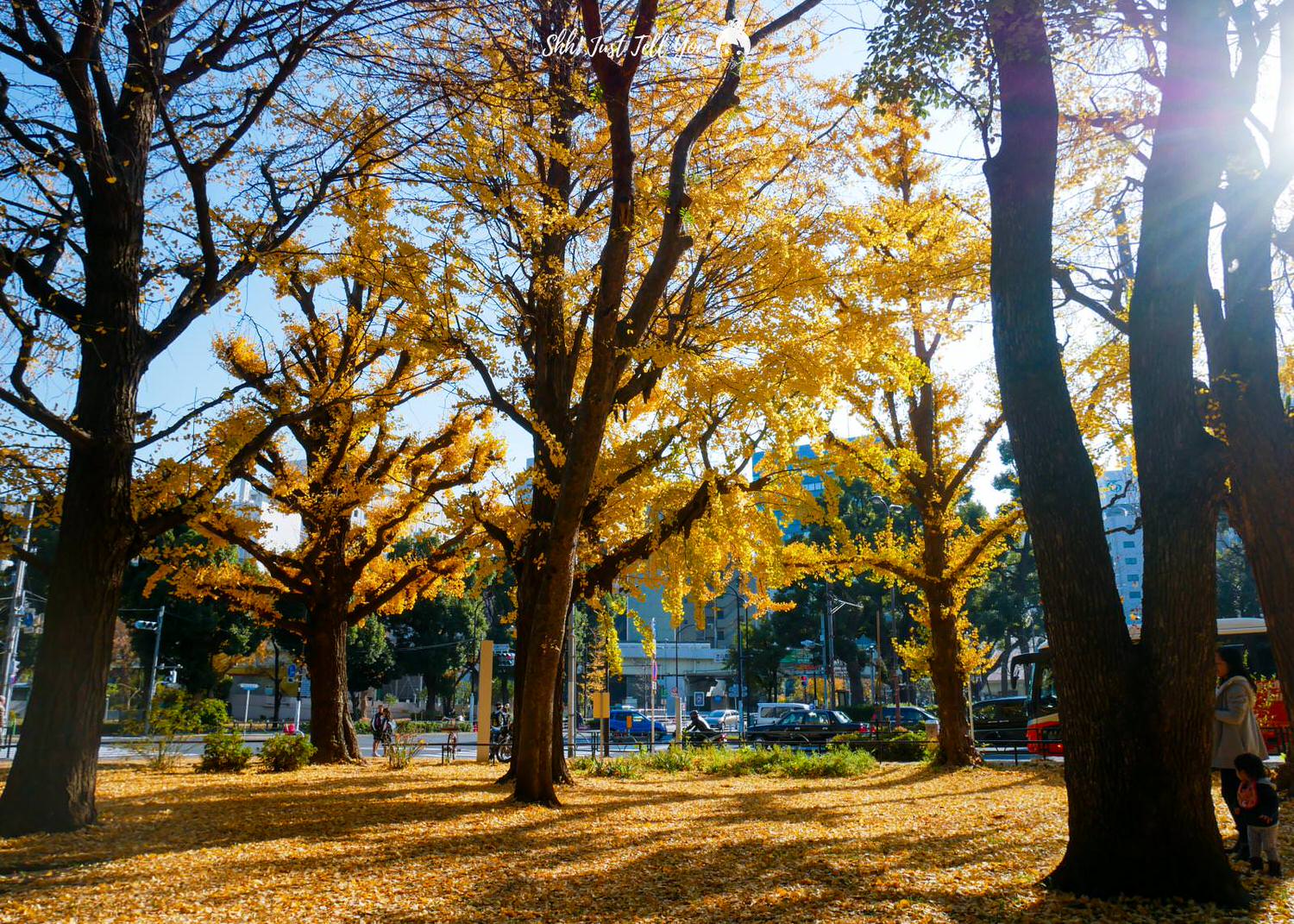
This park changes dramatically with the seasons. In autumn, the ginkgo trees turn golden and leaves cover the ground, making it one of the most photogenic times to visit. In spring, there are cherry blossoms nearby. Even in December the park is worth visiting — golden leaves on the ground can last well into the month.
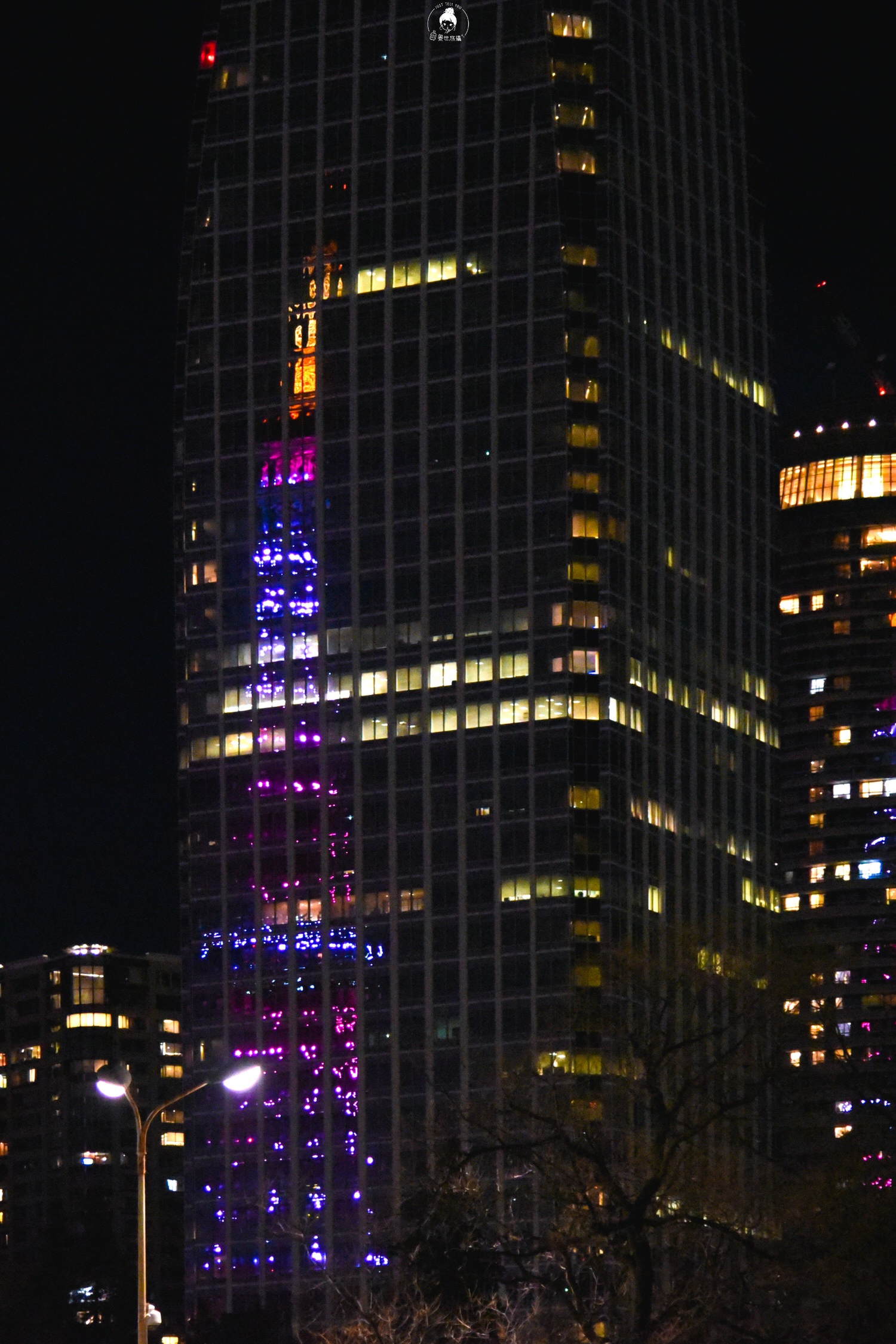
The park is also adjacent to Zojoji Temple (see spot #6), so both can be covered in the same visit.
Shiba Park Lot 4 (near Onarimon Station Exit A6) has a tree-lined path with lampposts that creates a strong leading-line composition toward the tower — particularly good at night.
Photography Information at Shiba Park
- Location and Coordinates: Shiba Park No. 4 (Google Maps)
- Recommended rating: ⭑⭑⭑⭑⭑ A must-visit spot in autumn!
- Transportation: Walking, public transportation
- Admission fee: Free
- Best Time: Daytime; autumn for ginkgo; night for lamppost leading-line shots
Zojoji Temple & Kumano Shrine
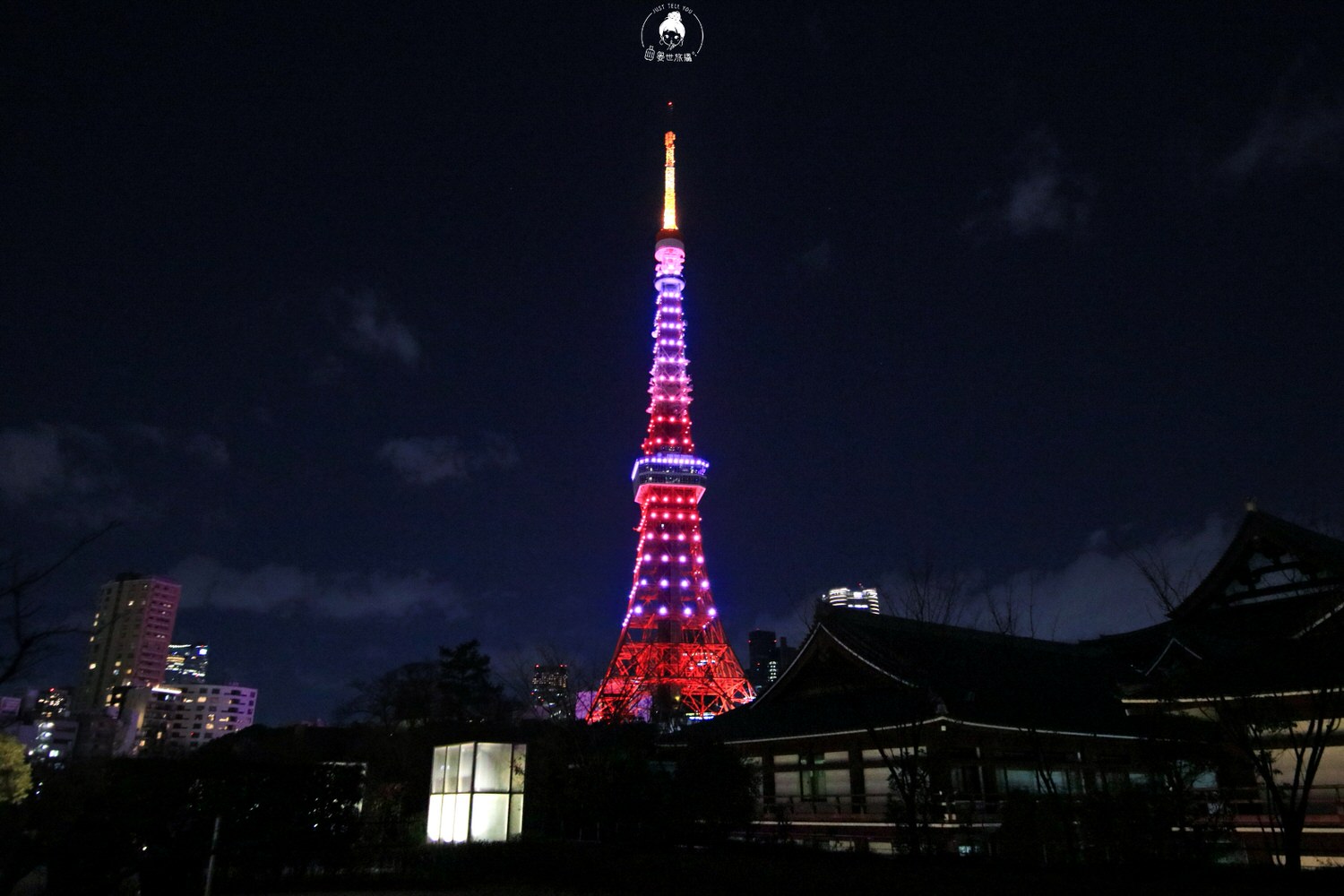
Zojoji Temple is one of Tokyo’s most important Buddhist temples — dating back to the Edo period — and it sits almost directly in front of Tokyo Tower. The juxtaposition of the ancient temple gate and the modern tower rising behind it is one of the most iconic compositions you can get in Tokyo.
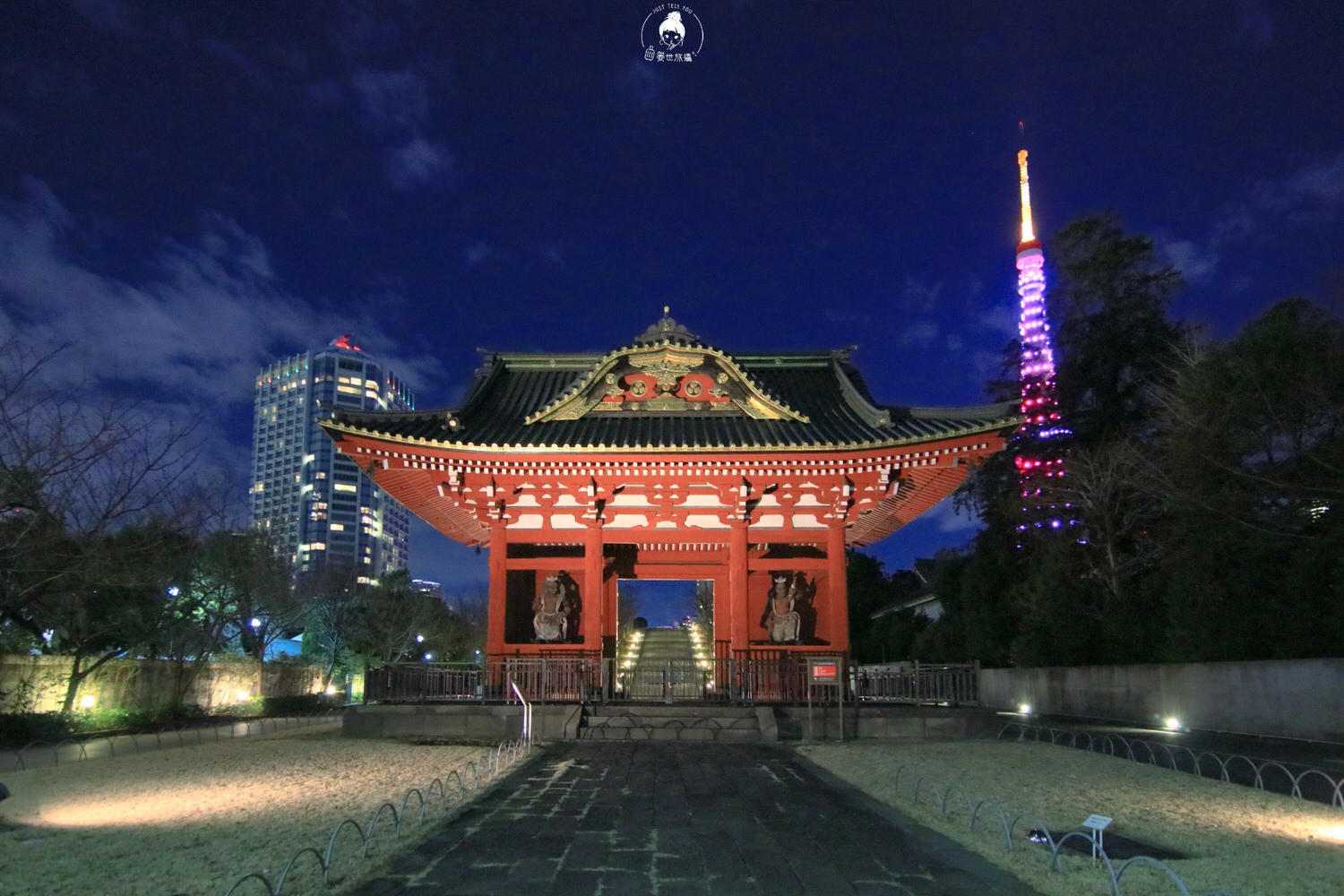
Zojoji Temple main gate: Frame the tower through the gate for the classic “old meets new” shot. Early morning is best — quieter, softer light, and fewer crowds. Lines can form by 10am on busy days.
Masukamiji Temple Photo Spot Information
- Location and Coordinates: Sensoji Temple (Google Map)
- Recommendation: ⭑⭑⭑⭑
- Transportation: Walking, public transportation
- Admission fee: Free
- Best time: Early morning for soft light and fewer crowds
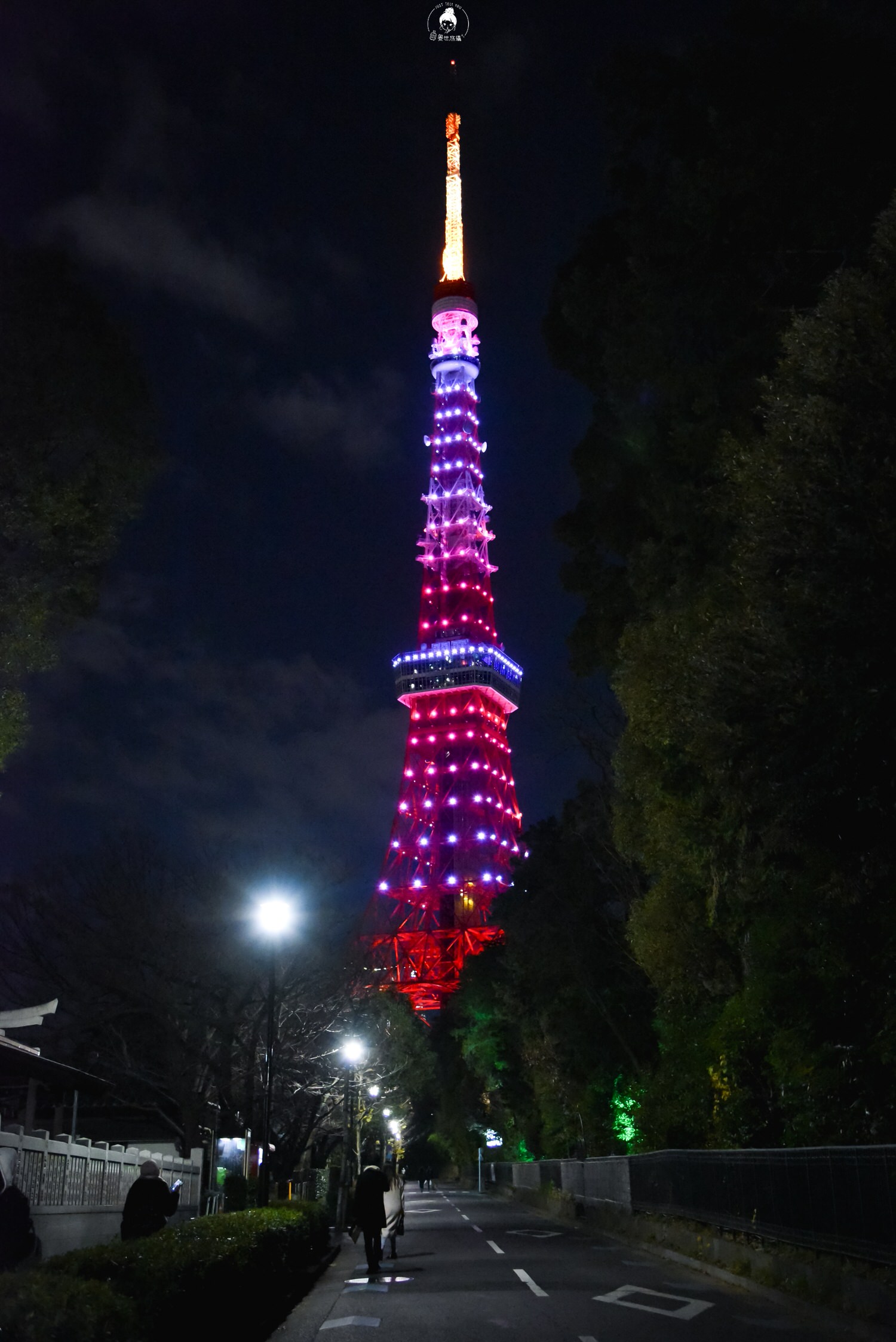
Kumano Shrine path (next to Zojoji): A narrow pathway lined with stone walls leads directly toward the tower. The straight corridor creates a natural leading line, and the greenery against the tower’s red provides a strong contrast. Daytime is recommended here — the stone walls and foliage read much better in natural light than at night.
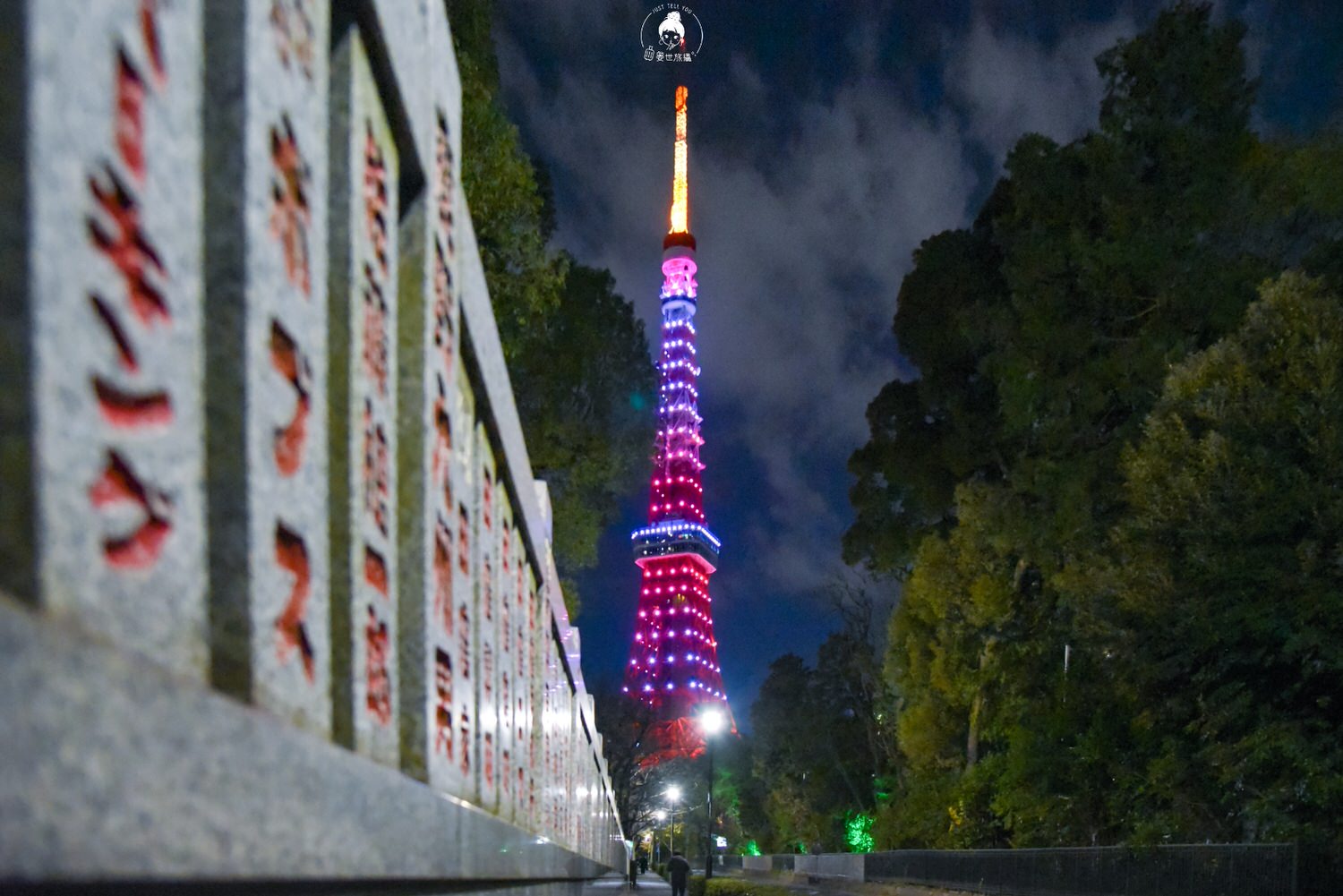
Kumano Shrine (next to Zozoji Temple) Photography Spot Information
- Location and Coordinates: Kumano Shrine (Google Map)
- Recommended Rating: ⭑⭑⭑⭑
- Access: Walking distance from Zojoji Temple
- Transportation: Walking, public transportation
- Admission Fee: Free
- Best time: Daytime
Tokyo Prince Hotel Skybridge
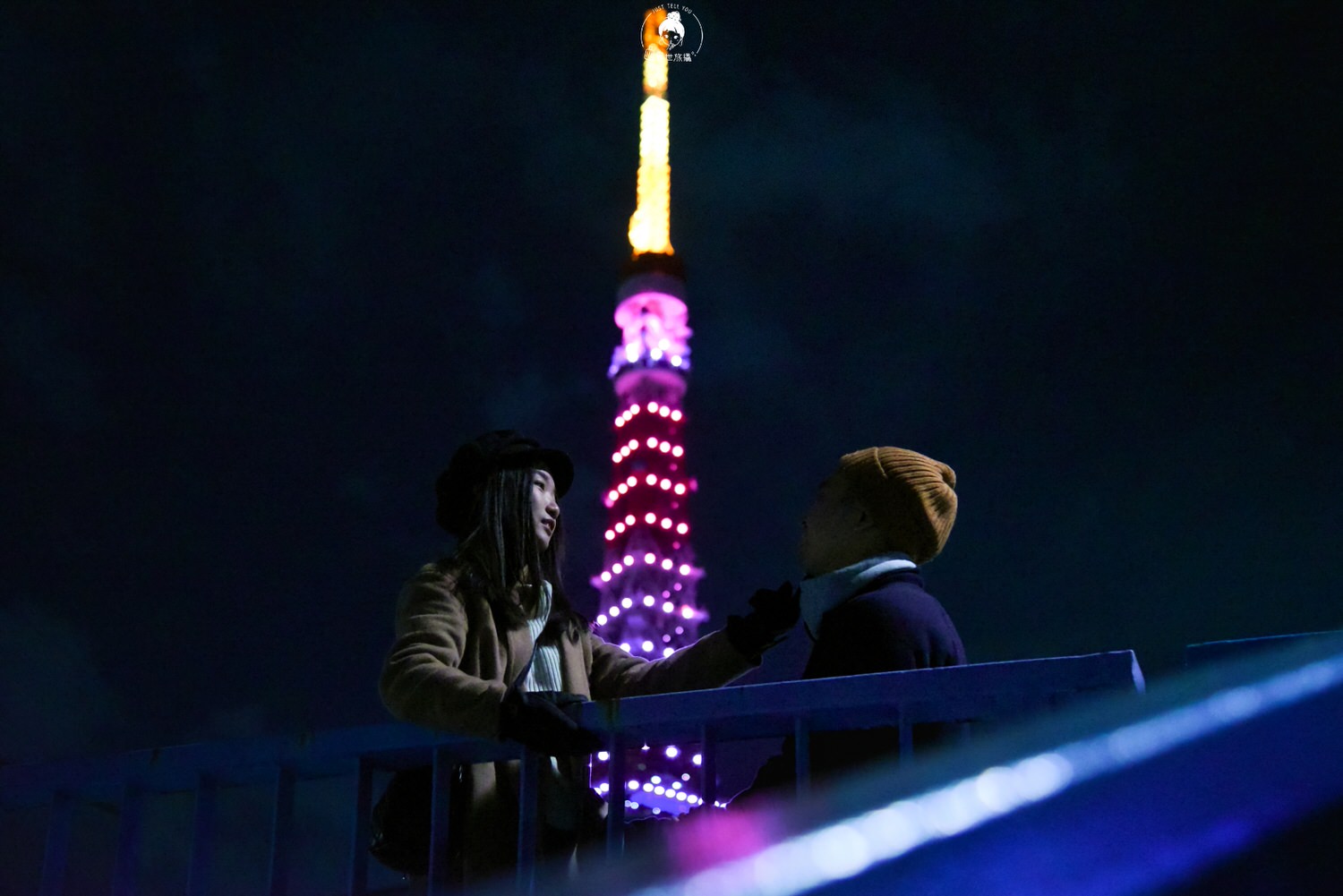
Many people recommend staying at the Prince Park Tower Tokyo for Tokyo Tower views from the hotel. But there’s a free alternative just nearby: the footbridge in front of the Tokyo Prince Hotel offers an excellent elevated view of the tower without needing to book a room.
This is a personal favorite spot. The bridge gives you a slightly elevated angle — not a rooftop panorama, but enough to see the tower cleanly above the surrounding trees. It’s less crowded than the other spots on this list and worth the short detour.
Shooting information
- Location and coordinates: The pedestrian bridge in front of the Prince Hotel (Google Map)
- Recommended rating: ⭑⭑⭑⭑⭑
- Access: Walking distance from Shiba Park or Akabanebashi Station
- Transportation: Walking or public transportation
- Admission fee: Free
- Recommended shooting time: Night
Bonus Spot A: The Underground Parking Staircase
One of the most well-known “secret” Tokyo Tower photo spots on Instagram. About 3 minutes from the base of the tower, there’s a public underground parking lot next to a fitness studio. Walking up the staircase from below, Tokyo Tower suddenly appears framed by the stairwell opening — a dramatic, graphic shot that looks very different from anything else on this list.
The location: around 4 Chome-4-13 Shibakoen, Minato City (look for the fitness studio). It’s a public space — be considerate of others using the staircase, and expect a queue on busy days.
Bonus Spot B: Zojoji Temple Grounds — Momiji Valley
The Zojoji grounds also reward wandering beyond the main gate shot. There’s a maple valley (Momiji no Taki area) added in 2020 where, if you look up through the autumn leaves, Tokyo Tower appears through the canopy. Works especially well in November during peak autumn color — and tends to be less crowded than the gate.
Photography Tips
Best time of day
Blue hour (15–25 min after sunset) is the single best window for Tokyo Tower photography from observation decks. The sky turns deep blue, the tower’s lights come on, and city lights begin appearing — all at the same time. Aim to be at your chosen deck 30–40 minutes before sunset so you’re set up and ready.
Golden hour (30 min before sunset) works best for ground-level spots like Shiba Park and Zojoji Temple, where warm light on the tower and surrounding foliage makes a significant difference.
Daytime is fine for street-level compositions — Akabanebashi intersection, the Kumano Shrine path, and the underground staircase all read well in flat daylight.
Night (after 8pm) is worth considering for Keyakizaka Avenue and the Shiba Park Lot 4 lamppost path.
Tripod rules by location
| Location | Tripod | Notes |
|---|---|---|
| Shibuya Sky (rooftop) | Not allowed | Prohibited on Sky Stage; lockers available on 46F |
| Roppongi Hills — Tokyo City View | Not allowed | Prohibited on indoor observation deck |
| Shiba Park | Allowed | Public space; no restrictions for personal photography |
| Zojoji Temple grounds | Allowed | Personal photography only; commercial shoots require advance permission |
| Akabanebashi intersection | Allowed | Public space — be mindful of pedestrians and traffic |
| Underground parking staircase | Allowed | Public space — be considerate of others using the staircase |
| Prince Hotel Skybridge | Allowed | Public footbridge; no restrictions |
Best Season to Visit
| Season | Highlights | Best spots |
|---|---|---|
| Spring Late Mar – early Apr |
Cherry blossoms at Shiba Park and Zojoji Temple; special pink tower lighting during sakura season | Shiba Park, Zojoji Temple, underground staircase |
| Early summer May – Jun |
Green foliage, cleaner air, less crowded than peak seasons | Shiba Park, Kumano Shrine path |
| Autumn Best overall Late Oct – early Dec |
Golden ginkgo at Shiba Park; autumn leaves at Zojoji; peak foliage usually mid-November | Shiba Park Lot 4, Zojoji Temple, Momiji Valley |
| Christmas Late Nov – Dec 25 |
Keyakizaka Avenue blue-and-white illuminations; most dramatic night shots of the year | Keyakizaka Avenue (Roppongi Hills) |
| Winter Jan – Feb |
Clearest air of the year — best chance of seeing Mt. Fuji from Shibuya Sky; fewer crowds | Shibuya Sky, Roppongi Hills |
Autumn is the most photogenic season overall. Golden ginkgo at Shiba Park, autumn foliage at Zojoji Temple, and Christmas illuminations beginning at Keyakizaka Avenue in late November can all be covered in a single trip.
Spring is the most popular time to visit Tokyo in general, which means crowds. Zojoji Temple gate gets busy fast — arrive before 9am for a clean composition.
Winter mornings offer the best visibility for distant views. On clear cold days in January and February, the chances of seeing Mount Fuji from Shibuya Sky are significantly higher than other seasons.
Turning your Tokyo Tower shoot into a full morning? A calm sit-down breakfast at Blue Bottle Coffee Aoyama in Omotesando makes an easy nearby stop.
Frequently Asked Questions

Hi BFFs!
The article may contain affiliate links, and we welcome you to book accommodations or purchase tickets through the links in the article or below. Rest assured, it won’t affect the price for you, but it would give us a small commission to support us in creating more great content. Thank you so much for your support!
✒︎ Flights: Skyscanner
✒︎ Accommodations: Booking.com, Agoda
✒︎ Tickets: Klook, KKday, Get Your Guide
✒︎ Car Rentals: Rental Car
✔︎ Shh! Just Tell You exclusive travel discount code.
All opinions on this website are 100% personal and I only recommend products or itineraries that I trust. Please refer to the “Disclosure and Public Welfare Program” section for more details. If you have any questions, please click on the social media icons below to contact me, or email 📧 to [email protected].
All copyrights of the blog’s texts and images are reserved. Link sharing is welcome. © 2018-2026 Shh! Just Tell You.

Sophie Yen
Taiwanese travel blogger based in the U.S. | Shh! Just Tell You
I work a 9-to-5 like most of us and write about travel after hours. Instead of racing through checklists, I prefer staying longer in one place. Everything on this blog comes from hotels I have actually stayed at, streets I have walked, and the honest research I do before every trip.