
- What Is the Amtrak Empire Builder, and Is 46 Hours Worth It?
- Empire Builder Coach vs. Sleeper: Which One Should You Book?
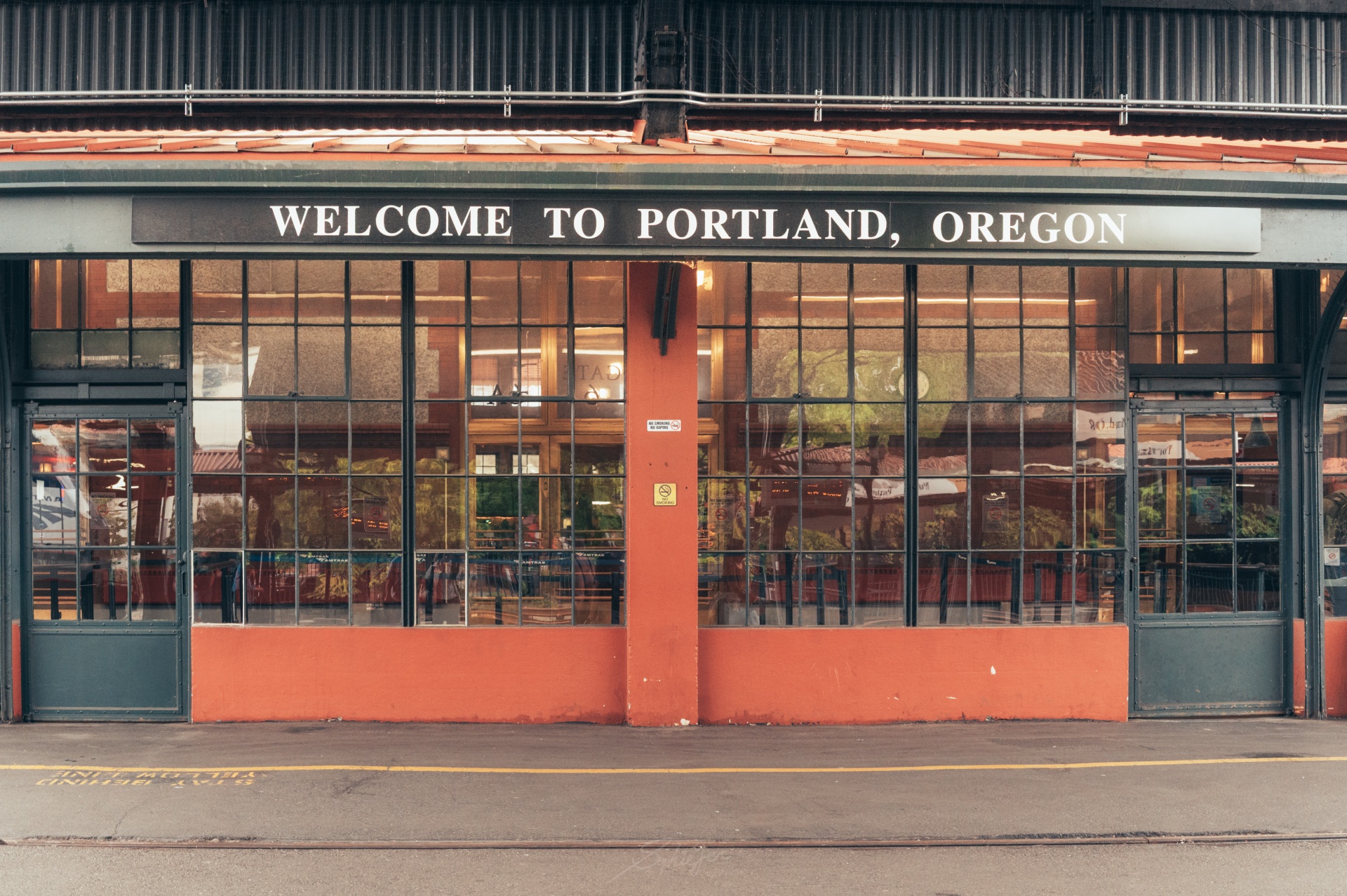
- Before You Board the Empire Builder: Baggage Cutoff and Boarding by Destination
- Your Coach Seat and Two Nights Onboard: How to Actually Sleep
- Where to Put Your Luggage in Coach, and How Safe Is It?
- Eating on the Empire Builder: Dining Car vs. Café Car
- Empire Builder Scenery Timetable: What to See, When, and Which Side to Sit
- The Spokane Split: Why It Decides Your Empire Builder Ticket
- Which Empire Builder Stops Are Worth a Stopover?
- What to Pack for 46 Hours in Coach
- Who the Empire Builder Is For, and Who Should Just Fly
- Frequently Asked Questions
- Postcards from Sophie · Shh Just Tell You
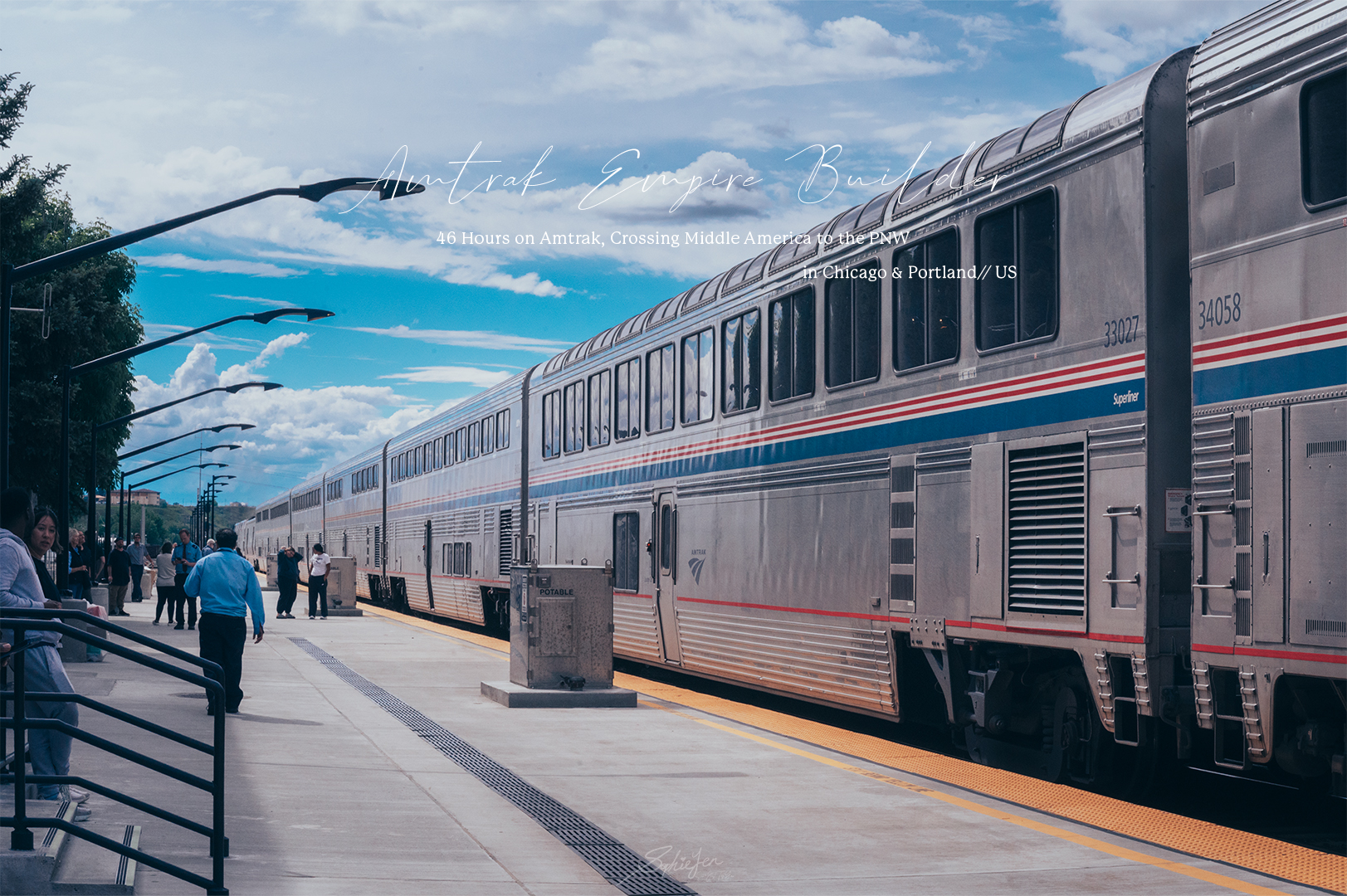
The Amtrak Empire Builder is Amtrak’s northern long-distance route between Chicago and the Pacific Northwest, roughly 46 hours and two nights on board. I rode it westbound from Chicago to Portland in the cheapest class, coach, for $293, and I slept better than I expected. This guide is written from that coach seat: how coach compares to a roomette, the 45-minute baggage cutoff nobody warns you about, why you board through a door assigned by your final destination, how to actually sleep across two seats, what the café car sells once the dining car is gone, and an hour-by-hour scenery timetable with which side of the train to sit on, which stops are worth a stopover, and what to pack for two nights in a seat. If you are heading to Portland rather than Seattle, one operational detail at Spokane quietly decides what you are allowed to book.
What Is the Amtrak Empire Builder, and Is 46 Hours Worth It?
The Amtrak Empire Builder is a daily long-distance train that runs between Chicago and the Pacific Northwest, splitting at Spokane so one half continues to Seattle and the other to Portland. The full ride takes about 46 hours with two nights on board, and it is widely considered one of the most scenic routes in the United States: the Mississippi River, the northern plains, Glacier National Park, and the Columbia River Gorge, all from a window seat.
“Forty-six hours on a train? Won’t that be miserable?” That was everyone’s first reaction when I told them, and honestly it was mine too. It turned out to be the opposite. The train is not transport here, it is the trip. You drift between your seat, the observation car, and the café downstairs, and the window keeps changing: big river, then grassland, then the Rockies, then a canyon. At night the car empties out and you can stretch across two seats.
The route runs in both directions, so Chicago, Seattle, and Portland can each be your start or your finish. Everything below is from a westbound Chicago to Portland ride in coach, with sleeper information as a comparison.
Empire Builder Coach vs. Sleeper: Which One Should You Book?
Book coach if you want to keep the cost down and can sleep sitting up; book a sleeper if you want a bed, a door, and meals included. Sleepers come in a few room types, and the difference is mostly space and whether you get your own bathroom.
| Class / room | Sleeping | Private bathroom | Meals | Rough price (check Amtrak for current fares) | Best for |
|---|---|---|---|---|---|
| Coach (what I rode) | Wide reclining seat; two seats to yourself when the car is empty | No (shared) | Bring your own or buy at the café | About $130–300 per person (mine was $293) | Budget travelers who can sleep in a seat |
| Roomette | Two seats by day, upper and lower berth at night | No (shared toilet and shower) | All meals included | About $450–1,200 per room | Wanting privacy at a mid budget, better value split between two |
| Bedroom | About twice a roomette; sofa and chair convert to berths | Yes (in-room toilet and shower) | All meals included | About $1,000–2,000+ per room | Sleeping properly and wanting your own bathroom |
| Family Bedroom | Four berths (two adult, two shorter child berths) | No (shared) | All meals included | Varies by party size and season | Families with kids |
Sleepers are priced per room, not per person, and all meals are bundled in, which softens the gap more than the sticker price suggests. Fares swing hard with season and how far ahead you book, so the same segment can differ by double. Treat the numbers above as a range and confirm on the day you book.
One thing that trips people up: no sleeper cars run to Portland. The full sleeper consist stays with the Seattle half after the train splits, so if you want a bed you need to end your trip in Seattle. Summer is the busiest season and rooms sell out early.
Before You Board the Empire Builder: Baggage Cutoff and Boarding by Destination
Two things will catch you out at the station if nobody tells you: checked baggage closes early, and you board through a door assigned by where you get off.
Checked baggage closes 45 minutes before departure, and Amtrak suggests showing up an hour ahead to check it. If you miss that window it is not a crisis, since you can simply carry your bags on. Large suitcases go on the luggage rack on the lower level of the car, though arriving late can mean there is no room left, and smaller bags go on the shelf above your seat.
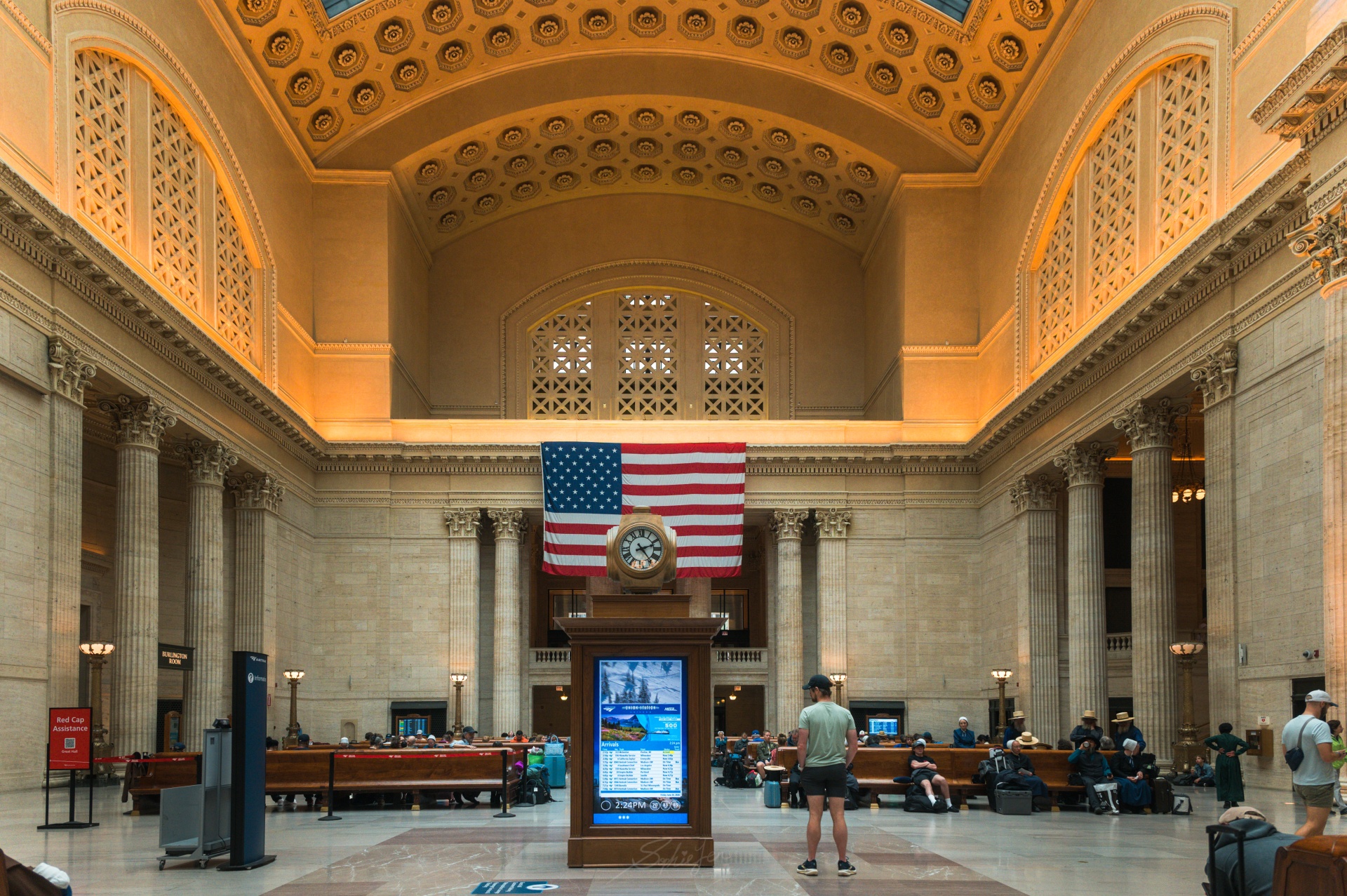
Then there is boarding. You queue in a dedicated line, and staff send passengers to different doors depending on their final destination. The reason is neat: at Spokane the train is cut in two, the Seattle cars and the Portland cars each get their own locomotive, and the crew needs everyone sorted into the right half long before that happens. It is also why the Empire Builder can offer two western endpoints on one train.
Your Coach Seat and Two Nights Onboard: How to Actually Sleep
Coach seating is unassigned, so you pick your own seat when you board, and the conductor comes through to ask your destination and clip a small paper tag above your head. The tags let the crew check who belongs where, and I am told they will also wake you if you sleep through your stop. Sleeper passengers go to the room printed on their ticket instead.
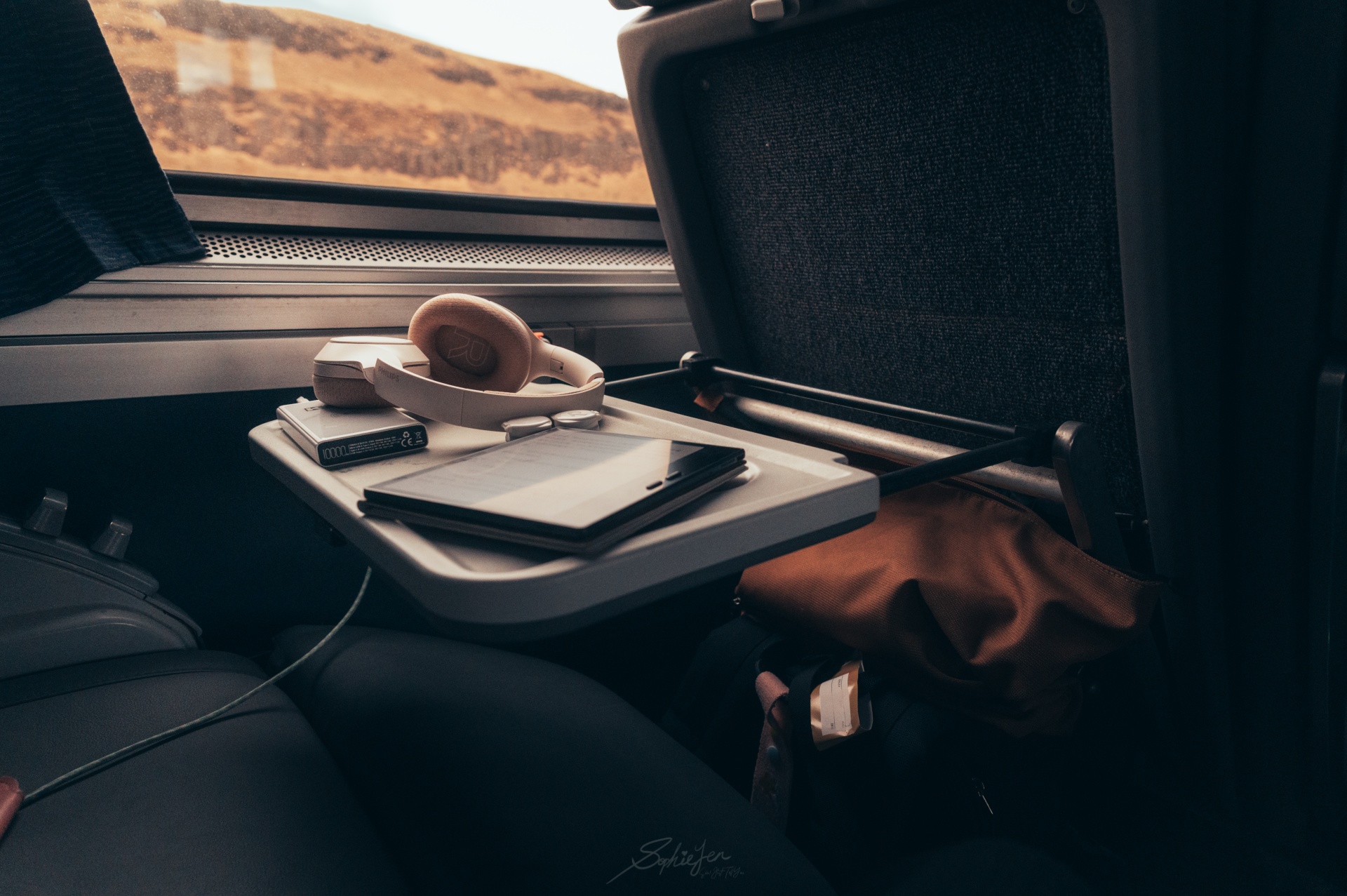
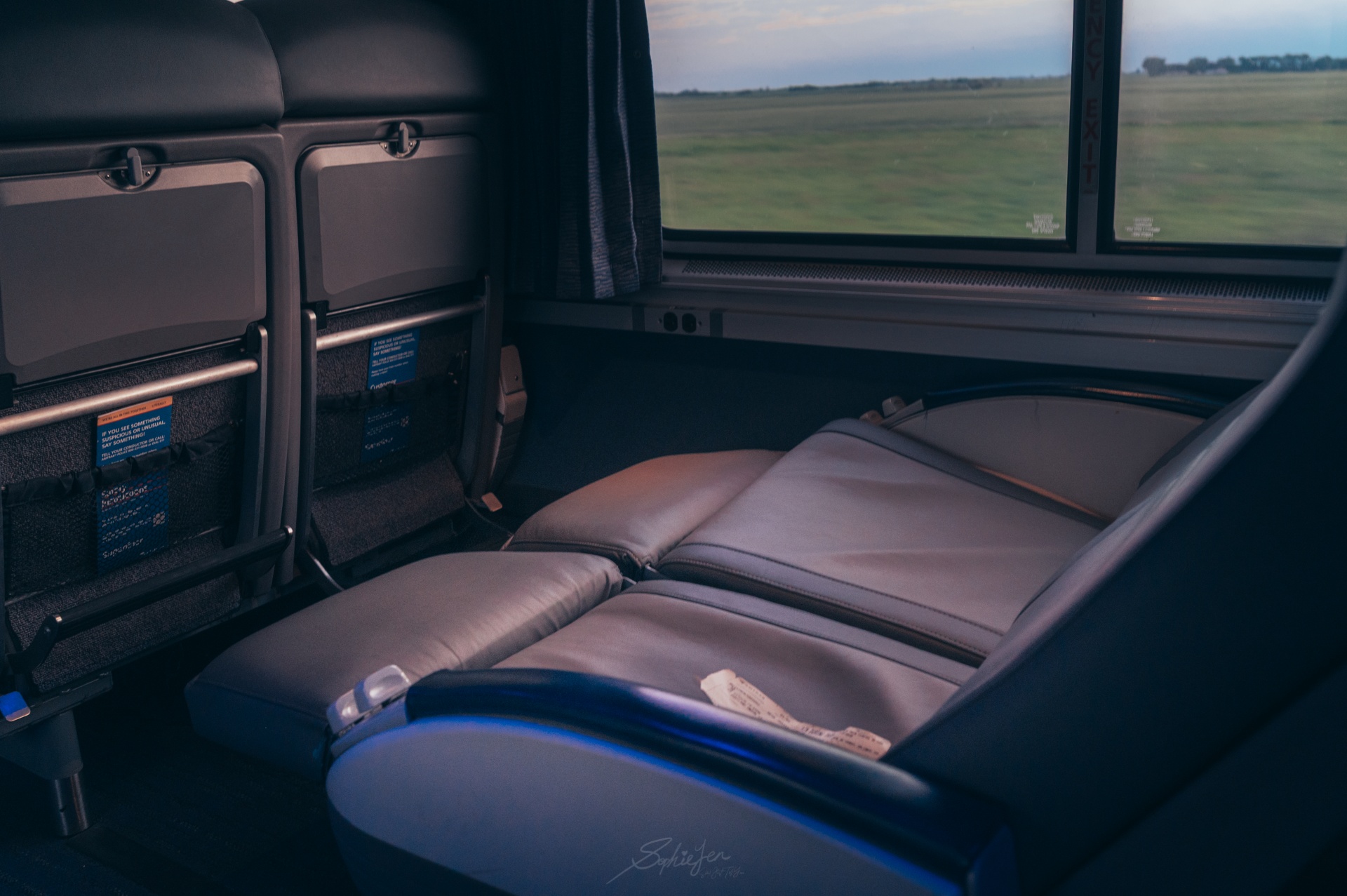
The seats are roomier than I pictured. I am about 156 cm, and even with a large camera bag parked in front of me my legs were fine; I would guess someone around 180 cm still would not have their knees in the seat ahead. Each seat has a sliding tray table like an airplane, and you can pull it toward you if you want to recline further.
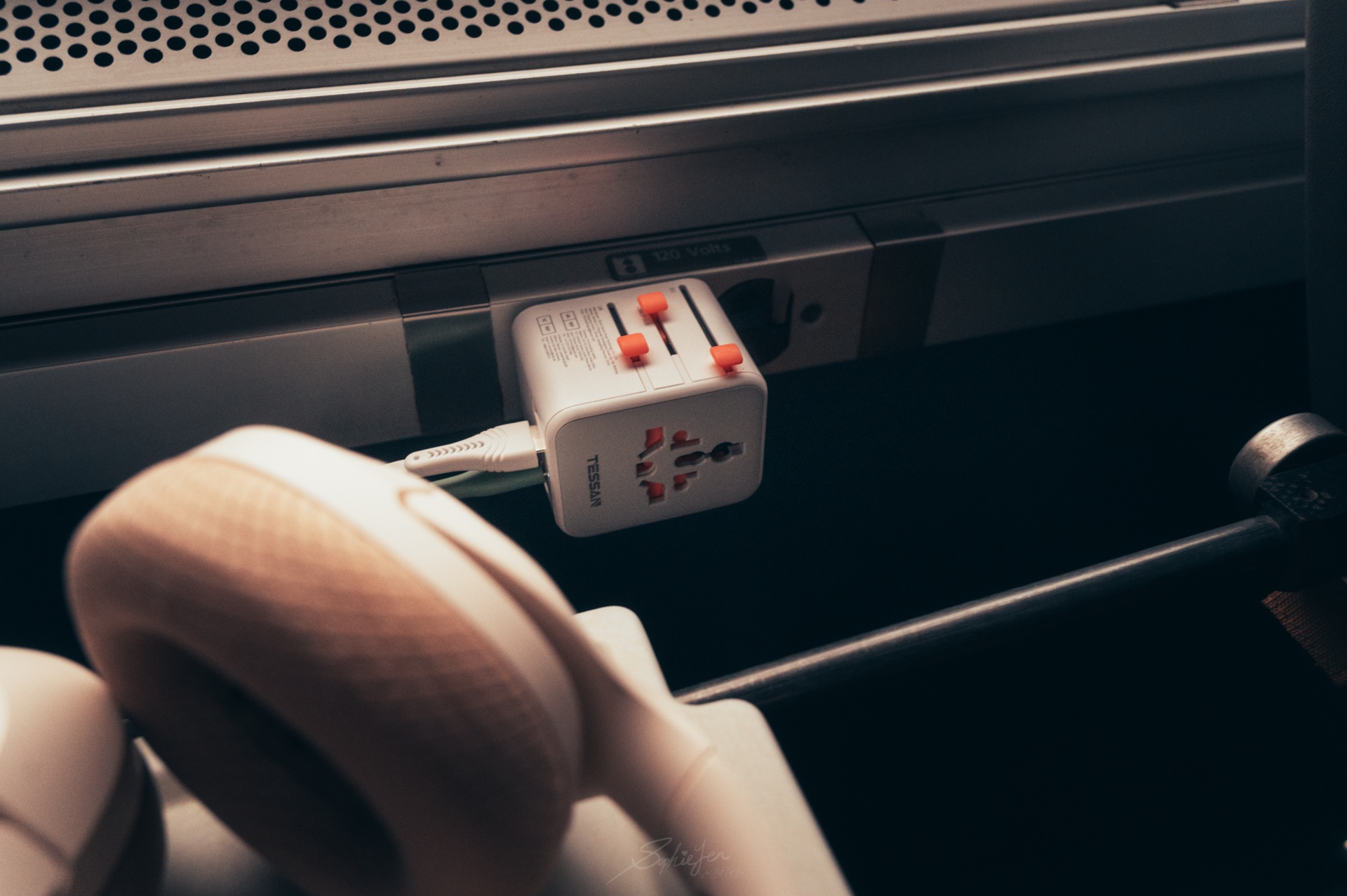
I had read complaints that using the outlet blocks the tray table. That was not my experience. I brought my own multi-port adapter, ran USB cables and even a laptop brick off it, and the table still worked normally with clearance to spare.
Sleeping comes down to one thing: the car empties as the night goes on. Boarding in Chicago it was packed and I shared a row with a stranger, but a wave of passengers got off at Minneapolis-St. Paul, around 11 p.m. on the first night, and after that I had two seats to myself and lay down. People kept getting on and off later, and I suspect the crew deliberately spreads full-route passengers across cars, because the first night was noticeably quiet. Apart from pairs traveling together, most solo coach riders around me ended up with a row each.
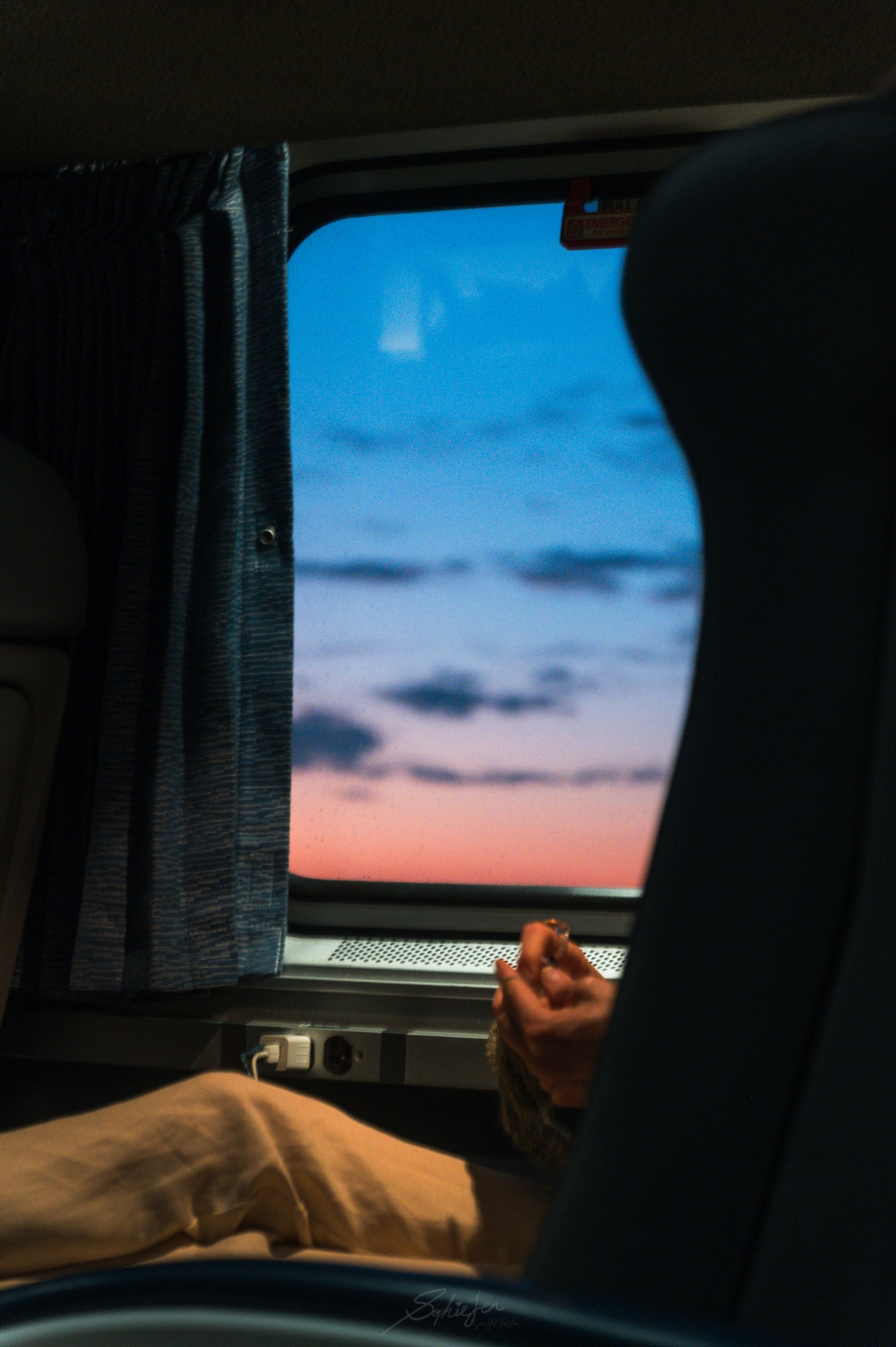
To be clear, comfortable here does not mean hotel-bed comfortable. But the seat is padded and generous, and lying across two of them was better than I expected. If you are a light sleeper, or you need a proper night’s rest to function, this is where coach stops being a bargain.
A lot of people ask me: can you really sleep in coach? Yes, but getting two seats is luck, not a guarantee. So bring a neck pillow or a small cushion, because it changes everything, plus a windbreaker or light blanket. The air conditioning on this train does not hold back.
Where to Put Your Luggage in Coach, and How Safe Is It?
Coach luggage has two homes: check the big bags, or carry everything on and split it between the overhead shelf and your feet. Valuables stay with you, and you take the most important ones along when you leave your seat. Two nights in, my honest read was that it felt safe, and there is no need to spend the trip anxious.
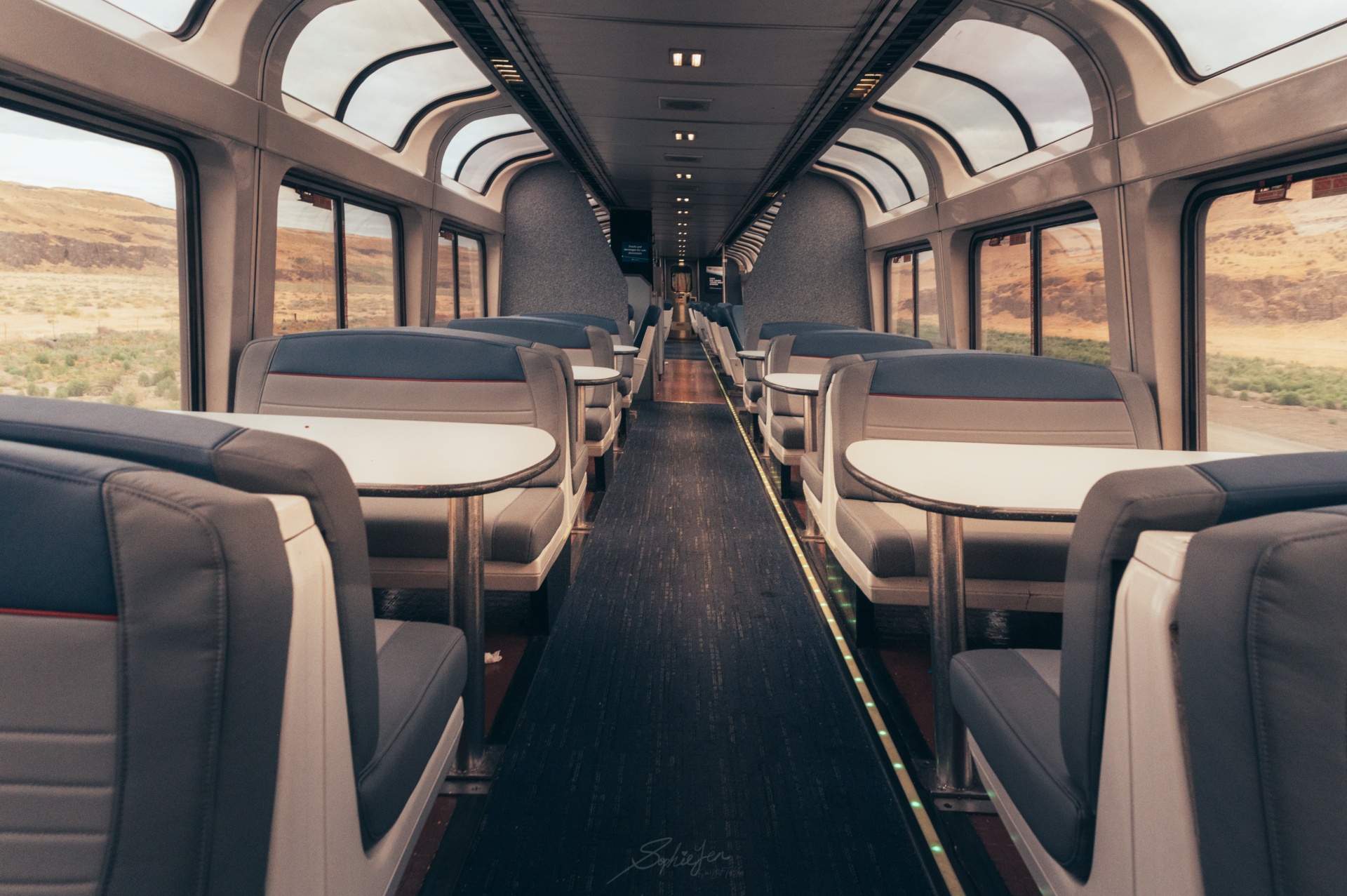
- What I did with bags: I skipped checked baggage entirely and brought two carry-ons up to the overhead shelf, holding only replaceable things like clothes and souvenirs picked up on the road trip before this.
- Valuables: passport, wallet, laptop, and camera all lived in my camera bag at my feet, within arm’s reach. I did not clutch it while sleeping, I just slept normally.
- Leaving your seat: heading to the observation car I always took my phone and wallet, and my passport depending on the situation. Read your own car first. Mine felt relaxed, so I left the laptop behind but tucked it away rather than leaving it face up on the table.
Eating on the Empire Builder: Dining Car vs. Café Car
Food on board comes from two cars, and which one you use depends on your class. The dining car is for sleeper passengers, the café car is open to everyone.
The dining car serves breakfast, lunch, and dinner by reservation, cooked on board and eaten either at a table or delivered to your room. Sleeper fares already include it, which is part of why the room price stings less than it looks. Tipping is not required since it is prepaid, though plenty of passengers leave something anyway.
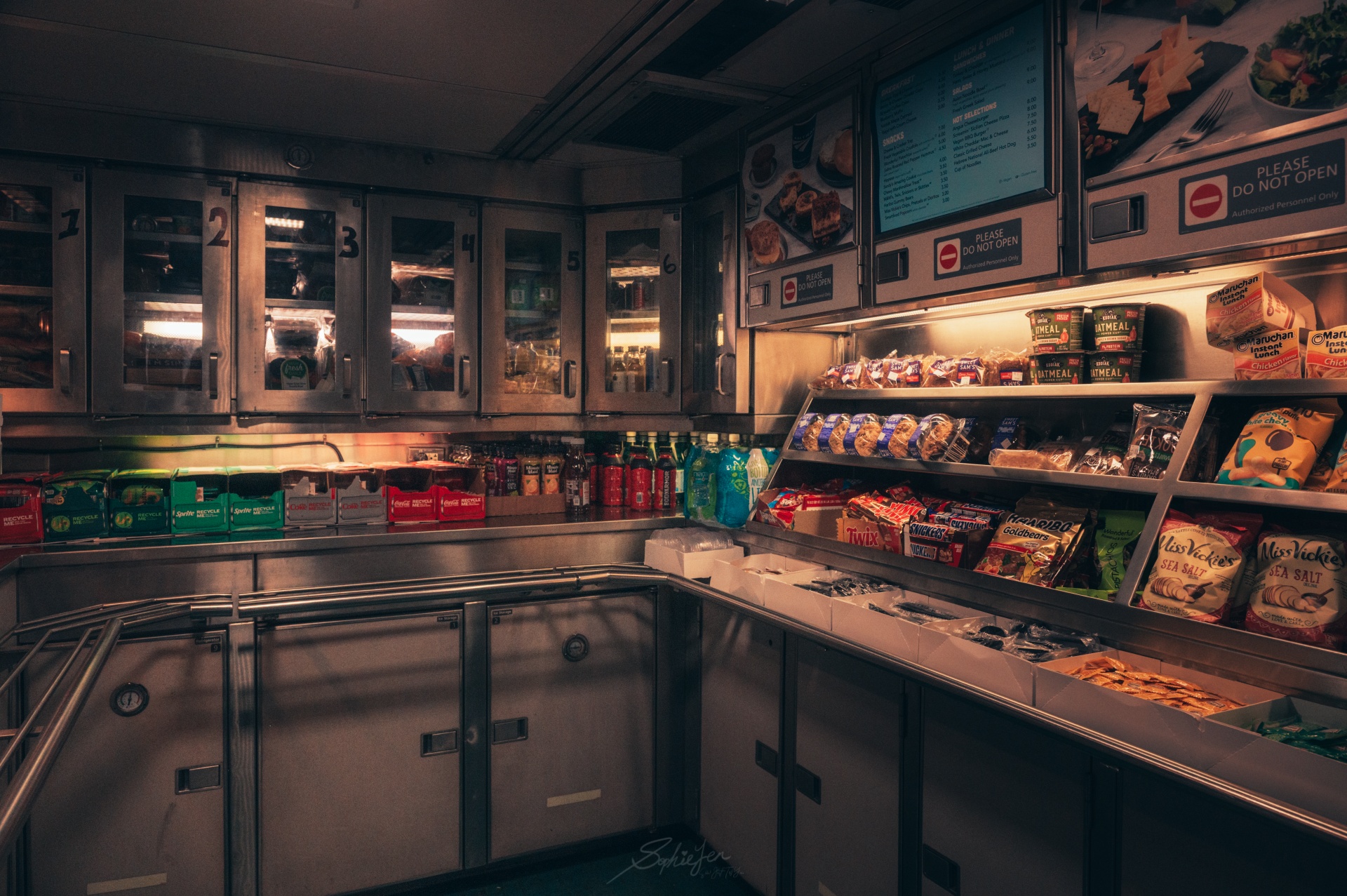
In coach you use the café on the lower level of the Sightseer Lounge. Think convenience-store food heated in a microwave, with hot items, snacks, and a full range of drinks. If your morning does not start without coffee, you can get it here.
Plenty of coach passengers bring a cooler bag with sandwiches, crackers, and drinks and barely spend a cent on board. I had been road-tripping right up to departure and squeezed every last hour out of Chicago, so I never got around to shopping and ate the train’s food instead.
Empire Builder Scenery Timetable: What to See, When, and Which Side to Sit
The best of this route needs no stops at all, it happens from your seat. Summer is the sweet spot because the daylight stretches so far north: in the Midwest the sun sets around 8:00 to 8:30 p.m. and it is not properly dark until after nine. Some stretches are ordinary. These five are not.
| When | What you see | Which side |
|---|---|---|
| Day 1 evening, about 5:30–9:00 p.m. | Sunset along the Mississippi River from around La Crosse, pink and purple gradients on the water | Right |
| Day 2 sunrise | North Dakota prairie waking up, light spreading slowly across the grass | Either |
| Day 2 late afternoon, about 4:00–9:30 p.m. | Montana Big Sky country after Havre, huge skies with rain squalls and sun in the same hour | Either |
| Day 2 evening, East Glacier Park around 8 p.m. | Climbing through Marias Pass at the edge of Glacier National Park | Mostly right, though the low sun glares |
| Day 3 sunrise, after Pasco | Columbia River Gorge, sheer volcanic walls on both banks, Beacon Rock near Portland | Left |
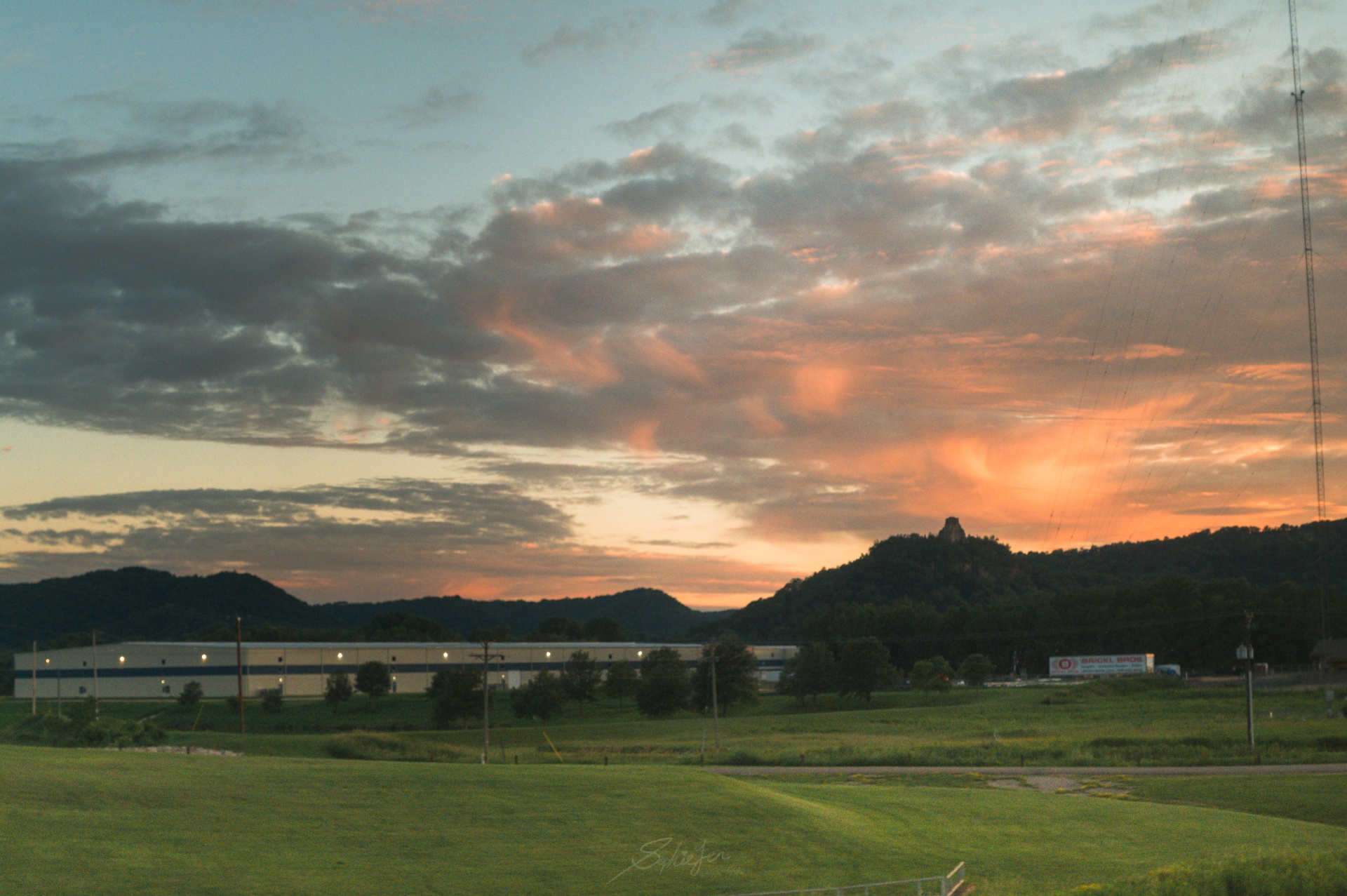

As a general rule heading from Chicago to Portland, the left side wins overall, with the first evening on the Mississippi being the exception. During the day, sitting away from the sun is easier on your eyes and your photos. And the observation car has no sides at all: its floor-to-ceiling curved windows are the best vantage point on the whole train, and where I spent most of my daylight hours.
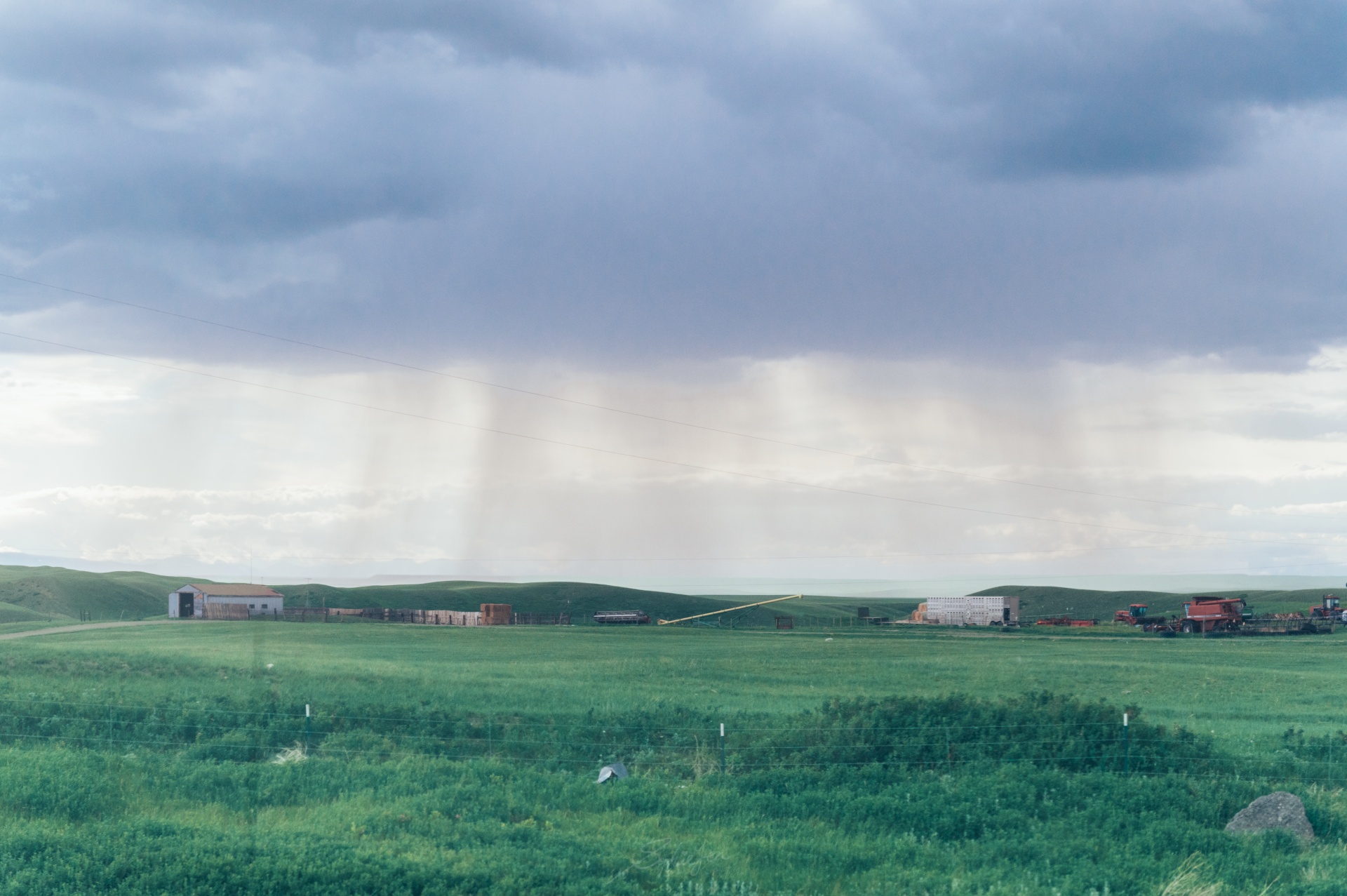
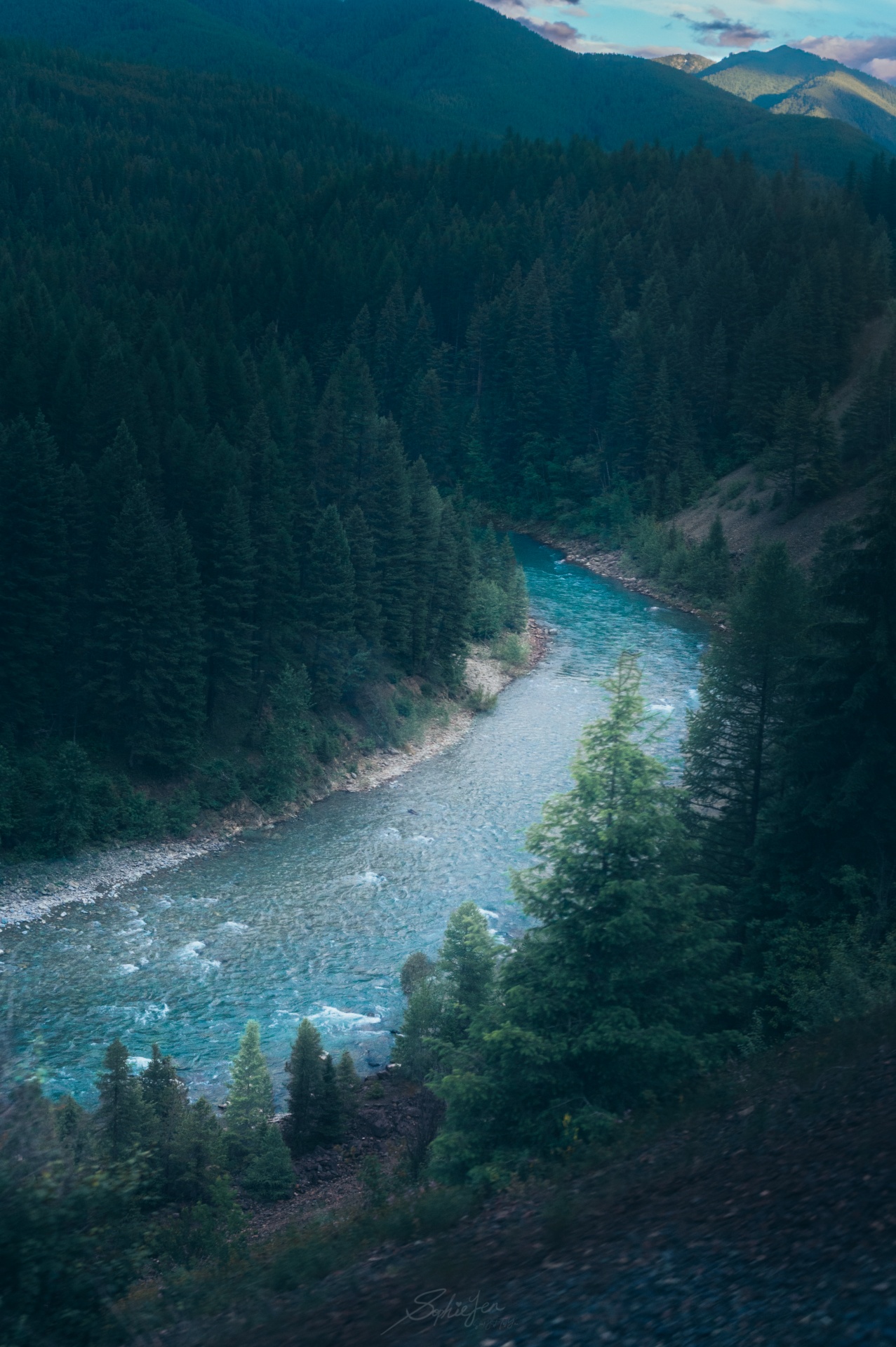
Shooting from a moving train is a bit of a lottery, and I say that as someone who photographs for a living. The train is quicker than it feels, so shots that looked sharp in the viewfinder came back soft, almost like watercolor. Pressing the lens against the glass picks up reflections, and the windows are not exactly clean, which acts like a permanent filter. My favorite frames ended up being the ones where I stopped fighting it and let the window frame sit in the shot.
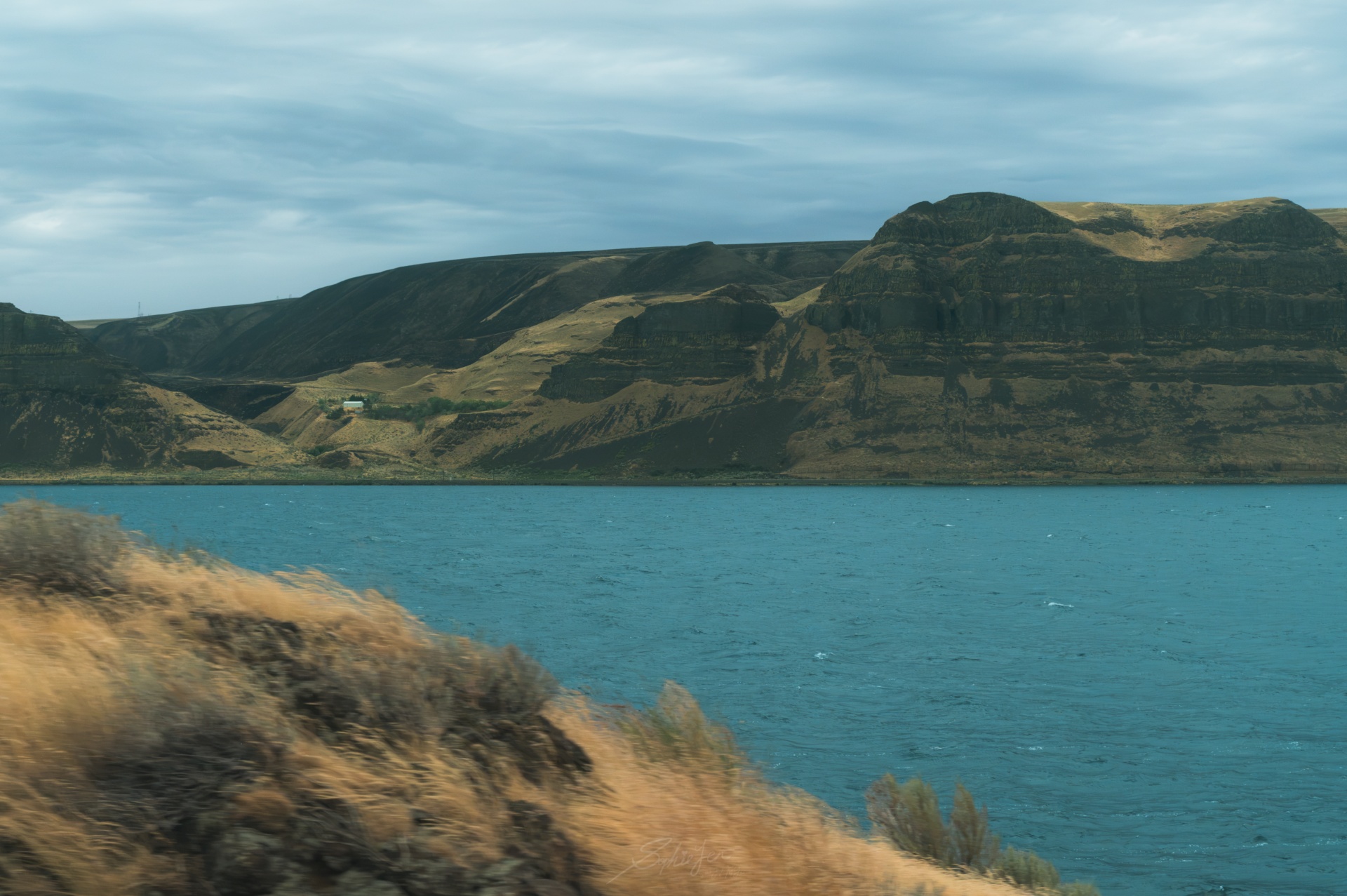
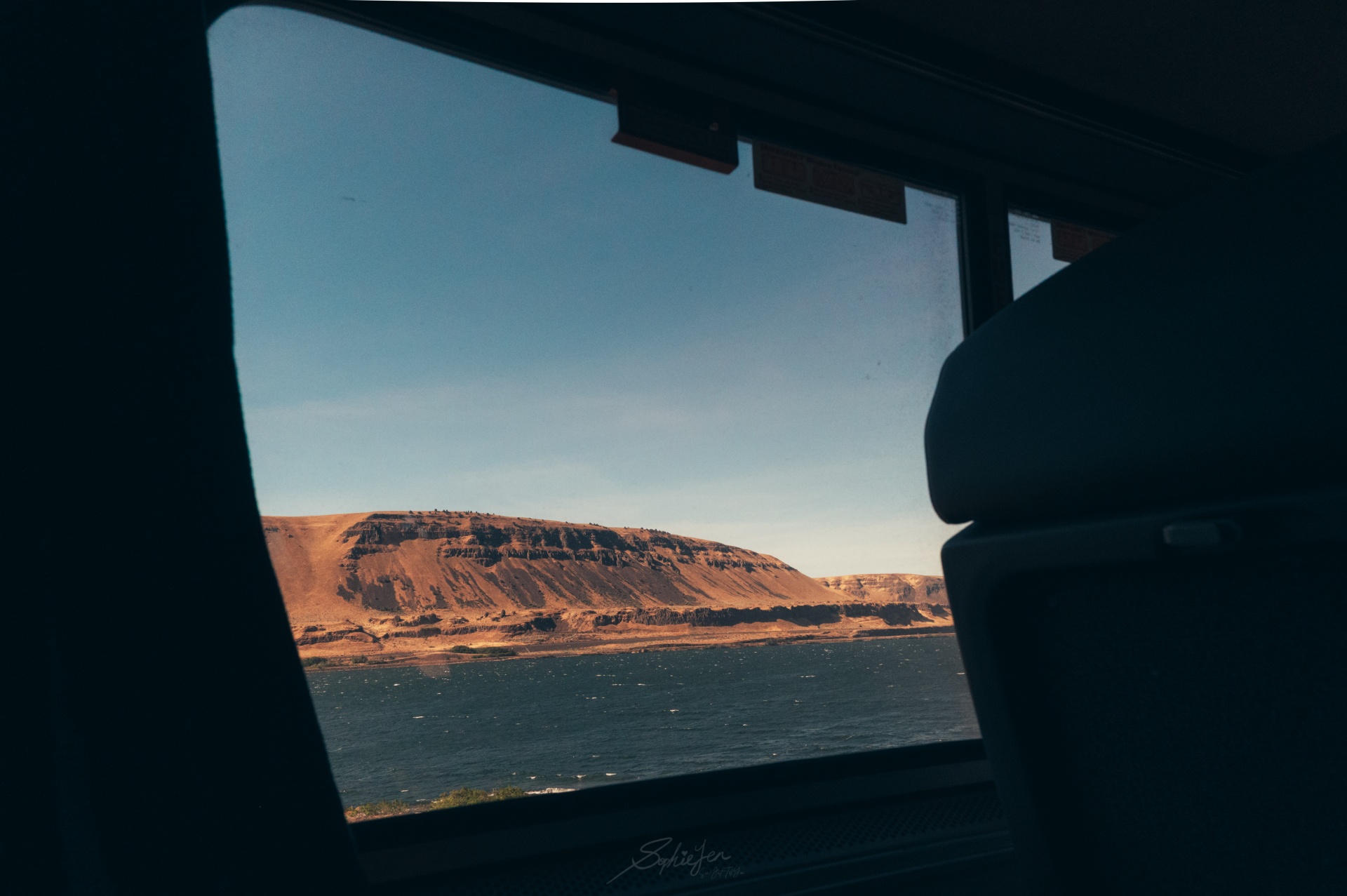
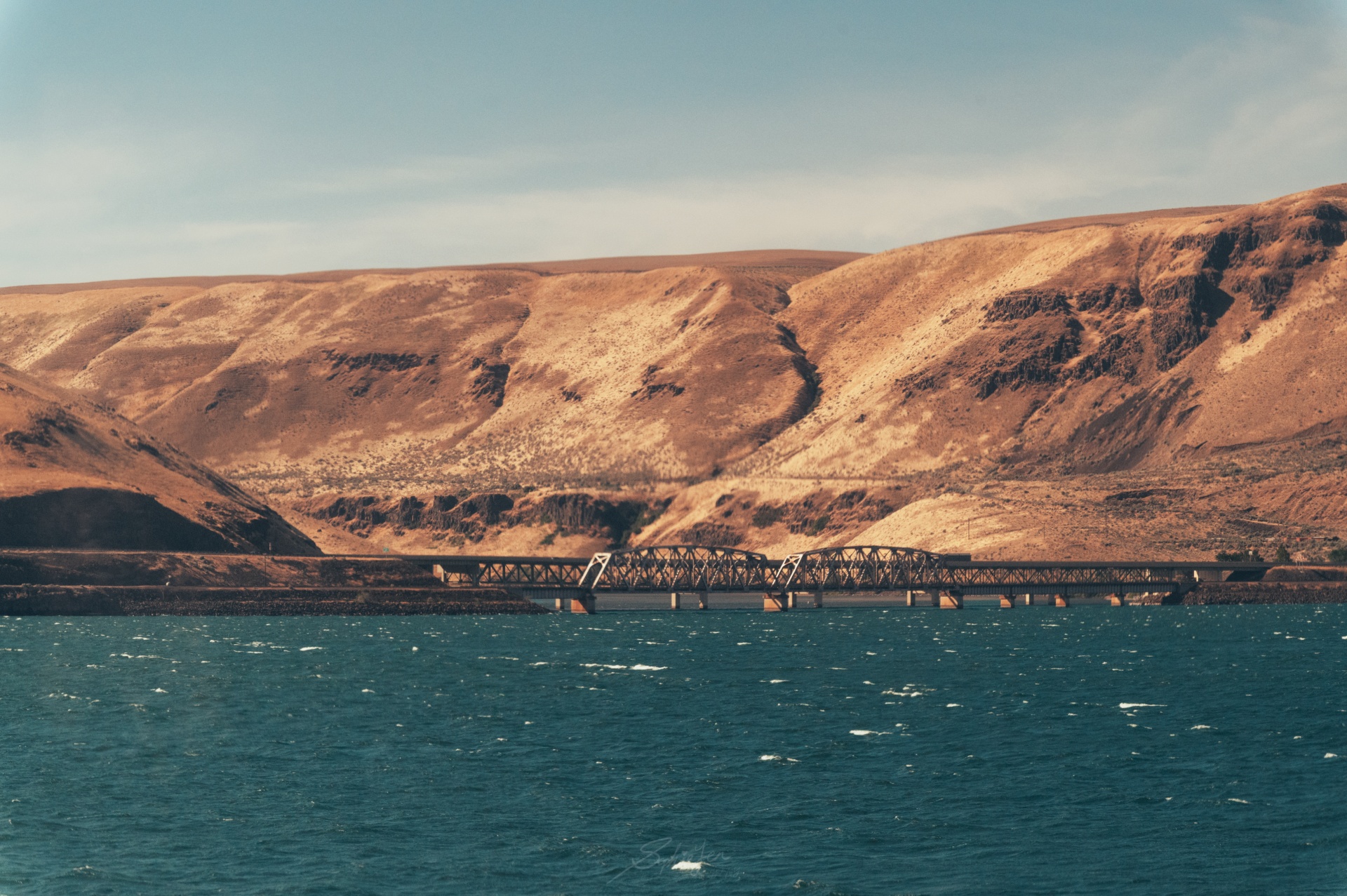
The Columbia River Gorge on the final morning is the one I would ride again for. Moving through the canyon without driving it yourself is a strange luxury, especially if you have hiked the Gorge before; the same walls I sweated up on the Dog Mountain wildflower hike slid past while I drank café coffee.
Can you ride it in winter? Yes, and a snowbound Glacier is its own reward, with a completely different palette from summer. The tradeoff is delays, which are far more common once snow is in the picture. If you go in winter, leave slack in whatever you have planned at the other end.
The Spokane Split: Why It Decides Your Empire Builder Ticket
One question I get a lot: why does the train split in the middle of the night? Because the Empire Builder is really two trains joined together, one bound for Seattle and one for Portland, and Spokane is where they part company and each half picks up its own locomotive.
That single operational detail explains three things travelers keep running into. First, it is why sleeper tickets to Portland simply do not exist; I spent ages trying to book one and only later understood that those cars never leave the Seattle half. Second, it is why you board through a destination-specific door back in Chicago. Third, and this is the one that catches coach passengers out, the two halves do not carry the same cars: after the split the Portland train has no dining car and the Seattle train has no café car. On the second night the conductor announced it repeatedly, telling anyone who wanted café food to buy it before 10 p.m.
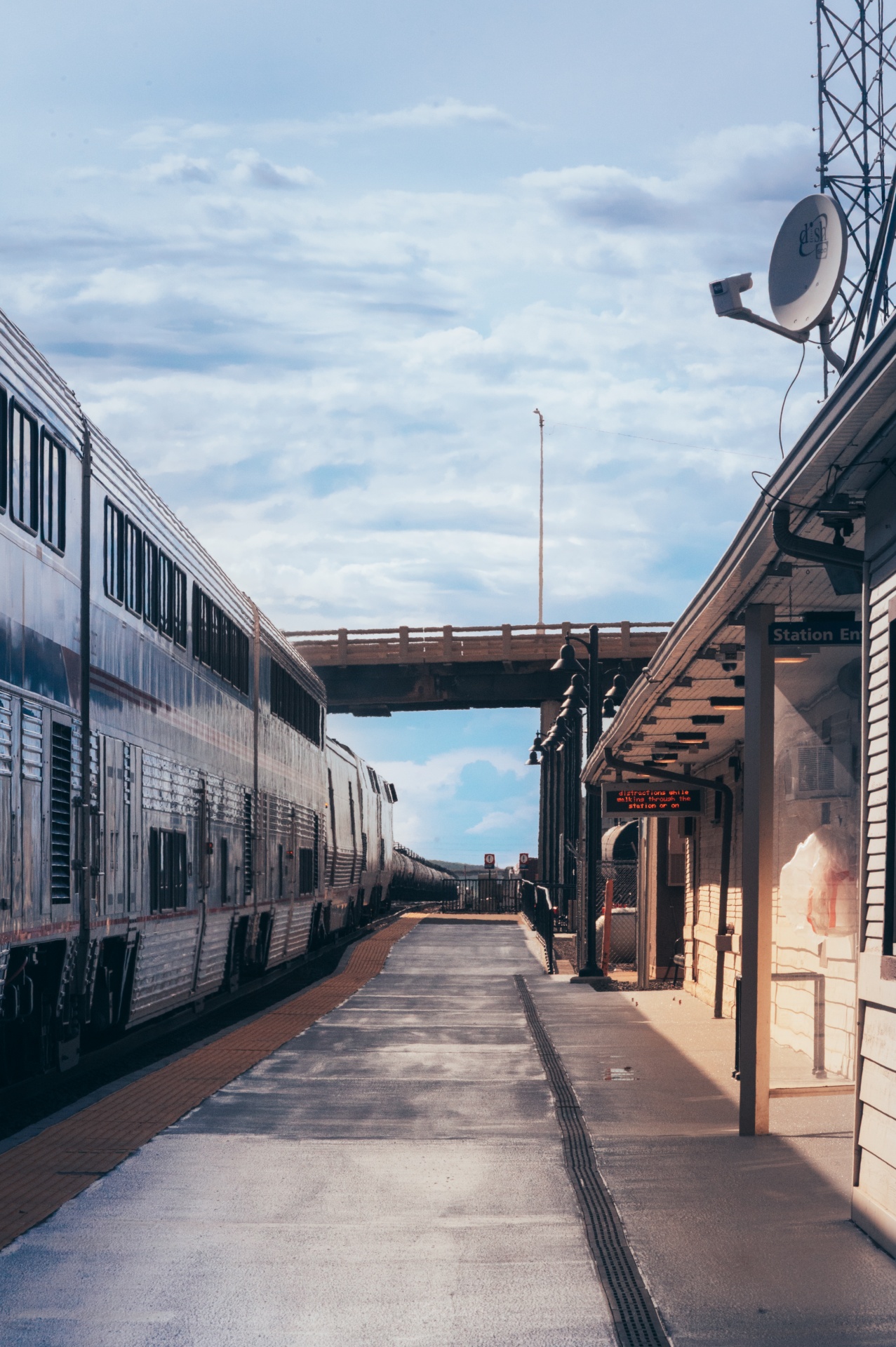
Between splits there are fresh air stops, where you can step onto the platform and stretch. I slept through several. The one I remember is Minot, North Dakota, a long stop of nearly an hour for crew change, servicing, and refueling. And since the route runs both ways, boarding in Portland means starting on a short handful of cars and only becoming a proper long-distance train once the two halves join at Spokane.
Which Empire Builder Stops Are Worth a Stopover?
More than you would think, especially if you are traveling domestically and can rent a car onward from the station. The train runs once a day in each direction, so getting off means committing to a stopover of at least a night before the next day’s train. Here are the stops I would actually build a trip around, running roughly west from Chicago.
- Chicago, IL, the eastern endpoint: worth two or three days before you even board, between the lakefront, the museums, and the skyline. If it rains, the Shedd Aquarium guide and the Museum of Science and Industry fill a day each, and a Chicago CityPASS bundles Shedd, the Field, and Skydeck into one ticket so those museums come cheaper than paying at each door.
- Wisconsin Dells, WI: the self-styled waterpark capital of the country and an easy first-evening hop out of Chicago. It is not scenic-railway territory, but if you are riding with kids it is the most family-friendly break on the eastern half.
- Minneapolis–St. Paul, MN: the Twin Cities are the roughly 11 p.m. stop and a natural urban breather about a third of the way across. Lakes, the Walker Art Center, and the Mall of America are all a short ride from the depot.
- Whitefish and Essex, MT: Whitefish is the trendy mountain town and the west-side gateway to Glacier, with its own ski hill. Get off a stop earlier at Essex and you are at the Izaak Walton Inn, a 1930s railroad lodge right on the tracks where trains still rumble past the windows.
- Glacier National Park, MT: the single best reason to break the journey. Get off at East Glacier Park or West Glacier and give the park its own days rather than trying to glimpse it from the window.
- Columbia River Gorge, WA: on the Portland half, get off at Bingen–White Salmon for the gorge you watched at sunrise, with Hood River’s windsurfing, waterfalls, and fruit loop just across the bridge. Those same walls are even better from the water on a Cascade Locks kayak tour.
- Seattle or Portland, the western endpoints: two Pacific Northwest cities that deserve to be the destination, not a transfer. For a day trip with a story attached, the six Thomas Dambo forest trolls are scattered between the two. Riding the Seattle branch instead? Get off at Leavenworth for its Bavarian-village downtown.
The rest are mostly small towns, malls, and ski access, worth a stop mainly if you already have a reason to be there.
What to Pack for 46 Hours in Coach
Packing well is the difference between a long ride and a rough one. Four things earned their space in my bag.
- A neck pillow or small cushion: since two seats are never guaranteed, this is the one item that decides how well you sleep.
- A windbreaker, thin blanket, or long pants: it was summer and I was still cold at dawn. The air conditioning runs hard all night.
- A multi-port travel adapter: there are outlets, but only two per seat pair. I routinely needed camera batteries, laptop, phone, and a power bank charging at once, and one adapter with USB-C and USB meant packing cables only.
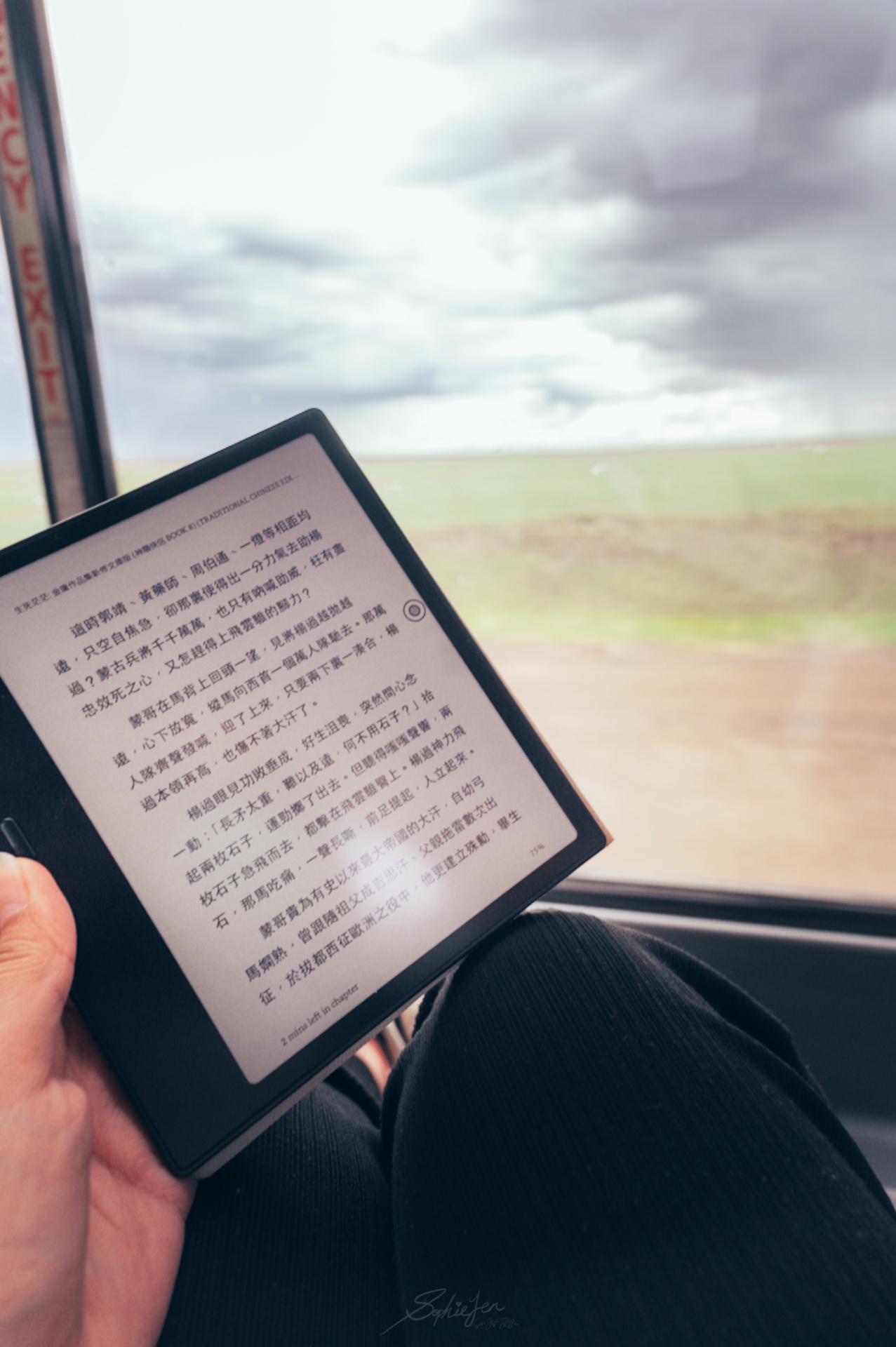
- Offline entertainment: there is no Wi-Fi on this train, you are on your own cellular data, and long stretches have no signal at all. Download shows and books first, and it is worth setting up offline maps before you lose signal too. I brought an e-reader and a single-player escape room game, and they carried whole afternoons.
Who the Empire Builder Is For, and Who Should Just Fly
Ride it if the journey is the point; fly if you just need to arrive.
- Good fit: travelers who like watching landscapes change slowly, backpackers who want a cheap long-distance rail experience in coach, anyone with the budget for a sleeper and a need for real rest, and people who want to cross mountains and rivers without driving.
- Poor fit: anyone in a hurry, anyone who cannot sit still for long, and light sleepers who refuse to pay for a sleeper. A two-hour flight will serve you better.
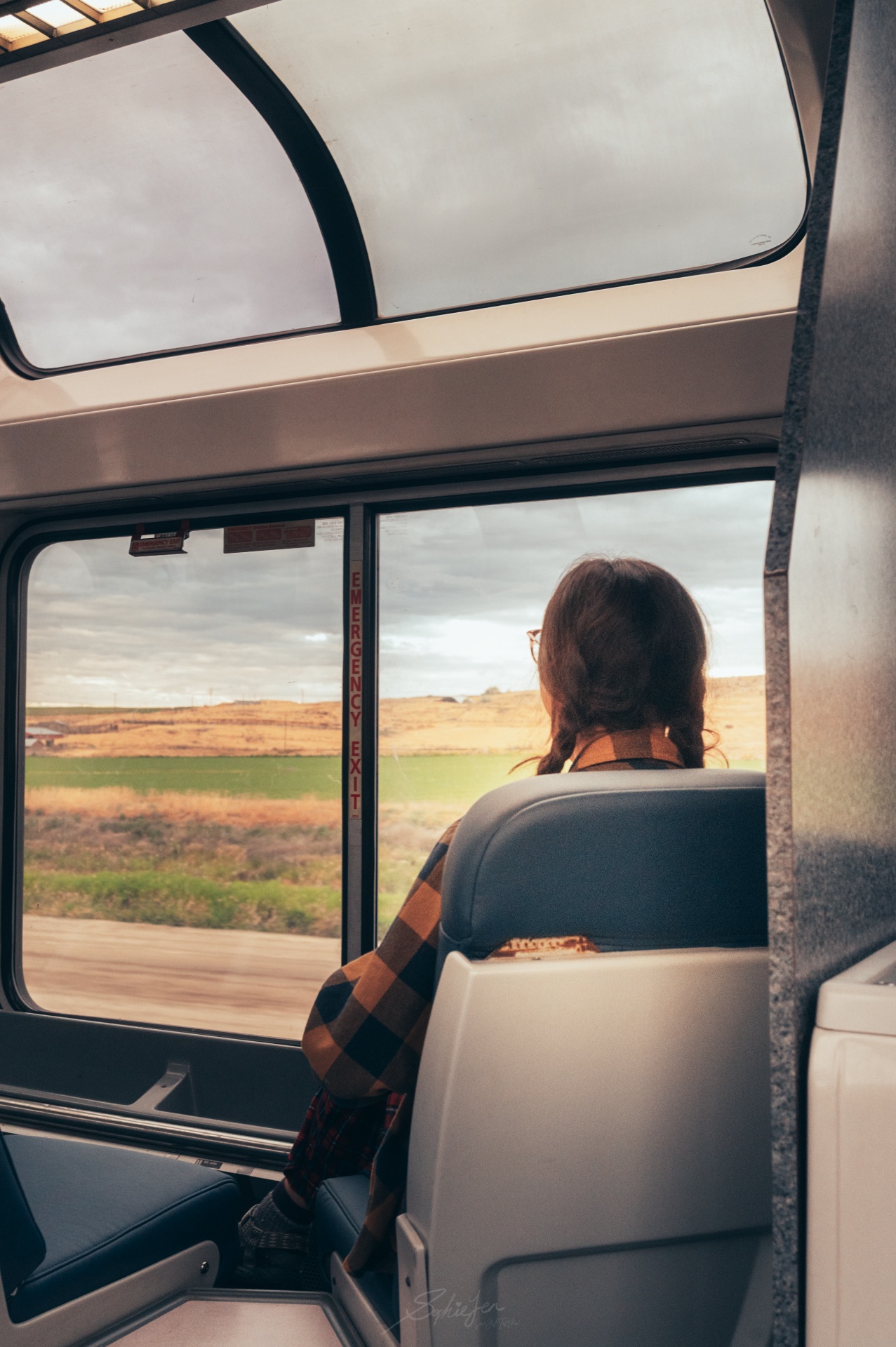
What stayed with me from those 46 hours was not a headline view. It was the conductor vacuuming the aisle with real care, running into the same handful of faces in the observation car every morning and trading a groggy hello, and that pink and purple sky over the Mississippi. You buy this kind of trip with time, and it is worth checking current schedules and fares on the official Amtrak Empire Builder page before you book.
Frequently Asked Questions
How long does the Amtrak Empire Builder take from Chicago to Portland?
About 46 hours, with two nights spent on board. The train runs once a day in each direction. Winter trips are still scenic, with snow over Glacier National Park, but delays are far more common once snow is involved, so leave slack in your plans at the other end.
Can you actually sleep in coach on the Empire Builder?
Yes. Coach seats recline generously, and the car empties out overnight, especially after the Minneapolis-St. Paul stop around 11 p.m. on the first night, so many solo passengers end up lying across two seats. It is luck rather than a guarantee, so bring a neck pillow and something warm; the air conditioning runs hard all night.
Which side of the train has the best views on the Empire Builder?
Heading west from Chicago to Portland, the left side wins overall, with one exception: the first evening along the Mississippi River is better from the right. During the day, sitting away from the sun is easier on your eyes. The Sightseer Lounge has curved floor-to-ceiling windows on both sides and is the best vantage point on the train.
Is food or Wi-Fi included with an Empire Builder coach ticket?
Neither. Meals are included only with sleeper fares, which use the dining car; coach passengers buy from the cafe on the lower level of the Sightseer Lounge, which sells microwaved hot food, snacks, and coffee. There is no Wi-Fi on the train, you rely on your own cellular data, and long stretches have no signal at all, so download entertainment and offline maps first.
Why can't I book a sleeper from Chicago to Portland?
Because the train splits at Spokane into a Seattle half and a Portland half, and the sleeper cars stay with the Seattle half. If you want a bed, book Seattle as your endpoint. The same split also means the Portland train has no dining car after Spokane and the Seattle train has no cafe car, so coach passengers heading to Portland need to buy cafe food before about 10 p.m. on the second night.

Sophie Yen
Taiwanese travel blogger based in the U.S. | Shh! Just Tell You
I work a 9-to-5 like most of us and write about travel after hours. Instead of racing through checklists, I prefer staying longer in one place. Everything on this blog comes from hotels I have actually stayed at, streets I have walked, and the honest research I do before every trip.
For those who like to slow down.
A little travel, a little life, a little warmth — in every letter.

Hi BFFs!
The article may contain affiliate links, and we welcome you to book accommodations or purchase tickets through the links in the article or below. Rest assured, it won’t affect the price for you, but it would give us a small commission to support us in creating more great content. Thank you so much for your support!
✒︎ Flights: Skyscanner
✒︎ Accommodations: Booking.com, Agoda
✒︎ Tickets: Klook, KKday, Get Your Guide
✒︎ Car Rentals: Rental Car
✔︎ Shh! Just Tell You exclusive travel discount code.
All opinions on this website are 100% personal and I only recommend products or itineraries that I trust. Please refer to the “Disclosure and Public Welfare Program” section for more details. If you have any questions, please click on the social media icons below to contact me, or email 📧 to [email protected].
All copyrights of the blog’s texts and images are reserved. Link sharing is welcome. © 2018-2026 Shh! Just Tell You.